
Saba is the smallest island in the Caribbean Netherlands, but its dramatic volcanic landscape and seafaring history have given it a distinctive place in the Kingdom of the Netherlands. Known as the Unspoiled Queen of the Caribbean, the island is celebrated for its cloud forests, traditional cottages and protected marine environment. Yet behind its peaceful appearance lies a history of Indigenous settlement, slavery, maritime trade, migration and remarkable human resourcefulness. Since 2010, Saba has been part of the country of the Netherlands, combining local self-government with the challenges of belonging to a European state thousands of kilometres away.
Kingdom of the Netherlands: An introduction to the series
The Kingdom of the Netherlands is a unique construct: a modern state spanning Western Europe and the Caribbean. Often misunderstood as simply "the Netherlands", the Kingdom consists of four countries, each with its own identity, government and story.
The country of the Netherlands also includes three Caribbean public bodies: Bonaire, Sint Eustatius and Saba, collectively known as the Caribbean Netherlands.
This series explores each part of the Kingdom:
- The Netherlands (Country)
- Aruba (Country)
- Curaçao (Country)
- Sint Maarten (Country)
- Bonaire (Public body of the Netherlands)
- Sint Eustatius (Public body of the Netherlands)
- Saba (Public body of the Netherlands)
Do you run a business? RotterdamStyle is looking for a main sponsor. Get exclusive visibility across our website for a fixed fee. Interested? Contact us 🤝
Introduction
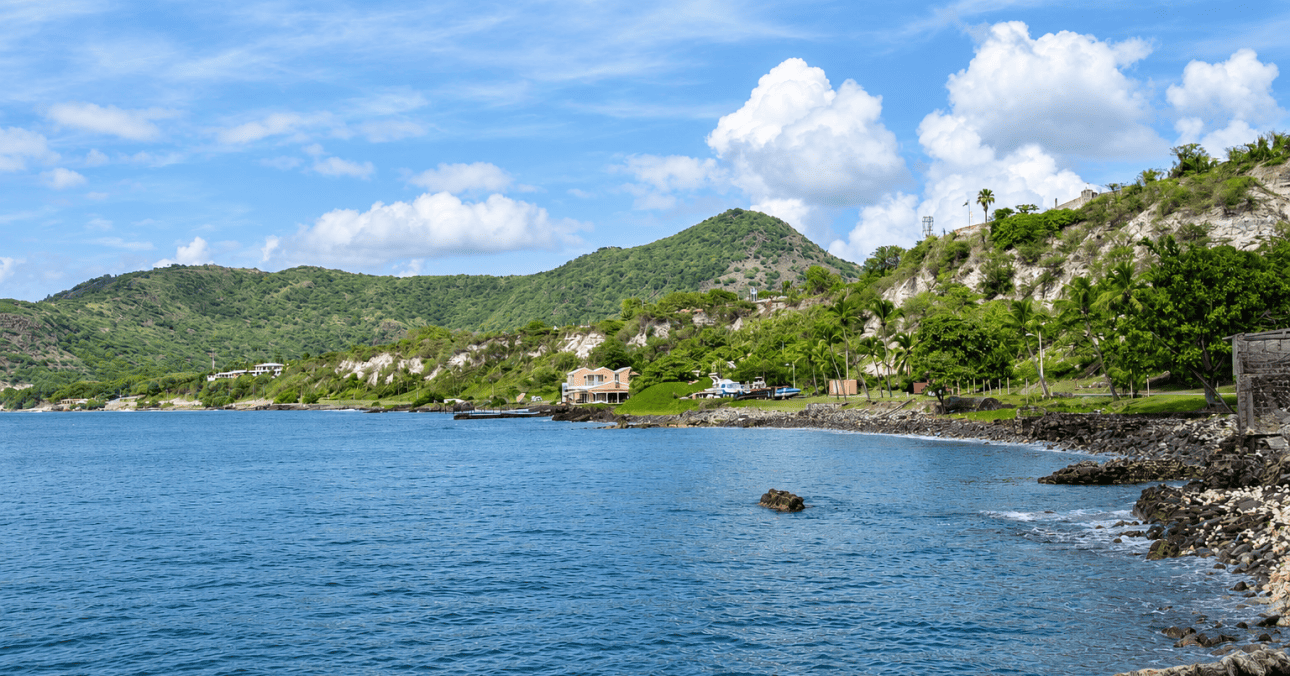
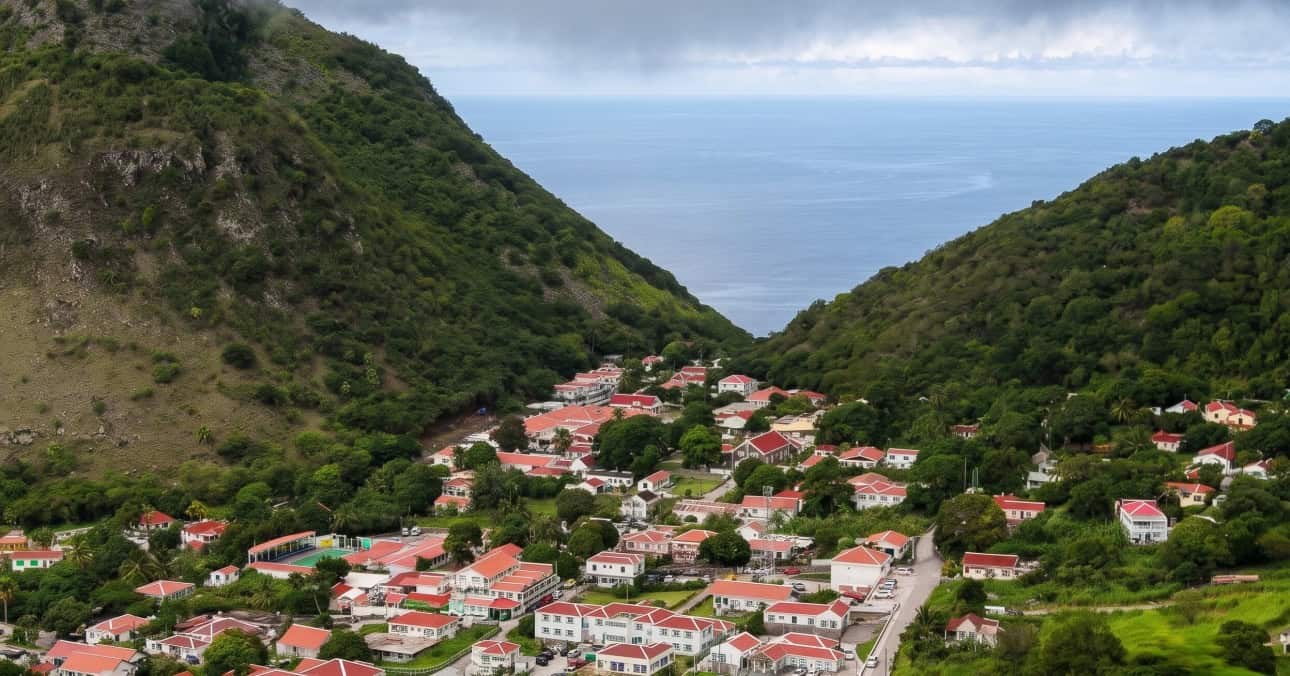
Rising steeply from the Caribbean Sea, Saba looks unlike almost any other island in the Kingdom of the Netherlands.
There are no extensive coastal plains, sprawling resorts or long stretches of sandy beaches. Instead, a volcanic mountain dominates the landscape, its slopes descending towards the sea through deep ravines and rugged cliffs.
Covering approximately 13 square kilometres, Saba is the smallest of the six Dutch Caribbean islands by land area. On 1 January 2026, it had a population of 2,270.
At its centre rises Mount Scenery, reaching approximately 887 metres above sea level. It is the highest natural point in the entire Kingdom of the Netherlands, considerably higher than the hills of the European Netherlands.
The island's administrative centre, The Bottom, occupies a valley surrounded by steep hills. Windwardside, another important settlement, sits higher on the mountain, where traditional cottages with white walls, red roofs and green shutters have become symbols of Saban architecture.
St. John's and Zion's Hill, historically known as Hell's Gate, complete the principal residential communities.
The island's geography has shaped nearly every aspect of its history.
For centuries, its steep terrain made transportation difficult and limited agricultural development. With few convenient places for ships to land, Saba's inhabitants developed close connections with the sea, becoming skilled sailors, fishermen and maritime traders.
Women maintained households, contributed to agriculture and developed craft industries, including the internationally recognised tradition of Saba lace.
But the familiar stories of seafaring men and resourceful women represent only part of the island's past.
Saba was also a colonial slave society. Enslaved Africans and their descendants worked on plantations, in households and in maritime activities. Their experiences and contributions were central to the island's development, even though they have often received less attention in popular historical accounts.
During the 20th century, the construction of a road, airport and harbour transformed Saba's connections with the outside world.
Tourism, nature conservation and international medical education subsequently created new economic opportunities.
On 10 October 2010, Saba became a public body of the Netherlands, alongside Bonaire and Sint Eustatius. This brought the island into a closer constitutional relationship with Dutch national institutions while preserving its local government and distinctive Caribbean identity.
Today, Saba faces questions familiar to many small island communities: how to create economic opportunities, provide affordable housing and reliable public services, protect vulnerable ecosystems and ensure that residents have a meaningful say in their future.
Understanding Saba means recognising both the beauty of its landscape and the history of the people who have adapted to it over generations.
Table of contents
- Ancient Saba: Indigenous heritage and European settlement
- Colonial rule, slavery and the development of a seafaring society
- Society and culture: language, migration and community
- Politics and governance: from the Netherlands Antilles to the Caribbean Netherlands
- Economy: maritime traditions, education and sustainable tourism
- Saba in the Kingdom: local identity and Dutch responsibilities
- Contemporary challenges and opportunities
- Saban identity: traditions, craftsmanship and daily life
- Looking forward: Saba and the 21st-century Kingdom
Do you run a business? RotterdamStyle is looking for a main sponsor. Get exclusive visibility across our website for a fixed fee. Interested? Contact us 🤝
1. Ancient Saba: Indigenous heritage and European settlement
Before European arrival
Saba's human history stretches back thousands of years.
Archaeological investigations have identified evidence of Indigenous communities occupying the island long before European explorers reached the Caribbean.
Early inhabitants travelled between islands and the South American mainland, forming part of a wider maritime network through which people, goods and cultural traditions moved across the region.
At sites near Fort Bay, archaeologists have discovered evidence of human activity dating back more than three thousand years.
Other archaeological remains, including pottery, stone tools and shell artefacts, have been found in different parts of the island.
These discoveries suggest that Saba was used by successive Indigenous communities whose ways of life changed over time.
Early inhabitants depended on hunting, fishing and gathering, while later communities practised agriculture and established more permanent settlements.
The island's steep slopes, limited flat land and exposure to the sea presented challenges, but its location also offered access to fishing grounds and neighbouring territories.
Archaeological research continues to provide new information about these communities.
Much remains uncertain about their languages, social organisation and the circumstances under which particular settlements were abandoned or transformed.
Nevertheless, the evidence establishes that Saba's history began long before European colonisation.
European exploration and settlement
European knowledge of Saba developed during the period of Atlantic exploration and competition between colonial powers.
Christopher Columbus is traditionally associated with the island's European discovery in 1493, although the historical details of early European encounters are not always securely documented.
Saba's steep coastline and lack of a sheltered natural harbour made permanent settlement more difficult than on neighbouring islands.
European colonisation developed during the 17th century.
Settlers associated with the Dutch West India Company established a presence during the 1640s, while people from the British Isles and neighbouring Caribbean colonies also contributed to the early colonial population.
The island's political control changed repeatedly during conflicts involving the Dutch, English and French.
These changes reflected the wider competition between European powers for Caribbean territory, maritime trade and strategic advantage.
Despite its difficult geography, Saba became home to a small but established colonial community.
By the early 19th century, Dutch authority had become firmly established, with the Netherlands retaining control after the Napoleonic conflicts.
A settlement shaped by the mountain
Saba's geography determined where people could build homes and cultivate land.
Most of the coastline consists of steep cliffs, making large coastal settlements impractical.
Instead, communities developed on the mountain's slopes and in relatively sheltered areas where the terrain allowed construction and agriculture.
The Bottom became the island's principal administrative settlement.
Windwardside developed higher on the mountain, while St. John's and the settlement historically known as Hell's Gate occupied other parts of the island.
Before the construction of modern roads, narrow trails and stone steps connected these communities.
Residents carried goods by hand or used donkeys to transport supplies between villages and coastal landing places.
Ships arriving offshore could not simply dock at a convenient harbour. Goods and passengers frequently had to be transferred between vessels and the shore under difficult conditions.
The result was a society whose daily routines required considerable physical effort and practical knowledge of the surrounding environment.
These conditions helped shape the resourcefulness for which Saba would later become known.
Do you run a business? RotterdamStyle is looking for a main sponsor. Get exclusive visibility across our website for a fixed fee. Interested? Contact us 🤝
2. Colonial rule, slavery and the development of a seafaring society
Plantations and colonial labour
During the colonial period, Saba developed an agricultural economy based on the limited areas of land suitable for cultivation.
Plantations produced crops including sugar, indigo, cotton and coffee, while smaller farms supported food production and livestock.
The island's steep terrain prevented the development of plantation estates on the scale found in parts of Saint Kitts, Barbados or other Caribbean colonies.
Nevertheless, plantation agriculture became an important part of Saba's colonial economy.
Enslaved Africans and their descendants provided much of the labour on which these activities depended.
They cultivated crops, tended livestock, worked in households, constructed buildings and participated in maritime and other commercial activities.
The smaller scale of Saba's plantations did not make slavery insignificant.
Historical research indicates that enslaved people accounted for a substantial proportion of the island's population during much of the colonial period.
In some periods, people living in slavery represented approximately one-third to one-half of the population.
This makes slavery central to understanding Saba's historical development, rather than a marginal aspect of its past.
Slavery beyond the plantations
Unlike the large plantation societies of some neighbouring islands, Saba's economy required many different forms of labour.
Enslaved people were employed in agriculture, domestic service, fishing, seafaring and other activities necessary to sustain the island.
Some worked in close proximity to the families who claimed ownership over them.
Such arrangements have sometimes contributed to misleading descriptions of slavery on Saba as comparatively mild.
Historical research offers a more complicated picture.
Enslaved people remained subject to coercion, punishment, restrictions on movement and the denial of fundamental rights.
Family relationships could be disrupted through sale or relocation, while personal freedom depended on the decisions of enslavers and colonial authorities.
The experiences of these people differed, but their legal status remained one of enforced subordination.
Archaeological research has helped recover some of their individual stories.
One study examined the remains of a woman of African ancestry and an unborn child discovered at Fort Bay Ridge.
The research combined archaeological evidence, skeletal analysis and historical records to investigate the woman's life and probable circumstances of death.
The findings suggested that she had been born in Africa and brought to the Caribbean, where she experienced the conditions of colonial slavery.
Her story provides an unusually personal connection to a history often described through plantation statistics and colonial records.
It also demonstrates the importance of archaeological research in recovering experiences that written documents frequently overlooked.
Emancipation in 1863
Slavery was formally abolished in the Dutch Caribbean colonies on 1 July 1863.
On Saba, approximately 700 enslaved people gained their legal freedom.
Historical sources report somewhat different totals, with some research identifying 734 people, reflecting differences in the records and methods used to reconstruct emancipation.
The scale of the figures nevertheless demonstrates how deeply slavery was embedded in the island's society.
As elsewhere in the Dutch Caribbean, former enslavers received compensation from the Dutch government, while the people who had endured enslavement received no comparable payment.
Emancipation brought an end to the legal institution of slavery, but it did not immediately eliminate poverty or unequal access to economic opportunities.
The island's limited agricultural resources and small domestic economy created difficulties for many families.
Residents increasingly depended on maritime employment, small-scale agriculture and migration to earn a living.
These developments contributed to the transformation of Saba into a society closely connected with seafaring.
The island of seafarers
During the 19th century, maritime work became an increasingly important source of income.
Saban men worked as sailors, fishermen, shipbuilders and captains, travelling throughout the Caribbean and beyond.
Their employment connected the island to commercial networks involving neighbouring territories, North America and other parts of the Atlantic world.
Seafaring offered opportunities that were difficult to obtain through agriculture alone.
However, it also meant that family members could be separated for long periods.
Many men spent months away from home, leaving women and other relatives responsible for households, agricultural activities and the daily organisation of community life.
This pattern contributed to Saba's historical reputation as the Island of Women.
The expression captures an important aspect of the island's social history, although it should not obscure the varied experiences of families or the contributions of women and men who remained on the island.
Women developed additional sources of income through craftsmanship, including the needlework tradition that became known as Saba lace.
The combined efforts of sailors, craftspeople, farmers and other workers helped sustain the island through periods of economic uncertainty.
Remembering slavery in modern Saba
Saba's colonial past has received increasing attention through historical research, public commemoration and heritage projects.
On 1 July each year, the island commemorates Emancipation Day, recognising the abolition of slavery in the Dutch Caribbean in 1863.
The 2026 commemorations included historical activities, traditional cultural workshops and public discussions under the theme Freedom is in We Culture.
These events linked historical remembrance to the preservation of language, music, food, traditional knowledge and community identity.
The Dutch government's apology for its role in slavery in December 2022, followed by King Willem-Alexander's apology in July 2023, also forms part of the wider Kingdom's reassessment of colonial history.
In August 2026, the Public Entity Saba announced further initiatives under its Slavery Past Action Agenda.
The programme includes historical and genealogical research, community engagement and plans for a History and Knowledge Centre at the Wathey Property.
The proposed centre would bring together historical collections, archives, a library and a permanent exhibition addressing slavery on Saba.
These initiatives remain in development, but they represent an important effort to ensure that the island's history is told through a broader range of voices and experiences.
Remembering Saba's past means recognising the skills and achievements of its inhabitants while also confronting the exploitation that shaped its colonial society.
Do you run a business? RotterdamStyle is looking for a main sponsor. Get exclusive visibility across our website for a fixed fee. Interested? Contact us 🤝
3. Society and culture: language, migration and community
English and the Saban identity
Saba's linguistic identity reflects its close historical connections with the English-speaking Caribbean.
English is the principal language of everyday communication and is used extensively in public life and education.
Local speech includes distinctive Saban expressions and pronunciations influenced by the island's history and its connections with neighbouring Caribbean communities.
Although Dutch remains important because of Saba's constitutional relationship with the Netherlands, it is not the language most residents use in daily life.
English is the language of instruction in primary and secondary education, while Dutch is taught as an important foreign language.
This arrangement recognises the linguistic circumstances of the island while preparing students who may wish to continue their education or pursue careers in the European Netherlands.
Other languages, including Spanish and Tagalog, are also spoken within Saba's increasingly diverse population.
Its multilingual character demonstrates how migration and international connections continue to shape a community whose physical territory is extremely small.
A changing population
Saba's population has experienced periods of growth, decline and migration throughout its history.
Maritime employment frequently took residents away from the island, while economic opportunities elsewhere encouraged families to establish connections with neighbouring territories and more distant countries.
In modern times, migration remains an important influence.
According to Statistics Netherlands, Saba had 2,270 residents on 1 January 2026, an increase of 112 compared with a year earlier.
The increase was largely the result of immigration.
During 2025, the population grew particularly through the arrival of people born outside the Caribbean Netherlands, including residents from Sint Maarten, the Philippines, Colombia and the United States.
International students and professionals also contribute to the island's population and social life.
These changes bring new cultural influences, skills and economic activity.
However, population growth can also create pressure on housing, infrastructure and public services, particularly when available space is limited by the island's mountainous terrain.
Religion and community life
Religious institutions have played an important role in Saban society.
Roman Catholic, Anglican and other Christian communities have contributed to education, cultural activities and social organisation.
Churches have often served as important gathering places in communities where family relationships and personal networks are central to everyday life.
Migration has brought additional religious and cultural diversity.
Although Saba is a small society, its residents have different backgrounds, beliefs and perspectives.
The island's reputation for close community relationships should therefore not be mistaken for complete social uniformity.
As in larger societies, residents have different opinions about politics, development, public services and the future of their community.
Belonging to Saba
For many Sabans, identity is closely connected to family history, village life and the island's distinctive environment.
Traditional houses, local place names, public celebrations and familiar landscapes help sustain a sense of belonging.
At the same time, many families maintain relationships across the Caribbean and in the European Netherlands.
Young people may leave to study or work elsewhere, while others return after spending years abroad.
These movements create a continuing exchange of ideas, experiences and cultural influences.
Saban identity therefore exists alongside wider Caribbean and Dutch connections, rather than being defined entirely by geographical isolation.
Do you run a business? RotterdamStyle is looking for a main sponsor. Get exclusive visibility across our website for a fixed fee. Interested? Contact us 🤝
4. Politics and governance: from the Netherlands Antilles to the Caribbean Netherlands
From colony to the Netherlands Antilles
During the 20th century, Saba formed part of the Dutch colonial Caribbean.
The Charter for the Kingdom of the Netherlands, introduced in 1954, established the Netherlands Antilles as a country within the Kingdom.
The arrangement provided substantial internal autonomy while maintaining shared responsibilities in areas including defence, foreign affairs and Dutch nationality.
Saba remained part of the Netherlands Antilles, with its own island administration and representation within the wider political structure.
However, important decisions were made through institutions located elsewhere, particularly in Curaçao.
The arrangement became increasingly difficult to maintain as the islands developed different economic interests and political priorities.
Aruba obtained separate autonomous country status within the Kingdom in 1986.
During the following years, the remaining Netherlands Antillean islands continued discussing their constitutional future.
The constitutional changes of 2010
On 10 October 2010, the Netherlands Antilles was formally dissolved.
Curaçao and Sint Maarten became autonomous countries within the Kingdom, joining Aruba and the Netherlands.
Saba, Sint Eustatius and Bonaire became public bodies of the country of the Netherlands.
The three islands are collectively known as the Caribbean Netherlands and are commonly described as special municipalities.
However, they are not ordinary municipalities within a Dutch province.
Their administrative arrangements and the legislation applying to them differ in several respects from those of the European Netherlands.
For Saba, the constitutional change meant that many government responsibilities previously exercised through the Netherlands Antilles became matters for Dutch national institutions.
The island retained local government, but its relationship with the European Netherlands became considerably more direct.
These changes created opportunities for cooperation and access to national resources, while also raising questions about local authority and democratic representation.
The Island Council and local government
Saba's local government consists of an elected Island Council, an Executive Council and an Island Governor.
The Island Council represents residents and supervises local executive decisions.
The Executive Council is responsible for day-to-day administration, while the Island Governor fulfils duties concerning public order, government procedures and the coordination of local institutions.
The Island Governor chairs both the Island Council and Executive Council.
The island's small population has historically been reflected in a relatively small elected council.
Following the 2023 elections, Saba's Island Council consisted of five members.
Legislation approved in 2026 provides for expanding the Council to seven members following the elections scheduled for March 2027.
The proposed changes are intended to improve representation and strengthen local administrative capacity.
However, Saba's Executive Council raised concerns about the practical and financial demands of introducing the changes within a relatively short period.
The discussion reflects a broader challenge: political institutions designed for larger communities do not always fit easily within the circumstances of a small island.
A new Island Governor in 2026
An important development occurred in July 2026, when Jocelyn Levenstone became Saba's new Island Governor.
Born on Saba, Levenstone had previously held senior positions in immigration administration, maritime security and the Dutch Caribbean Coast Guard.
His appointment marked the first change in the island's permanent governorship in eighteen years.
The role is significant because the Island Governor connects locally elected institutions with public administration and responsibilities under Dutch law.
Effective government on Saba requires cooperation between the Island Council, Executive Council, national ministries and other public institutions.
With only a small population and limited administrative capacity, decisions about staffing, finances and public services can have substantial consequences.
Political representation and distance
Because Saba is part of the Netherlands, eligible Dutch citizens living on the island can vote in elections to the Dutch House of Representatives.
Residents also participate in the process of electing the Dutch Senate through an electoral college, while eligible voters can take part in European Parliament elections.
However, Saba's population represents only a tiny proportion of the electorate of the Netherlands.
Most national political decisions are made in The Hague, thousands of kilometres away.
The island's geographical distance, economic circumstances and cultural identity create challenges that are not always reflected in debates primarily concerned with the European Netherlands.
For Saba, meaningful political representation therefore depends on more than formal voting rights.
It also requires national institutions to understand local circumstances and work with elected representatives when making decisions that affect the island.
Do you run a business? RotterdamStyle is looking for a main sponsor. Get exclusive visibility across our website for a fixed fee. Interested? Contact us 🤝
5. Economy: maritime traditions, education and sustainable tourism
From seafaring to modern services
For much of its history, Saba's economy was shaped by agriculture, fishing and maritime employment.
Its limited agricultural land and difficult coastline restricted opportunities for large-scale commercial development.
Instead, the skills of sailors, fishermen and craftspeople connected the island to regional markets.
Maritime trade brought income and goods from neighbouring territories, while local production helped sustain households.
During the 20th century, improved transportation gradually changed these economic relationships.
The construction of modern roads, an airport and a harbour made it easier to transport people, supplies and commercial goods.
These improvements created opportunities for tourism, education, government services and other activities.
Yet Saba remains a very small economy in which developments affecting only a few organisations can have substantial consequences.
The Saba University School of Medicine
One of the island's most important modern institutions is the Saba University School of Medicine.
Established in 1992, the international medical school attracts students from different countries, particularly the United States and Canada.
Students complete the basic science portion of their medical education on Saba before undertaking clinical training at affiliated institutions abroad.
The university contributes to the local economy through employment, student accommodation, retail spending and demand for services.
It also creates a distinctive international community on an island whose permanent population is relatively small.
However, dependence on student enrolment can make the economy sensitive to changes in the institution's activities.
The latest available figures demonstrate this vulnerability.
According to Statistics Netherlands, Saba's economy contracted by 4.4% in 2024, largely because of declining activity in education and public administration.
Reduced student numbers contributed to the contraction.
Trade, healthcare, accommodation and food services recorded growth, but this was insufficient to offset the decline in other sectors.
The figures demonstrate how developments within a single major institution can influence the economic performance of the entire island.
Tourism and the Unspoiled Queen
Tourism is another important part of Saba's economy.
Unlike larger Caribbean destinations, the island has not developed extensive resort areas or large-scale cruise tourism.
Its steep geography and limited space make such development difficult, while conservation policies have supported a different approach.
Saba's appeal lies largely in its natural environment, hiking, diving, traditional villages and relatively quiet atmosphere.
The nickname Unspoiled Queen of the Caribbean reflects this reputation.
The island's hiking trails connect forests, mountainsides, historic settlements and coastal areas.
Diving is especially important, with protected marine environments attracting visitors interested in coral reefs, volcanic underwater formations and marine wildlife.
Tourism supports hotels, guesthouses, restaurants, dive operators, guides and other small businesses.
However, the island's limited transportation capacity and accommodation supply constrain the scale of the industry.
These limitations can also be viewed as an opportunity to pursue a model of tourism based on environmental protection and benefits for local communities rather than visitor numbers alone.
The US dollar and living costs
Saba's official currency is the United States dollar, introduced as legal tender in the Caribbean Netherlands on 1 January 2011.
The same currency is used on Bonaire and Sint Eustatius.
The dollar reflects the islands' commercial connections with the Americas and the wider Caribbean.
However, Saba depends heavily on imported goods.
Food, fuel, building materials, household products and many other necessities must be transported by sea or air.
Its small market, transportation requirements and limited competition in certain sectors contribute to relatively high prices.
In the third quarter of 2026, consumer prices on Saba were 5.2% higher than a year earlier, according to Statistics Netherlands.
Clothing and footwear were among the categories experiencing substantial increases.
Such developments can have a considerable impact on household budgets, particularly when employment opportunities and wages are constrained by the island's small economy.
The economic outlook
In March 2026, the Public Entity Saba presented an Economic Master Plan intended to provide long-term direction for the island's development.
The plan identified several structural challenges, including high living costs, limited housing availability and vulnerability to external economic shocks.
Its priorities included improving infrastructure, supporting sustainable tourism, developing renewable energy and creating opportunities for economic diversification.
The plan also emphasised the importance of education, employment and a stable living environment for residents.
These objectives reflect an important reality.
Saba is unlikely to develop an economy comparable in scale or diversity to the larger Caribbean islands.
Its future will depend on making effective use of its distinctive strengths while ensuring that residents can afford to live and work there.
Do you run a business? RotterdamStyle is looking for a main sponsor. Get exclusive visibility across our website for a fixed fee. Interested? Contact us 🤝
6. Saba in the Kingdom: local identity and Dutch responsibilities
Part of the Netherlands
The Kingdom of the Netherlands consists of four countries: the Netherlands, Aruba, Curaçao and Sint Maarten.
Saba is not a separate country within the Kingdom.
Instead, it forms part of the country of the Netherlands, alongside Bonaire and Sint Eustatius.
These three islands are collectively known as the Caribbean Netherlands.
The distinction is important because their constitutional arrangements differ from those of the autonomous Caribbean countries.
Aruba, Curaçao and Sint Maarten have their own governments with responsibility for most internal affairs.
Saba has local government, but important areas of legislation and public administration are the responsibility of Dutch national institutions.
These include taxation, social security, healthcare, education and the justice system.
The arrangement creates a close administrative relationship with the European Netherlands while retaining elements of local self-government.
Citizenship and the European Union
Dutch nationality is shared throughout the Kingdom.
Saban residents who hold Dutch nationality have Dutch passports and are citizens of the European Union.
Nevertheless, Saba is not part of the European Union's territory in the same way as the European Netherlands.
It has a special relationship with the EU as an Overseas Country and Territory.
The island is also outside the Schengen Area.
These distinctions demonstrate the unusual constitutional geography of the Netherlands.
Citizens can belong to the same country while living under different legal and administrative arrangements across two continents.
Different circumstances, shared responsibilities
Saba's circumstances differ considerably from those of the European Netherlands.
Its mountainous geography, tropical climate, small population and dependence on external transportation create challenges that are unfamiliar to many Dutch municipalities.
National legislation recognises these differences through special arrangements applying to the Caribbean Netherlands.
However, differences in social security, taxation and public services also raise questions about equal treatment.
Residents may share Dutch nationality while experiencing different levels of social protection and access to services.
The central issue is not necessarily whether every law should be identical.
Rather, it is whether the arrangements provide fair opportunities and appropriate protection for citizens living under different circumstances.
For Saba, this question is particularly significant because a small population limits the resources available for local institutions and services.
The balance between local and national government
The relationship between Saba and the Dutch national government is shaped by both cooperation and differing priorities.
The Netherlands provides funding and institutional support for services and infrastructure that would be difficult for the island to finance independently.
At the same time, local representatives seek to ensure that decisions reflect the needs and preferences of residents.
Questions concerning housing, energy, transportation, education and public administration frequently require coordination between the island and national ministries.
The debate surrounding the expansion of Saba's Island Council illustrates the difficulties involved.
Improving democratic representation is an important objective, but increasing the size of local institutions also creates financial and administrative responsibilities.
For a small community, the successful functioning of government depends on balancing democratic principles with practical capacity.
The challenge is to establish a relationship in which Saba receives appropriate national support while retaining meaningful influence over decisions affecting its future.
Do you run a business? RotterdamStyle is looking for a main sponsor. Get exclusive visibility across our website for a fixed fee. Interested? Contact us 🤝
7. Contemporary challenges and opportunities
Mount Scenery and the island's natural environment
Saba's natural environment is among its most distinctive characteristics.
The island rises steeply from the Caribbean Sea, with Mount Scenery dominating its landscape.
At approximately 887 metres, it is the highest natural point in the Kingdom of the Netherlands.
Its upper slopes are frequently surrounded by clouds, creating conditions suitable for a distinctive tropical cloud forest.
Dense vegetation, mosses, ferns and other plants thrive in the relatively cool and humid conditions near the summit.
Lower on the mountain, different habitats reflect changes in rainfall, temperature, exposure and soil conditions.
These variations support a surprising diversity of plant and animal life within an extremely small area.
Mount Scenery National Park was established in 2018, protecting important habitats on the mountain and in other parts of northern Saba.
The park is managed by the Saba Conservation Foundation, which also oversees marine protection and the island's hiking trail network.
The organisation plays a central role in conservation, education and environmental management.
Marine conservation and the Saba Bank
Saba's natural importance extends far beyond the land visible above sea level.
The surrounding waters contain coral reefs, volcanic formations and marine habitats supporting numerous fish and other species.
The Saba National Marine Park was established in 1987 to protect the island's marine environment.
The protected area surrounds Saba, extending from the high-water mark to a depth of approximately 60 metres.
Conservation measures include restrictions on anchoring and fishing, together with the use of permanent moorings intended to reduce damage to coral habitats.
Farther offshore lies the Saba Bank, a vast submerged platform covering approximately 2,200 square kilometres.
Although almost entirely beneath the sea, the Saba Bank is substantially larger than the island itself and represents an important marine ecosystem.
Its coral habitats, fish populations and other marine life contribute to the biodiversity of the wider Caribbean.
The area also supports fisheries and provides habitat for sharks, sea turtles and migrating marine mammals.
In 2010, the Saba Bank received protection as a nature park.
Further international recognition followed in 2012, when the International Maritime Organization designated it a Particularly Sensitive Sea Area.
This helped address damage caused by large vessels anchoring on the submerged platform.
Protecting these waters remains important to both the local economy and the ecological health of the wider region.
Climate change and biodiversity
Saba's protected landscapes face growing environmental pressures.
Rising temperatures, changing rainfall patterns, stronger coastal erosion and marine heatwaves can affect both terrestrial and marine habitats.
Coral reefs are particularly vulnerable to prolonged periods of unusually warm seawater.
On land, invasive species and grazing animals can damage vegetation and prevent natural regeneration.
Conservation programmes seek to restore habitats, improve monitoring and reduce pressures on vulnerable species.
The island's relatively small size makes the management of these risks particularly important.
Damage to a limited area of habitat can affect a substantial proportion of the island's natural environment.
At the same time, conservation policies must take account of local livelihoods, including farming, fishing and tourism.
The challenge is to protect biodiversity while maintaining opportunities for sustainable economic activity.
Hurricanes and infrastructure resilience
Saba lies within the Caribbean region exposed to tropical storms and hurricanes.
Its steep terrain and exposed coastline create particular risks during severe weather.
Hurricanes can damage roads, buildings, electricity supplies, communications and coastal infrastructure.
The island's limited transport connections mean that disruptions may have serious consequences for access to essential goods and services.
The hurricanes of September 2017, particularly Irma and Maria, demonstrated the importance of improving infrastructure and disaster preparedness throughout the northeastern Caribbean.
For Saba, resilience requires more than protecting individual buildings.
It involves maintaining reliable transport, electricity, water, healthcare and communication systems that can continue functioning or recover quickly after severe weather.
The Black Rocks Harbour project
One of Saba's most significant infrastructure developments is the construction of a new harbour at Black Rocks.
The project is intended to improve maritime access and reduce the island's vulnerability to disruptions at its existing Fort Bay harbour.
The new facilities are being designed with stronger protection against severe weather and improved accommodation for vessels.
Construction work continued during 2026, with major activities involving dredging, breakwater development and the placement of large protective structures.
The project also illustrates the environmental challenges associated with infrastructure development.
In March 2026, construction activities caused increased sediment levels in nearby waters, raising concerns about possible effects on coral habitats.
The Public Entity Saba reported that the contractor changed its working methods and introduced additional monitoring to reduce the risk of environmental damage.
Coral relocation and other mitigation measures have also formed part of the project.
The challenge is to improve the island's long-term resilience while protecting the marine environment that is central to its identity and economy.
The harbour represents an investment in Saba's future, but its success will depend on maintaining environmental safeguards and ensuring that the infrastructure serves the needs of the local community.
Renewable energy and sustainability
Saba has also invested in renewable energy.
Solar installations and battery storage systems have reduced its dependence on diesel-generated electricity.
Two solar parks became fully operational in 2019, allowing renewable electricity to supply a substantial share of the island's energy needs.
Under favourable conditions, solar generation can meet much of the island's daytime electricity demand.
However, diesel generators remain necessary when solar production and stored electricity are insufficient.
The island's energy policy has identified further expansion of solar capacity as a priority, including development of a third solar park.
Renewable energy offers opportunities to reduce fuel imports, improve energy security and lower long-term environmental impacts.
Nevertheless, building and maintaining energy infrastructure on a small mountainous island involves considerable technical and financial challenges.
The energy transition therefore depends on careful planning and sustained investment.
Housing, poverty and the cost of living
Housing is one of Saba's most pressing social challenges.
Limited flat land, difficult construction conditions and the need to import building materials make residential development expensive.
Demand from residents, professionals and international students adds further pressure to the housing market.
In its 2026 Economic Master Plan, the Public Entity Saba identified housing availability as an important priority.
The plan included an objective of developing 50 additional homes by 2030, alongside broader work on housing policy and rental oversight.
Economic security is another major concern.
According to Statistics Netherlands, approximately 26% of Saba's residents lived in poverty in 2024, based on the poverty measure developed for the Caribbean Netherlands.
The rate had declined from approximately 33% in 2023, reflecting improvements in incomes and social support.
However, poverty remained particularly significant among children.
Approximately 32% of residents under the age of eighteen were living below the poverty threshold in 2024.
Employment did not always provide sufficient protection against hardship.
Many residents living in poverty belonged to households whose main income came from paid work.
These findings demonstrate the relationship between wages, social protection and the relatively high cost of living.
Improving economic security will require attention to incomes, housing, public services and the price of essential goods.
Education and healthcare
Saba's small population creates particular challenges for education and healthcare.
The island provides primary and secondary education, while the international medical university adds a specialised higher-education institution.
However, students seeking many vocational and university programmes must continue their education elsewhere.
The European Netherlands, neighbouring Caribbean islands and North America are among the destinations pursued by Saban students.
This can provide valuable opportunities, but it also creates concerns about whether qualified young people will return to live and work on the island.
Healthcare presents similar challenges.
Local medical facilities provide essential services, but specialised treatments may require travel to other islands or the European Netherlands.
Transport connections, staffing and coordination between healthcare providers are therefore important to the wellbeing of residents.
The island's limited population also makes it difficult to sustain the full range of specialised services available in larger communities.
Wellbeing and the experience of residents
Economic and social statistics provide important information about Saba, but they do not capture every aspect of life on the island.
In a 2025 survey published by Statistics Netherlands in September 2026, Saba's residents gave their happiness and overall life satisfaction average scores of 8.2 out of 10.
These figures suggest that many people value their lives on the island despite its economic and practical challenges.
However, the same survey found that approximately 45% of residents believed everyday life on Saba had become worse or much worse over the preceding five years.
Statistics Netherlands did not establish the individual reasons behind these assessments.
The findings nevertheless demonstrate that a strong attachment to the island can coexist with concerns about its development.
For Saba, maintaining a high quality of life will depend on ensuring that residents can continue to enjoy its community relationships and natural environment while accessing the services and opportunities they need.
Do you run a business? RotterdamStyle is looking for a main sponsor. Get exclusive visibility across our website for a fixed fee. Interested? Contact us 🤝
8. Saban identity: traditions, craftsmanship and daily life
Saba lace and the ingenuity of women
One of Saba's best-known cultural traditions is Saba lace, a form of intricate needlework also associated with the name Spanish Work.
The craft became established during the late 19th century.
According to local historical accounts, Mary Gertrude Hassell Johnson learned the technique while studying at a convent in Caracas, Venezuela.
She subsequently brought the craft back to Saba, where other women began producing similar needlework.
The development of regular mail connections during the 1880s created opportunities to sell these products beyond the island.
Women began producing embroidered tablecloths, decorative textiles and other items for customers throughout the Caribbean and abroad.
The industry became particularly important in a society where many men spent long periods working at sea.
Needlework provided an additional source of income and allowed women to participate directly in commercial activities.
Over time, Saba lace became closely associated with the island's cultural identity.
The tradition continues today through local craftspeople who preserve its techniques and share their knowledge with younger generations.
The Saba Lace Room in Windwardside is one of the places where visitors can learn about the craft and see examples of traditional needlework.
The history of Saba lace demonstrates how economic necessity, cultural exchange and craftsmanship contributed to the development of a distinctive local tradition.
Traditional Saban architecture
Saba's traditional houses are among the island's most recognisable cultural features.
White exterior walls, red roofs and green shutters create a distinctive appearance, particularly in the villages of Windwardside and The Bottom.
Many older cottages were built with timber frames, wooden shingles and stone foundations.
Their designs reflect influences from European and Caribbean building traditions, adapted to Saba's climate and steep terrain.
Strong construction and protective shutters were important in a region regularly exposed to tropical storms.
Some houses also feature decorative wooden details, verandas and traditional stone chimneys.
The appearance of these buildings has become closely associated with Saban identity.
However, maintaining historic architecture can be expensive, particularly when building materials must be imported and specialised craftsmanship is required.
Modern construction also introduces different techniques and materials.
Preserving the character of traditional settlements therefore requires a balance between heritage protection, affordability and contemporary housing needs.
The road that could not be built
One of Saba's most celebrated modern achievements is the construction of its main road.
For centuries, residents travelled between villages using narrow trails and steep stone steps.
The island's mountainous terrain made the construction of a conventional road seem extraordinarily difficult.
Local accounts recall that engineers regarded the project as impractical.
Josephus Lambert Hassell, commonly known as Lambee, challenged that assessment.
He studied road engineering through correspondence courses and helped organise the construction of a concrete road across the island.
Work began during the late 1930s, with the first section between Fort Bay and The Bottom completed in 1943.
Construction continued in stages, eventually connecting the island's principal communities.
By 1958, the road had reached the area that would later become the location of Saba's airport.
Known simply as The Road, it remains a central part of island life.
The project demonstrated the ability of Saban workers to adapt engineering techniques to their difficult environment.
It also transformed daily life by making it easier to transport people, supplies and services across the island.
From sea crossings to air travel
Transportation changed further during the second half of the 20th century.
The first aircraft landed on Saba in 1959, and the island's airport opened in 1963.
Juancho E. Yrausquin Airport was constructed on a relatively small area of flat land at Flat Point.
Its runway is exceptionally short, reflecting the constraints of the island's geography.
Flights connect Saba with Sint Maarten, providing an important link for residents, students, businesses and visitors.
The construction of a harbour at Fort Bay in 1972 also improved maritime access.
These developments transformed transportation and helped create opportunities for tourism and other economic activities.
Nevertheless, Saba remains dependent on a limited number of transport connections, making reliable infrastructure an essential part of everyday life.
Carnival and cultural celebrations
Music and public celebrations are important expressions of Saban community life.
Carnival brings together residents through parades, musical performances, costumes and other festivities.
Calypso, soca, steelpan and other Caribbean musical traditions reflect Saba's connections with neighbouring islands.
These celebrations provide opportunities for cultural expression and strengthen relationships between generations.
They also demonstrate that Saba's cultural identity extends beyond its familiar image as a quiet nature destination.
Like other Caribbean communities, its residents participate in a lively regional culture shaped by music, migration and shared history.
Saba Day and national symbols
Saba Day is one of the island's most important annual celebrations.
Observed on the first Friday of December, it brings residents together through official ceremonies, music, cultural activities and community events.
The celebration provides an opportunity to recognise Saba's history, achievements and identity.
The island's flag, coat of arms and anthem are important expressions of that identity.
In December 2025, Saba celebrated the 50th anniversary of Saba Day under the theme The Homecoming.
The anniversary brought together residents, former residents and representatives from other parts of the Kingdom.
Its emphasis on homecoming reflected the significance of migration and family connections in Saban life.
Many people with roots on the island live elsewhere, but continue to maintain close personal and cultural relationships with their place of origin.
Saba Day provides a moment when these connections become particularly visible.
Traditional food and community knowledge
Saban food reflects the island's agricultural history and its connections with the wider Caribbean.
Traditional dishes and preparations include corn pudding, cassava bread, stewed meats, fish and other foods associated with family cooking.
Ingredients and recipes have been influenced by African, European and Caribbean culinary traditions.
Local knowledge of herbs and medicinal plants also forms part of the island's cultural heritage.
These traditions are preserved through families, community organisations and cultural activities.
During the 2026 Emancipation Day commemorations, workshops on traditional medicinal plants, corn pudding and cassava bread formed part of the programme.
The activities reflected a broader effort to recognise traditional knowledge as an important part of Saba's historical inheritance.
Food and everyday practices help preserve connections between generations, particularly when migration and social change alter the composition of local communities.
Life in the villages
Everyday life on Saba takes place within a small number of closely connected settlements.
The Bottom is the administrative centre, containing government offices and important public facilities.
Windwardside has shops, restaurants, accommodation and cultural attractions, while St. John's is home to educational and community facilities.
Zion's Hill, historically known as Hell's Gate, occupies another part of the island's steep landscape.
The different settlements have their own histories and local characteristics, but they remain closely connected through family networks and the island's limited road system.
For residents, Saba is a place of everyday responsibilities and relationships rather than simply a picturesque destination.
People work, attend school, raise families, participate in local organisations and debate the decisions that affect their community.
The island's small size can strengthen personal connections, but it also means that economic and social changes may be felt across much of the population.
Maintaining the character of Saban life while providing opportunities for future generations is therefore an important part of the island's continuing development.
Do you run a business? RotterdamStyle is looking for a main sponsor. Get exclusive visibility across our website for a fixed fee. Interested? Contact us 🤝
9. Looking forward: Saba and the 21st-century Kingdom
Saba enters the coming decades with distinctive strengths and significant challenges.
Its protected natural environment, maritime heritage and cultural traditions provide a foundation for sustainable tourism and community identity.
The island's international medical university and connections with neighbouring Caribbean territories also contribute to its economy and social life.
But these strengths exist alongside structural vulnerabilities.
Limited land, high transportation costs, dependence on imported goods and a small labour market make economic security difficult to achieve.
Housing availability, education, healthcare and reliable infrastructure will remain important priorities.
Climate change adds further uncertainty, particularly for a mountainous island exposed to severe weather and surrounded by sensitive marine ecosystems.
Investments in renewable energy, improved harbour facilities and environmental conservation demonstrate efforts to address these challenges.
Yet infrastructure alone cannot secure the island's future.
Residents must also have access to affordable housing, meaningful employment and effective public services.
The constitutional relationship with the Netherlands provides opportunities for financial and institutional support, but it also requires careful attention to local circumstances and democratic representation.
Saba's experience demonstrates that the needs of a small Caribbean island cannot always be addressed through policies designed primarily for the European Netherlands.
Its history also offers an important lesson.
For generations, Sabans have adapted to difficult geography, economic uncertainty and changing relationships with the outside world.
They developed maritime skills, built roads across steep mountainsides, created craft industries and preserved cultural traditions despite limited resources.
These achievements reflect a society shaped by resourcefulness, migration and close community relationships.
However, celebrating resilience should not become an excuse for overlooking the responsibilities of government.
Residents should not have to rely entirely on personal adaptability to compensate for inadequate housing, public services or economic opportunities.
The challenge for Saba and the Netherlands is to build a future in which local initiative is supported by effective institutions, fair policies and appropriate investment.
Protecting the island's natural and cultural heritage will be essential, but so will ensuring that people can continue to make their lives there.
Conclusion
Saba's history is a story of adaptation to an extraordinary landscape.
Its Indigenous inhabitants, enslaved communities, sailors, craftspeople and later generations all contributed to the development of a society whose identity extends far beyond its small territory.
The island's steep mountains, historic villages and protected marine environment have made it internationally recognisable.
Yet its greatest distinction lies in the experiences of the people who have built their lives there.
From the era of colonial plantations and slavery to the development of maritime trade, Saba lace and modern transportation, the island has repeatedly found ways to confront difficult circumstances.
Today, Saba is part of the Netherlands, but its geography, culture and history remain unmistakably Caribbean.
Its constitutional position creates shared responsibilities that must be balanced with respect for local identity and democratic decision-making.
For the Kingdom of the Netherlands, Saba illustrates an important principle: the significance of a community cannot be measured by its population, territory or economic output alone.
Even the smallest island has its own history, aspirations and expectations of the country to which it belongs.
As the seventh and final chapter in our exploration of the Kingdom, Saba brings the story back to the central challenge shared by all its parts: how to maintain unity while recognising the distinct character, experiences and needs of the people who live within it.
The Unspoiled Queen may be small, but its story belongs to a much larger history of Caribbean identity, self-determination and the continuing evolution of the Kingdom of the Netherlands.