
Sint Eustatius may be one of the smallest islands in the Kingdom of the Netherlands, but its history reaches across the Atlantic. Once known as the Golden Rock, it was a bustling centre of international commerce whose merchants helped supply the American Revolution. Its prosperity was built alongside slavery and colonial exploitation, while its people developed a distinctive Caribbean identity through centuries of political and economic change. Today, Sint Eustatius, commonly called Statia, is part of the Netherlands, combining local self-government with a constitutional relationship that continues to shape its future.
Kingdom of the Netherlands: An introduction to the series
The Kingdom of the Netherlands is a unique construct: a modern state spanning Western Europe and the Caribbean. Often misunderstood as simply "the Netherlands", the Kingdom consists of four countries, each with its own identity, government and story.
The country of the Netherlands also includes three Caribbean public bodies: Bonaire, Sint Eustatius and Saba, collectively known as the Caribbean Netherlands.
This series explores each part of the Kingdom:
- The Netherlands (Country)
- Aruba (Country)
- Curaçao (Country)
- Sint Maarten (Country)
- Bonaire (Public body of the Netherlands)
- Sint Eustatius (Public body of the Netherlands)
- Saba (Public body of the Netherlands)
Do you run a business? RotterdamStyle is looking for a main sponsor. Get exclusive visibility across our website for a fixed fee. Interested? Contact us 🤝
Introduction
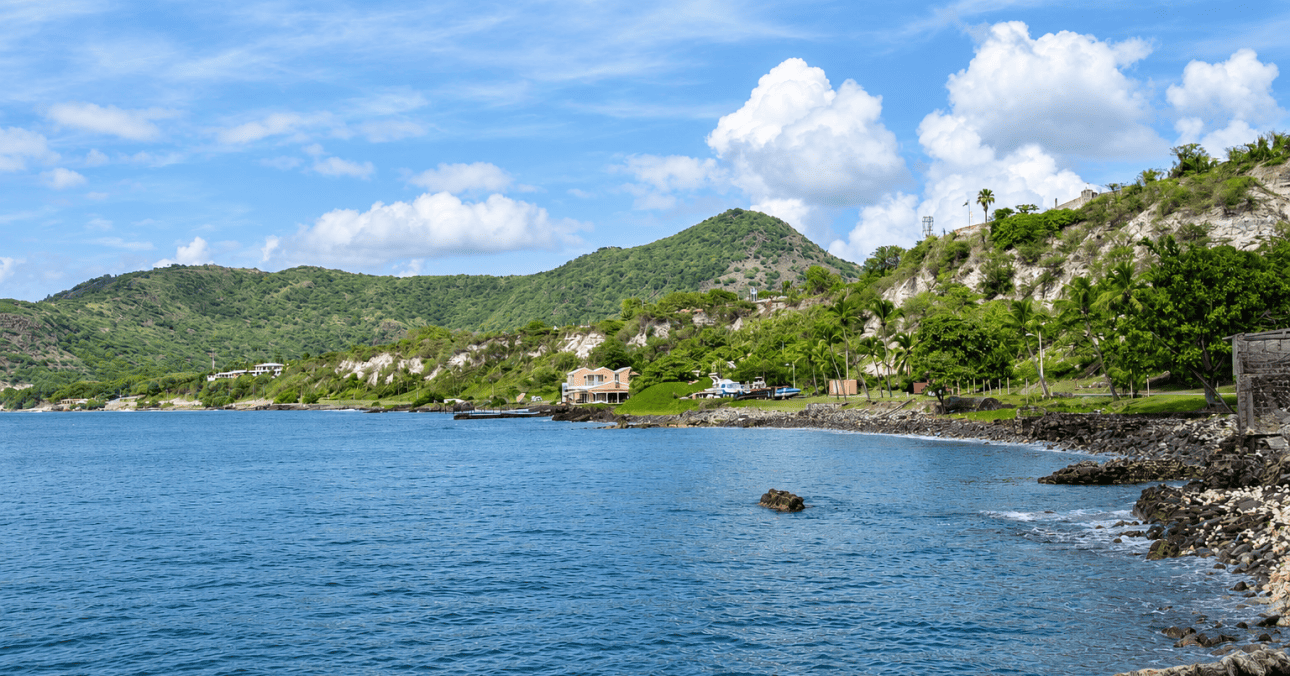
In the northeastern Caribbean, between the islands of Saba and Saint Kitts, lies Sint Eustatius, a volcanic island covering approximately 21 square kilometres.
Its population stood at 3,348 on 1 January 2026, making it one of the smallest communities within the Kingdom of the Netherlands.
The island's main settlement, Oranjestad, overlooks a coastline where hundreds of ships once arrived to exchange goods from across the Atlantic world. Today, the waterfront is relatively quiet, its historic buildings and ruins recalling a time when this small Caribbean island occupied an important position in international commerce.
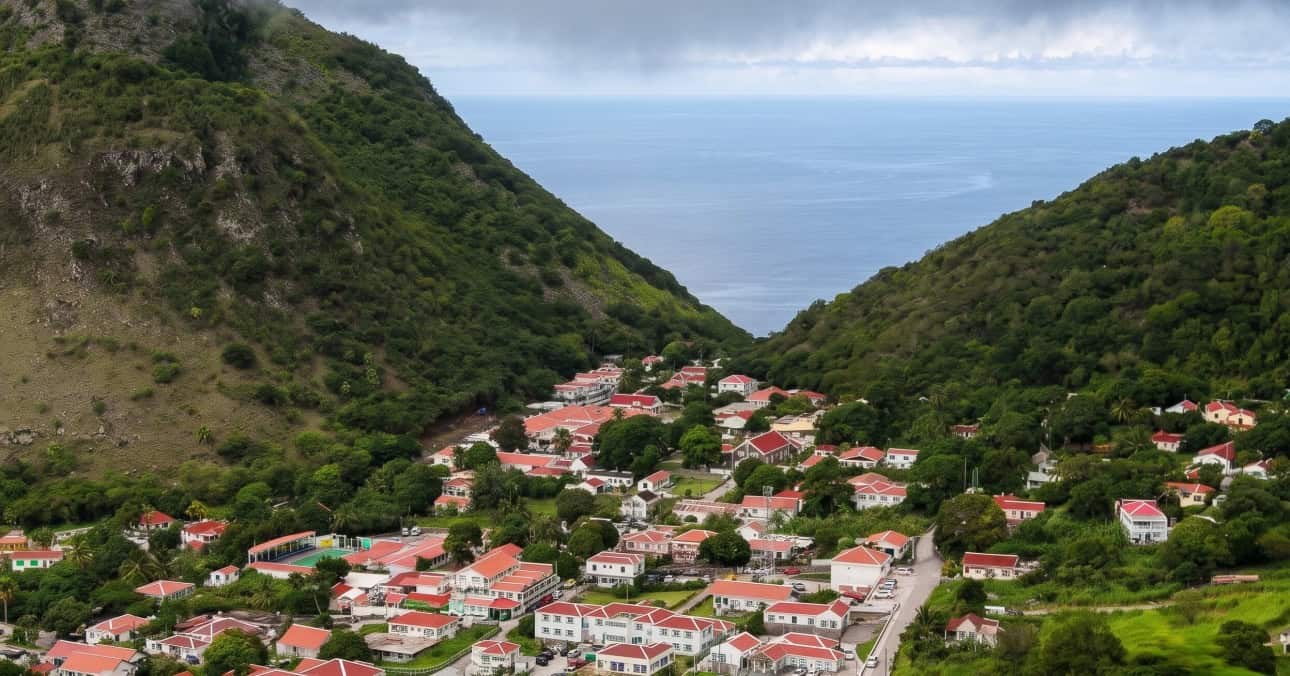
To the south rises the Quill, a dormant volcano whose forested slopes dominate the landscape. To the north, rugged hills and dry vegetation create a contrasting environment.
The scenery is striking, but it tells only part of Statia's story.
During the 18th century, Sint Eustatius became one of the Caribbean's busiest trading centres. Its free-port policies attracted merchants from different European empires and the American colonies, earning it the nickname the Golden Rock.
That commercial success played a role in a defining episode of American history. On 16 November 1776, Fort Oranje returned a cannon salute to a ship flying the flag of the emerging United States. The event became known as the First Salute and remains one of Statia's most celebrated historical moments.
Yet the island's prosperity was closely connected to slavery. Enslaved Africans were transported through its harbour, sold in its markets and forced to work on plantations and in households. Resistance to this system became an important part of Statia's history, including an uprising in 1848.
The island's political development has been equally eventful.
After centuries of colonial rule and its later incorporation into the Netherlands Antilles, Sint Eustatius became part of the country of the Netherlands on 10 October 2010.
The arrangement brought new responsibilities and connections to Dutch national institutions, but also renewed questions about local authority, representation and equality.
These tensions became especially visible in 2018, when the Dutch government intervened directly in the island's administration. Local democratic government was subsequently restored in stages, with the process formally completed in 2024.
Today, Statia is a small community with an unusually large historical inheritance. Its future depends on protecting that heritage while addressing the practical challenges of economic opportunity, public services, environmental conservation and meaningful self-government.
Table of contents
- Ancient Statia: Indigenous roots and European colonisation
- The Golden Rock: trade, slavery and revolution
- Society and culture: language, migration and community
- Politics and governance: from colonial rule to restored democracy
- Economy: from international trading centre to a small island economy
- Sint Eustatius in the Kingdom: local identity and Dutch responsibilities
- Contemporary challenges and opportunities
- Statian identity: music, traditions and daily life
- Looking forward: Sint Eustatius and the 21st-century Kingdom
Do you run a business? RotterdamStyle is looking for a main sponsor. Get exclusive visibility across our website for a fixed fee. Interested? Contact us 🤝
1. Ancient Statia: Indigenous roots and European colonisation
Before European arrival
Long before European merchants discovered the commercial possibilities of Sint Eustatius, the island was inhabited by Indigenous Caribbean communities.
Archaeological evidence indicates human activity dating back thousands of years. Research has identified traces of Indigenous settlement from as early as approximately 1350 BC, although the precise chronology and nature of the earliest occupation remain subjects of archaeological study.
Later Indigenous communities maintained connections with neighbouring islands through maritime travel, trade and cultural exchange.
Like other peoples of the precolonial Caribbean, they depended on the sea and surrounding landscape for food and materials.
Fishing, gathering and agricultural activities contributed to their livelihoods, while archaeological discoveries reveal changes in settlement patterns and material culture over time.
Evidence of Indigenous occupation has been identified at locations including Corre Corre Bay and areas near the island's modern airport.
These sites demonstrate that Sint Eustatius formed part of a wider Caribbean world long before it became a possession of European powers.
The full histories of these early communities remain incompletely documented. Nevertheless, their presence challenges the idea that the island's history began with Dutch settlement.
European competition in the Caribbean
European encounters with Sint Eustatius began during the age of Atlantic exploration and colonial expansion.
The island was recorded by European navigators during the late 16th century, including the English explorer Francis Drake.
Its location in the northeastern Caribbean attracted interest from several European powers, although the island's relatively small size limited the development of major settlements during the earliest colonial period.
French settlers established a presence during the early 17th century.
In 1636, the Dutch West India Company took possession of Sint Eustatius, establishing a settlement that would eventually develop into an important commercial centre.
The island's natural anchorage and position near other Caribbean colonies made it attractive to Dutch merchants.
Unlike territories whose economies depended primarily on large plantations, Sint Eustatius possessed the potential to become an intermediary in regional and transatlantic trade.
Its harbour offered access to shipping routes connecting Europe, Africa, the Caribbean and North America.
Control of the island changed repeatedly during conflicts between European powers. Dutch, French and British forces occupied it at different times, reflecting its strategic and commercial importance.
By the 18th century, however, Sint Eustatius had developed into a particularly influential trading centre.
Oranjestad and the island's geography
Oranjestad grew along the western coast, where an offshore anchorage allowed ships to load and unload goods.
The settlement developed into two principal areas.
Upper Town occupied the elevated ground overlooking the sea, with fortifications, government buildings, churches and residential properties.
Lower Town extended along the shoreline, where warehouses, merchants' premises and commercial facilities served the busy harbour.
Fort Oranje, established during the Dutch colonial period, occupied a prominent position above the anchorage.
The fort provided a strategic view of approaching ships and became an important symbol of Dutch authority.
These geographical features helped shape Statia's development. The island's sheltered western anchorage and proximity to neighbouring colonies gave it advantages disproportionate to its size.
Within a few generations, Sint Eustatius would become internationally known as the Golden Rock.
Do you run a business? RotterdamStyle is looking for a main sponsor. Get exclusive visibility across our website for a fixed fee. Interested? Contact us 🤝
2. The Golden Rock: trade, slavery and revolution
The rise of a Caribbean trading centre
During the 18th century, Sint Eustatius became one of the most commercially active islands in the Caribbean.
Its success was closely associated with the Dutch authorities' relatively open approach to international trade.
While other European colonial powers frequently restricted trade between their colonies and foreign merchants, Sint Eustatius developed into a free port where traders could exchange goods with fewer restrictions.
Merchants arrived from British, French, Spanish, Dutch and other territories, making use of the island's position between competing colonial trading networks.
Sugar, tobacco, coffee, textiles, manufactured goods, weapons and other commodities passed through its warehouses and harbour.
The volume of commerce was extraordinary for such a small island.
During the height of its prosperity, historical accounts suggest that several thousand ships visited annually. The harbour could be crowded with vessels waiting to unload cargo or acquire goods for onward shipment.
Statia's role was largely that of a commercial intermediary. Goods produced elsewhere could be imported, stored, exchanged and exported again.
This activity generated wealth for merchants and created employment in shipping, warehousing, transport and other services.
The island's commercial success earned it the nickname the Golden Rock, reflecting its importance to international merchants.
But prosperity was unevenly distributed, and the trading system was deeply connected to colonial exploitation.
Slavery and the Atlantic economy
The history of Sint Eustatius as a commercial centre cannot be separated from slavery.
Enslaved Africans were transported through its harbour, bought and sold by merchants, and forced to work on plantations and in other activities across the island.
The Dutch West India Company and private traders participated in the wider Atlantic system that treated human beings as commercial property.
Sint Eustatius served as a transit point in the movement of enslaved people between Africa and the Americas.
Historical research has identified Fort Amsterdam, situated near the coast, as one of the locations associated with the confinement and sale of enslaved Africans.
Enslaved people were also central to the island's agricultural economy.
Plantations produced sugar, cotton, tobacco and other crops, while enslaved workers performed labour in households, construction and commercial activities.
The development of Oranjestad's buildings and fortifications also depended in part on enslaved labour.
Research undertaken with the Dutch Central Government Real Estate Agency has highlighted the role of enslaved workers in constructing and maintaining Fort Oranje and nearby colonial properties.
This history complicates the familiar image of the Golden Rock as a place of commercial freedom.
Its merchants benefited from relatively open trade, yet many people whose labour supported that prosperity were denied their freedom.
A multicultural merchant community
International trade brought people of different religious and cultural backgrounds to Sint Eustatius.
Among the island's merchant communities were Sephardic and Ashkenazi Jews, some with family and commercial connections to Curaçao, Amsterdam and other Atlantic trading centres.
During the 18th century, the Jewish community became an important part of the island's commercial and social life.
The Honen Dalim synagogue, completed in 1739, provided a religious centre for the community.
Its surviving ruins remain an important part of Oranjestad's historical heritage.
A Jewish cemetery also preserves evidence of the community's presence, including gravestones reflecting its international connections.
Other inhabitants included European settlers, sailors, free people of African descent and enslaved people.
These communities contributed to the island's development, although their experiences differed greatly according to wealth, legal status and colonial social hierarchies.
The trading economy created opportunities for some while reinforcing profound inequalities for others.
The First Salute of 1776
One of the most significant moments in Statia's history occurred on 16 November 1776.
Earlier that year, thirteen British colonies in North America had declared their independence, beginning the formation of the United States of America.
The American struggle for independence created a growing demand for weapons, ammunition and other military supplies.
Statia's position as an international trading centre made it an important source of these goods.
Merchants on the island supplied American revolutionaries despite British objections, contributing to tensions between Britain and the Dutch Republic.
On 16 November, the American naval vessel Andrew Doria, commanded by Captain Isaiah Robinson, entered the harbour flying the flag of the emerging United States.
The ship fired a salute towards Fort Oranje.
Under the authority of Dutch governor Johannes de Graaff, the fort returned the salute with eleven cannon shots.
The exchange became known as the First Salute.
It is widely commemorated as the first official salute by a foreign authority to the flag of the emerging United States.
The event was symbolically important, although it should not be confused with a formal diplomatic recognition treaty between the Dutch Republic and the United States.
Historical research has also identified other early encounters in which American vessels received salutes abroad, making absolute claims about the first such exchange difficult to establish beyond dispute.
Nevertheless, the event at Fort Oranje became an enduring symbol of Statia's connection to the American Revolution.
For the island, it represented a remarkable moment when a small Caribbean trading centre became associated with a major turning point in world history.
The British invasion of 1781
Statia's commercial relationship with the American revolutionaries angered Britain, which regarded the island's merchants as important suppliers to its opponents.
In February 1781, British forces under Admiral George Brydges Rodney captured Sint Eustatius.
The invasion brought an abrupt end to the island's period of extraordinary prosperity.
British forces seized commercial goods, ships and other property, while merchants faced confiscation and financial ruin.
The treatment of Jewish merchants was particularly severe. Members of the community were targeted during the occupation, with some expelled and their property confiscated.
Rodney's actions attracted criticism, including within Britain, where questions were raised about the conduct of the occupation and the handling of seized property.
French forces subsequently captured the island later in 1781, and Dutch rule was restored in 1784.
By then, the commercial conditions that had sustained the Golden Rock were changing.
International trade routes shifted, competing ports became more important, and repeated military occupations disrupted commercial confidence.
The island never fully recovered its former position as a major Atlantic trading centre.
Resistance and the uprising of 1848
Long after the Golden Rock's commercial peak, slavery remained part of life on Sint Eustatius.
During the 19th century, abolitionist movements and resistance by enslaved people challenged colonial systems throughout the Caribbean.
On 12 June 1848, an uprising took place on Sint Eustatius.
Local historical commemorations identify Thomas Dupersoy, Prince, Valentine, Oscar, Joseph and Abraham among those who led resistance involving enslaved and free inhabitants.
The participants demanded freedom and better treatment, challenging the authority of the colonial government.
Lieutenant Governor Johannes de Veer rejected their demands, and colonial forces responded with violence.
The uprising was suppressed. Some participants were killed, while others were punished or exiled.
Although the revolt did not immediately bring emancipation, it demonstrated that enslaved Statians were actively resisting the system imposed upon them.
Its legacy remains important to the island's historical memory.
The Dutch government did not formally abolish slavery in its Caribbean colonies until 1 July 1863.
Statia's emancipation register documents 1,161 people who were freed that year.
Colonial authorities compensated enslavers, while formerly enslaved people received no comparable financial recognition for the exploitation they had endured.
Legal freedom also did not eliminate economic inequality or the influence of former plantation owners.
Access to land, employment and economic opportunity remained difficult for many families.
Remembering slavery and resistance
In recent years, Statia has devoted increasing attention to preserving the history of slavery and recognising the people who resisted it.
Historical research, archaeological investigations and archival projects have revealed information about enslaved people, their families and the commercial structures that exploited them.
The Dutch National Archives has made records concerning the 1863 emancipation available for historical and genealogical research.
These documents help connect present-day families with individuals whose lives were recorded under colonial administration.
In 2025, Sint Eustatius secured approximately US$5.35 million in funding from the Kingdom of the Netherlands for a multi-year programme addressing the legacy of slavery.
The programme includes plans for heritage facilities, memorial markers, the preservation of historic sites and educational initiatives.
It also seeks to recognise the experiences of enslaved people whose stories were historically overshadowed by accounts of merchants, military commanders and colonial authorities.
For Statia, remembering the Golden Rock means acknowledging both its extraordinary commercial history and the human suffering on which much of that prosperity depended.
Do you run a business? RotterdamStyle is looking for a main sponsor. Get exclusive visibility across our website for a fixed fee. Interested? Contact us 🤝
3. Society and culture: language, migration and community
English and the Statian voice
Sint Eustatius has a cultural and linguistic identity closely connected to the wider English-speaking Caribbean.
Although the island has been governed by the Dutch for much of its modern history, English is the principal language of everyday life.
Local speech reflects the development of Caribbean English through centuries of contact among African, European and neighbouring island communities.
Dutch remains important in legal and national government contexts, while English is central to education, administration and ordinary communication.
Other languages are spoken by residents whose families have connections with different parts of the Caribbean and beyond.
This linguistic environment distinguishes Statia from Bonaire, where Papiamentu is the dominant local language.
It also illustrates an important feature of the Kingdom of the Netherlands: communities may share Dutch nationality while speaking different languages and maintaining distinct cultural traditions.
A small but diverse population
Statia's population has changed considerably over time.
During the Golden Rock era, the island supported a much larger and more internationally connected population than its modern size might suggest.
Merchants, sailors, plantation owners, enslaved people and migrants from different regions lived and worked on the island.
The decline of international commerce contributed to population losses during the 19th century.
More recently, employment opportunities, education and migration have continued to influence the island's population.
According to Statistics Netherlands, Sint Eustatius had 3,348 residents at the beginning of 2026, an increase of 78 compared with a year earlier.
The growth was largely the result of migration.
Residents have family and professional connections with Sint Maarten, Saba, other Caribbean islands, the European Netherlands and countries such as the Dominican Republic.
These connections contribute to a diverse community, although the island's relatively small population creates particular challenges for housing, employment and public services.
Religion and social traditions
Religious institutions have played an important role in Statian society.
Methodist, Roman Catholic and Seventh-day Adventist communities are particularly prominent, alongside other Christian traditions and residents without a religious affiliation.
According to research covering 2021, approximately 78% of the island's population belonged to a church or religious community.
Churches have contributed to education, social activities and community support, particularly in a society where family relationships and personal networks remain important.
The island's religious history also includes its former Jewish community, whose synagogue and cemetery testify to the diversity of the Golden Rock period.
These different traditions form part of a cultural history extending far beyond the island's geographical size.
Family, migration and belonging
For many Statian families, connections with neighbouring islands are part of everyday life.
Young people may leave to pursue education or employment, while relatives maintain homes and family relationships across the Caribbean and in the European Netherlands.
Such movement creates opportunities, but it can also affect the availability of skilled workers and the continuity of local institutions.
Maintaining a strong sense of community becomes particularly important when a small population experiences significant changes through migration.
Statian identity is therefore shaped by both attachment to the island and connections beyond it.
The familiar name Statia expresses an intimacy that is difficult to capture through formal constitutional terminology. For its residents, the island is not simply an administrative unit of the Netherlands, but a community with its own history, traditions and priorities.
Do you run a business? RotterdamStyle is looking for a main sponsor. Get exclusive visibility across our website for a fixed fee. Interested? Contact us 🤝
4. Politics and governance: from colonial rule to restored democracy
From Dutch colony to the Netherlands Antilles
During the 20th century, Sint Eustatius formed part of the Dutch colonial Caribbean.
The Charter for the Kingdom of the Netherlands, introduced in 1954, established the Netherlands Antilles as a country within the Kingdom.
The arrangement provided substantial internal autonomy while maintaining shared Kingdom responsibilities, including defence, foreign affairs and Dutch nationality.
Sint Eustatius remained part of the Netherlands Antilles, with its own island administration but important responsibilities exercised through the central government based in Curaçao.
As political and economic circumstances changed, debates emerged over whether the Netherlands Antilles should continue as a single country.
Different islands favoured different constitutional arrangements.
Aruba became an autonomous country within the Kingdom in 1986, while the remaining Netherlands Antillean islands continued discussions about their future.
10 October 2010
On 10 October 2010, the Netherlands Antilles was formally dissolved.
Curaçao and Sint Maarten became autonomous countries within the Kingdom, joining Aruba and the Netherlands.
Sint Eustatius, Bonaire and Saba became public bodies of the country of the Netherlands, collectively known as the Caribbean Netherlands.
This arrangement is commonly described as special municipal status.
However, the three islands are not ordinary Dutch municipalities within a province.
Their administrative structures and the legislation applying to them differ in several respects from arrangements in the European Netherlands.
For Statia, the change meant that many responsibilities previously exercised through the Netherlands Antilles became matters for the Dutch national government.
Local authorities retained responsibility for various island affairs, while national institutions took on important roles in public services and administration.
The constitutional transformation also raised questions about the balance between local decision-making and the authority of The Hague.
The 2018 Dutch intervention
One of the most consequential episodes in Statia's modern political history occurred in February 2018.
The Dutch government intervened directly in the island's administration, following investigations that identified serious problems involving governance, financial management and the functioning of local institutions.
The intervention replaced the Island Council and local executive authorities with a government commissioner appointed by the Netherlands.
The Dutch government argued that the intervention was necessary to restore effective administration and address failures in public governance.
However, the decision also raised substantial questions about democratic representation and the constitutional position of Sint Eustatius.
For several years, residents were governed under extraordinary administrative arrangements rather than through the island's normal democratically elected institutions.
The intervention was therefore more than an administrative dispute.
It exposed tensions within the relationship between a small Caribbean community and a national government located thousands of kilometres away.
The gradual return of local democracy
The restoration of local government took place in stages.
In October 2020, a new Island Council was elected.
However, the council initially operated with restricted powers, while the government commissioner continued to exercise important responsibilities.
During the following years, authority was gradually returned to locally elected representatives.
In October 2022, the Island Council regained the ability to appoint members of the Executive Council.
Further powers, including greater responsibility for organisational and budgetary decisions, were restored in 2023.
A significant milestone came on 10 April 2024, when Alida Francis was sworn in as Island Governor.
Francis, who was born on Sint Eustatius, had previously served as government commissioner during the restoration process.
Her appointment marked the restoration of the normal island administration.
On 1 September 2024, the legislation governing the extraordinary intervention ceased to apply, formally completing the restoration of local democratic government.
The episode remains an important chapter in Statia's modern political history.
It illustrates both the responsibilities of the Dutch government in ensuring effective administration and the importance of protecting democratic representation within the Caribbean Netherlands.
Local government today
Sint Eustatius is governed through an elected Island Council, an Executive Council and an Island Governor.
The Island Council represents residents and holds the local executive accountable.
The Executive Council manages day-to-day government responsibilities, while the Island Governor performs administrative and public-order functions.
These institutions operate within the wider legal framework of the Netherlands.
Eligible Dutch citizens living on Statia may also participate in elections to the Dutch House of Representatives and European Parliament, and in the process of electing the Dutch Senate through an electoral college.
Nevertheless, the island's small population limits its electoral influence at national level.
The challenge is to ensure that local institutions possess sufficient authority, expertise and resources to represent a community whose circumstances differ substantially from those of the European Netherlands.
The Dutch government has recognised that the small Island Councils of the Caribbean Netherlands need greater capacity.
Legislation approved in 2026 provides for increasing the number of seats on Sint Eustatius's Island Council from five to seven following the 2027 island elections.
The change is intended to strengthen representation and improve the functioning of local government.
Do you run a business? RotterdamStyle is looking for a main sponsor. Get exclusive visibility across our website for a fixed fee. Interested? Contact us 🤝
5. Economy: from international trading centre to a small island economy
From the Golden Rock to economic decline
Sint Eustatius's economic history is defined by remarkable changes in fortune.
During the 18th century, its harbour connected international trading networks and generated considerable wealth.
But the collapse of the Golden Rock's commercial system left the island without the economic advantages that had once supported its prosperity.
The British invasion of 1781, changes in international trade and competition from other ports contributed to a long period of economic decline.
Agriculture and smaller-scale commercial activities continued, but they could not reproduce the scale of international commerce that had characterised the island's peak.
By the 20th century, Statia had become a relatively small island economy with limited employment opportunities.
Its future depended increasingly on government services, infrastructure, specialised commercial activities and connections with neighbouring Caribbean territories.
The oil terminal
During the late 20th century, a major petroleum storage and transshipment terminal became an important part of Sint Eustatius's economy.
The facility developed on the western side of the island, taking advantage of deep surrounding waters and Statia's strategic location near international shipping routes.
Large storage tanks and marine facilities allowed petroleum products to be stored and transferred between vessels.
The terminal became a significant source of economic activity, providing employment and generating demand for supporting services.
It also connected Statia once again to international trade, although under very different circumstances from those of the Golden Rock era.
However, reliance on a major industrial facility creates particular vulnerabilities for a small economy.
Changes in ownership, operations and international energy markets can have a substantial effect on overall economic performance.
The industry's environmental implications also raise questions about the balance between commercial activity and the protection of the island's natural surroundings.
Tourism and heritage
Unlike some Caribbean destinations, Sint Eustatius has not developed a mass-tourism economy dominated by large resorts and cruise ships.
Its tourism sector is comparatively small, with an emphasis on nature, diving, historical heritage and visitors seeking a quieter island experience.
The island's volcanic landscape, coral reefs, historic buildings and archaeological sites provide distinctive attractions.
Fort Oranje, the ruins of the Honen Dalim synagogue and the remains of Lower Town connect visitors with the island's commercial and colonial past.
The surrounding waters are also known for diving, with coral reefs, marine wildlife and historic shipwrecks offering opportunities for underwater exploration.
Tourism provides income for accommodation providers, restaurants, guides, transport services and other local businesses.
Yet developing the sector requires careful planning.
Limited accommodation, air connectivity, public infrastructure and the island's environmental sensitivity constrain the scale of development that can realistically be supported.
For Statia, the challenge may be less about attracting large numbers of visitors than about ensuring that tourism contributes to local employment, cultural preservation and sustainable economic activity.
The economy in 2026
According to Statistics Netherlands, the economy of Sint Eustatius grew by 1.6% in 2024, the latest year for which complete GDP figures were available in October 2026.
Growth was supported by business services, public administration and construction.
However, the longer-term picture remained more difficult.
In inflation-adjusted terms, Statia's economy was almost 30% smaller in 2024 than it had been in 2014.
Much of the difference reflected reduced economic activity among a relatively small number of large businesses.
This illustrates an important feature of a small island economy: developments affecting only a few employers or industries can have a substantial impact on national economic figures.
Public administration, education, industry, construction and commercial services remain important sources of employment.
Statistics Netherlands recorded approximately 1,800 employed residents in 2024, with a labour participation rate of 71.4% among people aged 15 to 74.
The US dollar and living costs
The official currency of Sint Eustatius is the United States dollar, introduced as legal tender in the Caribbean Netherlands on 1 January 2011.
The same currency is used on Bonaire and Saba.
Using the dollar reflects the economic connections of the Caribbean Netherlands with the Americas and regional trade.
However, Statia remains heavily dependent on imports.
Food, fuel, vehicles, construction materials and numerous everyday goods must be transported to the island.
Its small market, transport costs and limited local production contribute to high prices.
In the third quarter of 2026, consumer prices on Sint Eustatius were 4.5% higher than a year earlier, according to Statistics Netherlands.
Electricity costs were among the areas experiencing substantial price increases.
For households with limited incomes, the costs of basic necessities can place considerable pressure on financial security.
These challenges make economic development and social protection closely connected priorities.
Do you run a business? RotterdamStyle is looking for a main sponsor. Get exclusive visibility across our website for a fixed fee. Interested? Contact us 🤝
6. Sint Eustatius in the Kingdom: local identity and Dutch responsibilities
Part of the Netherlands
The Kingdom of the Netherlands consists of four countries: the Netherlands, Aruba, Curaçao and Sint Maarten.
Sint Eustatius is not a separate country within the Kingdom.
Instead, it forms part of the country of the Netherlands, alongside Bonaire and Saba.
These three islands are collectively known as the Caribbean Netherlands and have a constitutional position commonly described as special municipal status.
The distinction is important.
Aruba, Curaçao and Sint Maarten possess their own national governments and responsibility for most internal affairs.
Sint Eustatius has elected local government, but important areas of legislation and public administration fall directly under the responsibility of Dutch national institutions.
These include responsibilities involving taxation, social security, healthcare, education and the justice system.
The arrangement places Statia within a country whose population, political institutions and economic resources are overwhelmingly concentrated in Europe.
Citizenship and the European Union
Dutch nationality is shared throughout the Kingdom.
Statian residents who hold Dutch nationality have Dutch passports and are citizens of the European Union.
Nevertheless, Sint Eustatius is not part of the European Union's territory in the same way as the European Netherlands.
It has a special relationship with the EU as an Overseas Country and Territory.
This means that certain European rules and arrangements operate differently on the island.
The island is also outside the Schengen Area.
These constitutional distinctions reflect the unusual geography of the Netherlands, a country whose territory extends across the Atlantic.
The debate about equality
The relationship between Sint Eustatius and the European Netherlands raises important questions about equality and representation.
Residents share Dutch nationality, yet their social and economic circumstances differ significantly from those of people living in Europe.
Different arrangements apply in areas including taxation, social security and certain public services.
Some differences reflect practical circumstances, such as the island's small population, climate, distance and economic structure.
But different circumstances do not automatically justify unequal outcomes.
Questions about the adequacy of social protection, the quality of public services and the cost of living remain important political issues.
For Statia, equality is therefore not simply a matter of applying identical legislation to communities separated by thousands of kilometres.
It also involves ensuring that government policy responds appropriately to the needs of the people affected.
Self-government and responsibility
The Dutch intervention of 2018 brought the relationship between local democracy and national responsibility into particularly sharp focus.
The Dutch government argued that intervention was necessary because local administrative institutions were failing to carry out their responsibilities effectively.
However, the extraordinary suspension of local democratic authority also created concerns about political representation and the balance of power within the Netherlands.
A 2023 assessment by the Netherlands Court of Audit raised questions about aspects of the intervention and the sustainability of the arrangements intended to restore normal government.
The Court also drew attention to the island's limited administrative capacity and questioned whether Dutch national institutions adequately accounted for the circumstances of such a small community.
The restoration of local democracy in 2024 therefore marked an important achievement, but it did not eliminate the structural challenges facing Statia's government.
Effective local administration requires professional capacity, adequate financial resources and meaningful authority over decisions affecting the island.
At the same time, national institutions remain responsible for ensuring that Dutch citizens in the Caribbean have access to appropriate public services and legal protections.
The continuing challenge is to balance these responsibilities without undermining local democracy.
Do you run a business? RotterdamStyle is looking for a main sponsor. Get exclusive visibility across our website for a fixed fee. Interested? Contact us 🤝
7. Contemporary challenges and opportunities
The Quill and the island's natural environment
Sint Eustatius possesses an extraordinary natural environment for an island of its size.
The southern part is dominated by the Quill, a dormant volcano whose name derives from the Dutch word kuil, meaning pit or hollow.
Its volcanic crater contains dense vegetation, creating a landscape markedly different from the island's coastal and northern environments.
The Quill's slopes support a variety of plant and animal species, while the crater's sheltered conditions have allowed distinctive forest habitats to develop.
To the north, the Boven hills contain drier vegetation, rocky ridges and coastal habitats.
These two areas are protected within the Quill and Boven National Park.
The park received legal protected status in 1997 and is managed by the St. Eustatius National Parks Foundation, commonly known as STENAPA.
The organisation also manages the island's marine protected areas and botanical garden.
Its work is particularly important because small island ecosystems can be highly vulnerable to habitat disturbance, invasive species and climate change.
Marine conservation
The St. Eustatius National Marine Park was established in 1996.
It surrounds the island, extending from the high-water line to a depth of approximately 30 metres and protecting an area of around 27 square kilometres.
The park includes coral reefs, marine habitats and historic shipwreck sites.
Two marine reserves, one in the north and another in the south, restrict fishing and anchoring to support conservation.
The waters around Statia provide habitat for sea turtles, rays, sharks, reef fish and other marine life.
Protecting these ecosystems is essential to biodiversity and also supports the island's diving and tourism activities.
Yet conservation remains challenging.
Coral disease, rising sea temperatures, pollution, coastal development and changing ocean conditions threaten reefs throughout the Caribbean.
Marine protection requires both local management and wider international efforts to address climate change.
Climate change and extreme weather
Statia lies within a region exposed to tropical storms and hurricanes.
Severe weather can damage buildings, roads, electricity supplies and other essential infrastructure, with consequences that are particularly significant for a small and relatively isolated island.
Climate change adds further pressures.
Rising sea levels, coastal erosion, extreme rainfall and increasing temperatures create risks for communities and natural habitats.
The historic coastal areas of Oranjestad are particularly sensitive to erosion and the deterioration of old structures.
Protecting heritage sites such as Fort Oranje requires careful engineering and conservation, particularly where buildings occupy vulnerable cliff edges.
Strengthening public infrastructure and preparing for natural disasters will remain important priorities.
Housing, poverty and social security
Despite improvements in household purchasing power, poverty remains a significant challenge.
According to Statistics Netherlands, approximately 27% of Sint Eustatius's residents lived in poverty in 2024, based on the poverty measure developed for the Caribbean Netherlands.
The share was lower than in 2023, when approximately 38% of residents were living below the threshold.
Government measures, including increases in the minimum wage and certain benefits, contributed to improvements in purchasing power.
However, poverty remained particularly common among households with children and people relying primarily on social benefits.
The figures also demonstrate that having employment does not necessarily guarantee financial security.
Many residents living in poverty belonged to households whose main source of income was paid work.
Housing availability and affordability are additional concerns.
Limited land, construction costs and the need to import building materials can make housing development expensive.
These challenges are especially significant when younger residents wish to establish independent households or return after studying abroad.
Education and opportunities for young people
Education is central to Statia's future.
The island's relatively small population limits the range of educational programmes and specialised training that can be offered locally.
Students seeking higher education often need to continue their studies elsewhere, including in the European Netherlands, Sint Maarten or other Caribbean territories.
This creates opportunities to acquire qualifications and professional experience, but it can also contribute to the departure of younger residents.
Some graduates return to Statia, while others establish their careers abroad.
For local institutions, retaining qualified personnel can be difficult when employment opportunities and professional development are limited.
Investment in education, vocational training, digital connectivity and sustainable economic activities may help create more opportunities for young Statians.
Healthcare and public services
The island's small population also creates challenges for healthcare.
Local medical services provide essential care, but patients requiring certain specialist treatments may need to travel to other islands or the European Netherlands.
Transport arrangements, staffing and coordination between healthcare providers are therefore particularly important.
Similar challenges affect other public services.
Maintaining reliable electricity, drinking water, telecommunications and waste management requires substantial infrastructure relative to the number of people served.
The relationship with the Dutch national government can provide financial and institutional support, but practical implementation must account for local circumstances.
A different picture of wellbeing
Despite these challenges, recent surveys suggest that many Statia residents have a positive assessment of their quality of life.
In 2025, Statistics Netherlands found that Sint Eustatius had the highest reported life satisfaction among the three Caribbean Netherlands islands.
Residents gave their overall life satisfaction an average score of 8.4 out of 10.
Approximately 60% said that everyday life on the island had improved over the preceding five years.
The island also recorded relatively high satisfaction with the functioning of local government.
These findings do not eliminate the significance of poverty, infrastructure concerns or other social problems.
They do, however, demonstrate that the experiences and perspectives of residents are more varied than economic figures alone can reveal.
Community relationships, cultural identity and a sense of belonging may contribute to wellbeing in ways that cannot be measured solely through income or economic output.
Do you run a business? RotterdamStyle is looking for a main sponsor. Get exclusive visibility across our website for a fixed fee. Interested? Contact us 🤝
8. Statian identity: music, traditions and daily life
Music and cultural heritage
Statia's cultural traditions reflect centuries of African, European and Caribbean influences.
Music and dance remain important parts of community life, particularly during festivals and public celebrations.
Calypso, soca, steelpan music, Caribbean rhythms and contemporary popular music all contribute to the island's musical landscape.
These traditions connect Statia with neighbouring islands such as Sint Maarten, Saint Kitts and Nevis, Antigua and other parts of the English-speaking Caribbean.
Music also serves as a means of expressing local identity.
Performances at cultural celebrations bring together residents of different generations, while traditional songs and community activities help preserve memories of earlier ways of life.
As elsewhere in the Caribbean, the musical heritage of Statia has been shaped by migration, social change and the experiences of people whose cultural traditions survived colonial rule.
Carnival and community celebrations
Carnival is one of Sint Eustatius's most important annual cultural events.
The celebrations generally take place during the summer, bringing together music, costumes, parades and community activities.
Calypso and soca performances form part of the festivities, alongside events that involve local musicians, dancers and other creative participants.
Carnival provides an important opportunity for community expression, particularly in a society where cultural activities help connect different generations.
The celebrations also reflect Statia's relationship with neighbouring Caribbean islands, whose musical and Carnival traditions have influenced one another over time.
Statia Day and the First Salute
Every year on 16 November, Sint Eustatius celebrates Statia Day.
The date commemorates the First Salute of 1776, when Fort Oranje returned a cannon salute to the American vessel Andrew Doria.
The event has become one of the island's most important symbols of historical identity.
Although Sint Eustatius is a small community, the First Salute connects its history to the foundation of the United States and the wider political transformation of the Atlantic world.
Statia Day celebrations include official ceremonies, cultural activities, music and community gatherings.
The island's flag and coat of arms, adopted in 2004, have become important symbols of local identity.
The coat of arms reflects elements of Statia's history and environment, including the Golden Rock, Fort Oranje and marine life.
Its motto, Superba et Confidens, means "Proud and Confident".
250 years of the First Salute
The 250th anniversary of the First Salute falls on 16 November 2026, creating a particularly significant milestone for Statia.
The anniversary has attracted renewed international attention to the island's role in the American Revolution.
A special exhibition exploring the First Salute and the contribution of Jewish merchants to the American revolutionary era opened in Philadelphia in April 2026.
On Statia, the anniversary programme includes historical commemorations, cultural performances and public celebrations.
King Willem-Alexander, Dutch Prime Minister Rob Jetten and State Secretary Eric van der Burg are scheduled to attend the official commemoration at Fort Oranje on 16 November.
The occasion connects the island's historical relationship with the United States to its present constitutional position within the Netherlands.
It also provides an opportunity to revisit the broader history of the Golden Rock, including the trade in enslaved people and the experiences of those whose labour supported its commercial prosperity.
Local food and everyday traditions
Statian cuisine shares many features with the wider northeastern Caribbean.
Traditional dishes include stewed meats, fish, rice and peas, johnnycakes and other foods associated with family cooking and community gatherings.
Local ingredients and recipes reflect African, Caribbean and European influences, alongside the contributions of more recent migrant communities.
Food plays an important role during public celebrations, family occasions and informal social gatherings.
These everyday traditions help sustain cultural identity, particularly when younger residents move abroad for education or employment.
Historical heritage and preservation
Statia's built heritage is unusually rich for an island of its size.
Fort Oranje, the ruins of the Honen Dalim synagogue, historic churches, cemeteries, warehouses and colonial-era buildings provide visible connections to different periods of the island's development.
Lower Town is particularly important to understanding the Golden Rock era.
Much of its former commercial infrastructure has disappeared or fallen into ruin, while some historic remains are located along the shoreline or underwater.
Archaeological research has revealed evidence of warehouses, maritime trade and the movement of goods through the harbour.
The surrounding seabed also contains shipwrecks, anchors and other material associated with centuries of maritime activity.
Protecting this heritage requires careful conservation, especially where coastal erosion and environmental change threaten historic structures.
The Public Entity of Sint Eustatius, Dutch heritage institutions and local researchers have become increasingly involved in projects to document and preserve these sites.
The renewed attention to slavery history has also broadened the understanding of what deserves protection.
Preserving Statia's heritage means recognising the experiences of enslaved people, workers and ordinary families, alongside the lives of colonial governors and international merchants.
Life on a small island
Everyday life on Sint Eustatius differs considerably from that of larger Caribbean islands.
The population is small, and many residents know one another through family relationships, schools, churches, workplaces or community organisations.
This can create a strong sense of familiarity and belonging.
At the same time, living on a small island brings practical limitations.
Employment opportunities are concentrated in a limited number of sectors, certain goods and services must be obtained elsewhere, and travel to neighbouring islands is important for personal and professional reasons.
Oranjestad remains the centre of much of the island's administrative and commercial life.
Residential communities extend beyond the historic centre, with the island's terrain and infrastructure influencing patterns of development.
For residents, Statia is more than its celebrated historical landmarks or its natural attractions.
It is a place where people work, raise families, participate in public life and make decisions about their future.
The challenge is to preserve the character of this community while providing opportunities that allow younger generations to build their lives on the island.
Do you run a business? RotterdamStyle is looking for a main sponsor. Get exclusive visibility across our website for a fixed fee. Interested? Contact us 🤝
9. Looking forward: Sint Eustatius and the 21st-century Kingdom
Sint Eustatius enters the coming decades with an extraordinary historical inheritance and a distinctive set of contemporary challenges.
The island that once connected major Atlantic trading networks is now a small community whose economy depends on a limited number of industries and public institutions.
Its natural environment, historic buildings and cultural traditions offer opportunities for sustainable development.
But these resources require careful protection.
Climate change, coastal erosion, pressure on marine ecosystems and the maintenance of historic sites will demand continuing investment and cooperation.
Economic development must also address the needs of residents.
Improving housing, healthcare, education and employment opportunities will be essential if Statia is to retain young people and support a stable community.
The restoration of local democracy in 2024 established an important foundation for the island's political future.
Yet effective self-government depends on more than the existence of elected institutions.
Local representatives need sufficient authority, professional support and financial resources to make decisions and deliver public services.
The Dutch national government, meanwhile, must recognise the practical limitations facing a community of just over three thousand people.
The relationship between Statia and the European Netherlands will therefore continue to require negotiation.
How can residents exercise meaningful local authority while benefiting from the institutions and resources of the wider country?
How should national legislation accommodate the island's particular economic and cultural circumstances?
And how can the Netherlands ensure equal opportunities for citizens whose daily lives differ greatly from those of people living in Europe?
These questions extend beyond Statia itself.
They concern the wider future of the Caribbean Netherlands and the responsibilities associated with shared citizenship.
The 250th anniversary of the First Salute in 2026 offers a useful moment for reflection.
It recalls a time when a small Caribbean island exercised influence far beyond its shores.
Today, Statia's influence may be different, but its history remains a reminder that the importance of a community cannot be measured simply by its population or territory.
Conclusion
Sint Eustatius is an island whose small size conceals an extraordinary history.
Its transformation into the Golden Rock made it a centre of international commerce. Its merchants helped supply the American Revolution, while the First Salute of 1776 connected the island to the emergence of the United States.
Yet this history of trade and international influence was inseparable from slavery, colonial exploitation and resistance.
The Statian people inherited both the achievements and the injustices of that past, developing a distinctive cultural identity through generations of political and economic change.
Today, Sint Eustatius is part of the Netherlands, but its history, geography and community life remain unmistakably Caribbean.
The restoration of local democracy, the protection of historical heritage and the pursuit of greater economic security all form part of its continuing development.
For the Kingdom of the Netherlands, Statia illustrates a particularly important lesson: even the smallest communities have their own histories, identities and democratic aspirations.
The challenge is to create a future in which those aspirations are respected, the island's natural and cultural heritage is protected, and its residents can benefit fully from the rights and responsibilities of belonging to the Netherlands.
Once the Golden Rock of Atlantic commerce, Sint Eustatius now faces the task of shaping a future defined less by the interests of distant powers and more by the needs and ambitions of its own people.