
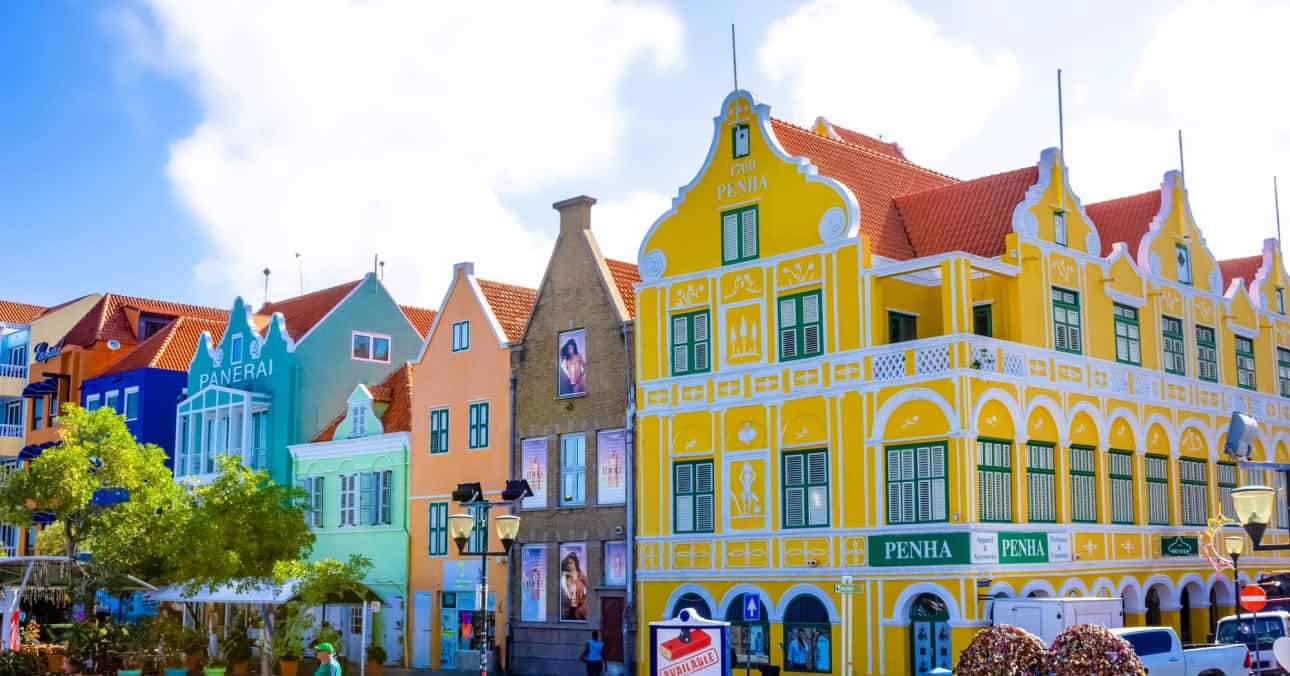
Curaçao is a Caribbean country shaped by centuries of trade, migration, slavery and resistance. Its colourful capital, Willemstad, reflects a history that connects Africa, Europe and the Americas, while its language and cultural traditions reveal a society with a distinctive identity. Since 2010, Curaçao has been an autonomous country within the Kingdom of the Netherlands, with its own government and a continuing debate about the meaning of self-determination.
Kingdom of the Netherlands: An introduction to the series
The Kingdom of the Netherlands is a unique construct: a modern state spanning Western Europe and the Caribbean. Often misunderstood as simply "the Netherlands", the Kingdom consists of four countries, each with its own identity, government and story.
The country of the Netherlands also includes three Caribbean public bodies: Bonaire, Sint Eustatius and Saba, collectively known as the Caribbean Netherlands.
This series explores each part of the Kingdom:
- The Netherlands (Country)
- Aruba (Country)
- Curaçao (Country)
- Sint Maarten (Country)
- Bonaire (Public body of the Netherlands)
- Sint Eustatius (Public body of the Netherlands)
- Saba (Public body of the Netherlands)
Do you run a business? RotterdamStyle is looking for a main sponsor. Get exclusive visibility across our website for a fixed fee. Interested? Contact us 🤝
Introduction
Some 65 kilometres off the coast of Venezuela, Curaçao occupies a distinctive position in the southern Caribbean. Covering approximately 444 square kilometres and home to around 158,000 people in early 2026, it is the largest of the six Dutch Caribbean islands by area.
Together with Aruba and Bonaire, Curaçao forms part of the ABC islands, a group connected by geography, language and a shared colonial past. Yet each island has developed its own society, political institutions and relationship with the Netherlands.
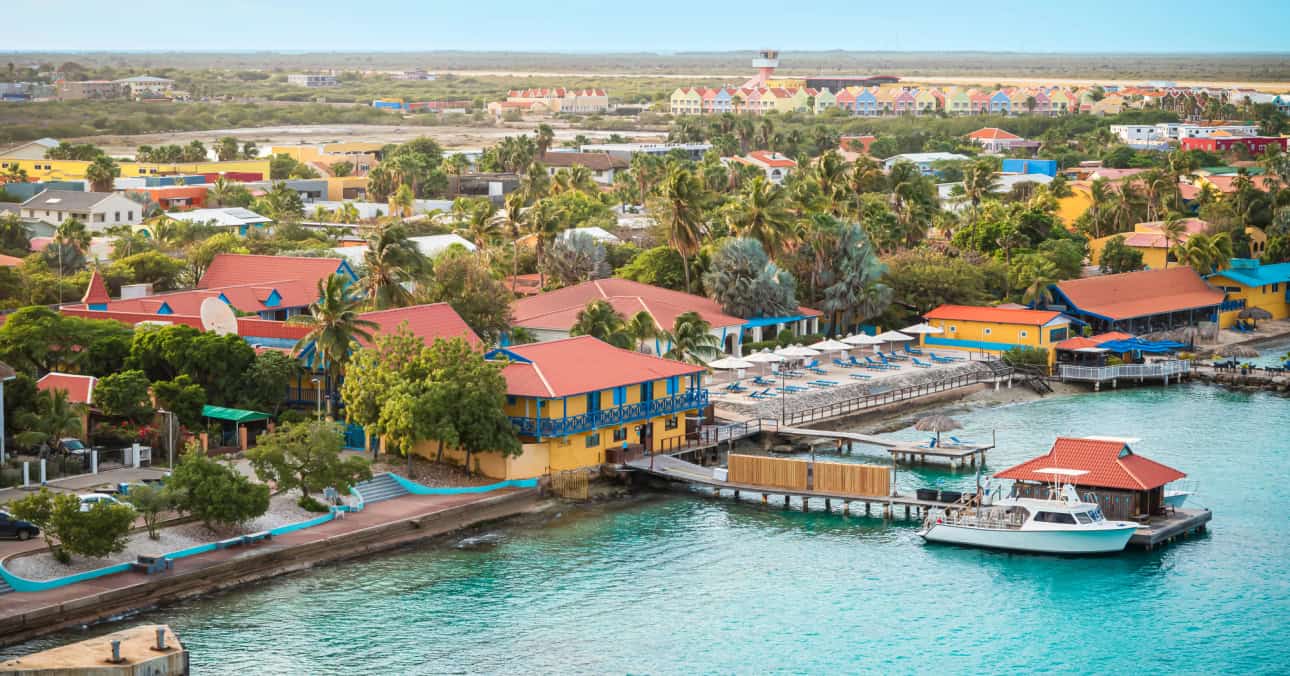
Curaçao's capital, Willemstad, is often the first image associated with the country. Its colourful waterfront buildings, floating bridge and natural harbour are instantly recognisable. Since 1997, the historic centre has been a UNESCO World Heritage Site.
But Willemstad is more than an architectural attraction. Its streets and harbour tell the story of a former colonial trading centre, an important hub in the transatlantic slave trade, a multicultural port city and, eventually, the administrative centre of the Netherlands Antilles.
The island's history has been marked by profound transformations. Indigenous communities inhabited Curaçao long before European colonisation. Dutch commercial expansion brought slavery and international trade. The arrival of the oil industry in the 20th century transformed the economy and attracted migrants from across the world.
Social unrest, labour movements and changing attitudes towards colonial rule contributed to a growing demand for political and cultural recognition. On 10 October 2010, Curaçao became an autonomous country within the Kingdom of the Netherlands.
Today, Curaçao is a society of contrasts. Historic neighbourhoods coexist with modern resorts, Papiamentu with Dutch and English, and a strong sense of national identity with continuing political ties to Europe.
To understand Curaçao, we need to look beyond its beaches and colonial architecture. Its story is about the people who built the country, the inequalities they confronted and the continuing search for prosperity, dignity and self-determination.
Table of contents
- Ancient Curaçao: Indigenous roots and European conquest
- Colonial expansion, slavery and resistance
- Society and culture: language, migration and heritage
- Politics and governance: from colonial rule to autonomy
- Economy: oil, international trade and tourism
- Curaçao in the Kingdom: autonomy and shared responsibilities
- Contemporary challenges and opportunities
- Curaçaoan identity: music, traditions and daily life
- Looking forward: Curaçao and the 21st-century Kingdom
Do you run a business? RotterdamStyle is looking for a main sponsor. Get exclusive visibility across our website for a fixed fee. Interested? Contact us 🤝
1. Ancient Curaçao: Indigenous roots and European conquest
The island's earliest inhabitants
Curaçao's history began thousands of years before European ships arrived in the Caribbean.
Archaeological evidence suggests that people were visiting or inhabiting the island as early as approximately 3400 BC. These early communities came from the South American mainland, travelling by canoe and maintaining connections with the territories that are now Venezuela and Colombia.
The earliest inhabitants depended largely on the sea and the surrounding landscape. Shellfish, fish, fruits and other natural resources sustained their communities, while stone and shell tools provide evidence of their activities.
Over time, more permanent settlements emerged. Archaeological sites reveal developments in pottery, agriculture and community organisation, reflecting changing ways of life across the southern Caribbean.
By the time Europeans reached Curaçao, the island was inhabited by the Caquetío, an Indigenous people associated with the Arawakan linguistic and cultural world.
The Caquetío cultivated crops including maize and cassava, built settlements and maintained contact with communities on the nearby mainland. Their knowledge of agriculture, navigation and the local environment was essential to life on the island.
Indigenous heritage remains visible through archaeological discoveries, rock drawings and place names, although much of the population's original language and cultural knowledge was disrupted or lost following colonisation.
The arrival of the Spanish
In 1499, a Spanish expedition led by Alonso de Ojeda reached the waters around Curaçao. Although Ojeda himself is not known to have set foot on the island, the expedition marked the beginning of Spanish claims over the territory.
Spanish colonisation brought profound changes to the Indigenous population.
In the early 16th century, the Spanish authorities classified Curaçao, Aruba and Bonaire among the so-called islas inútiles, meaning useless islands. The term reflected the absence of the precious metals and agricultural opportunities sought by European colonisers.
Its consequences were devastating. Indigenous inhabitants could be captured and forcibly transported to Hispaniola, where enslaved labour was being used to support Spanish colonial activities.
Some Indigenous people remained or later returned, while new attempts were made to establish agricultural settlements and livestock farming.
Under Spanish authority, Curaçao developed into a modest colonial outpost. Its strategic position near the South American coast was useful for shipping, although the island remained far less economically significant than Spain's major mainland colonies.
The Dutch takeover
In 1634, during the Eighty Years' War between the Dutch Republic and Spain, forces of the Dutch West India Company (WIC) took control of Curaçao.
The island's natural harbour, particularly the sheltered waters of the Schottegat, offered considerable strategic advantages. It could accommodate ships, support military operations and provide access to trade routes throughout the Caribbean.
Willemstad developed around the entrance to this harbour, beginning with the fortified district now known as Punda.
The Dutch takeover also brought further displacement of the Indigenous population. Spanish settlers and many Caquetío inhabitants were sent to the South American mainland, leaving the island with a greatly reduced population.
In the decades that followed, Curaçao became an increasingly important part of the Dutch Atlantic trading system.
Its economic development would be closely connected to one of the darkest chapters in Caribbean history: the transatlantic slave trade.
Do you run a business? RotterdamStyle is looking for a main sponsor. Get exclusive visibility across our website for a fixed fee. Interested? Contact us 🤝
2. Colonial expansion, slavery and resistance
A centre of the transatlantic slave trade
During the 17th and 18th centuries, Curaçao became an important trading centre for the Dutch West India Company.
Its natural harbour, position near the Spanish American mainland and commercial connections made it well suited to the movement of goods and people between continents.
Among the people transported through Curaçao were enslaved Africans, forcibly removed from their homes and sold into slavery across the Americas.
The WIC developed the island into a major regional market for enslaved people. Ships brought captives from the African coast, and traders subsequently transported many of them to Spanish colonies and other Caribbean territories.
The trade generated wealth for European merchants, shipping companies and colonial authorities, while subjecting countless people to violence, forced separation and exploitation.
Slavery was also deeply embedded in Curaçao's own society.
Enslaved people worked on plantations, in households, in the harbour and in various forms of skilled and unskilled labour. Agricultural estates produced crops and livestock, while the island's trading economy depended heavily on people who had little or no control over their own lives.
The wealth and influence of colonial Curaçao cannot be separated from this system.
Willemstad and the colonial trading economy
Willemstad grew into a commercial centre linking Europe, Africa and the Americas.
Merchants traded goods ranging from textiles and food to timber and manufactured products. Shipping activities brought people of different backgrounds into contact, contributing to the emergence of a multilingual and multicultural society.
One important community consisted of Sephardic Jews, many descended from families who had fled religious persecution in Spain and Portugal before settling in the Netherlands and other parts of the Atlantic world.
Jewish settlement on Curaçao expanded from 1651, and merchants from the community played influential roles in trade and finance.
The Mikvé Israel congregation dates from this period, while its present synagogue, consecrated in 1732, is recognised as the oldest synagogue building in continuous use in the Americas.
Its survival reflects a remarkable history of religious and cultural continuity. Yet Curaçao's commercial society was also shaped by unequal colonial institutions, including slavery and restrictions based on legal status, race and religion.
The island's multicultural development was therefore accompanied by significant inequalities.
Tula and the uprising of 1795
One of the defining moments in Curaçao's history occurred on 17 August 1795.
On that day, approximately fifty enslaved people on Plantation Knip, also known as Kenepa, refused to continue working. Their action developed into a major uprising against slavery, led by Tula and other resistance figures.
The rebellion spread across the island, eventually involving nearly 2,000 people.
Tula argued that the principles of freedom and equality should apply to enslaved people in Curaçao. His reasoning was influenced by revolutionary developments in Europe and the Caribbean, including the abolition of slavery by revolutionary France.
Resistance continued for several weeks before colonial forces suppressed the uprising.
Tula was captured, tortured and executed on 3 October 1795. Other participants also faced severe punishment, and the colonial authorities sought to discourage further resistance.
For generations, colonial accounts portrayed Tula as a criminal. Later historical research and changing attitudes towards slavery led to a fundamental reassessment of his actions.
In 2010, Curaçao officially recognised Tula as a national hero. The Dutch government formally rehabilitated him in 2023, acknowledging his struggle against slavery and the injustice of his treatment.
Today, 17 August is commemorated as Dia di Lucha pa Libertat, the Day of the Struggle for Freedom.
Tula's legacy has become central to Curaçao's understanding of resistance, dignity and the long history of the pursuit of freedom.
Emancipation and its limitations
Slavery was formally abolished in the Dutch Caribbean colonies on 1 July 1863.
In Curaçao, approximately one-third of the population gained legal freedom through emancipation.
Former enslavers received financial compensation from the Dutch authorities, while the people who had endured enslavement received none.
Unlike in Suriname, formerly enslaved people in Curaçao were not subjected to an additional ten-year period of compulsory state supervision. Nevertheless, legal freedom did not mean immediate economic independence.
Land ownership remained concentrated among established families and former plantation owners. Many emancipated people struggled to secure housing, employment and access to agricultural land.
Some continued living on estates under arrangements such as paga tera, through which access to land depended on providing unpaid labour to landowners.
These conditions maintained economic dependence even after slavery had formally ended.
The consequences continued to influence Curaçao's social hierarchy, wealth distribution and political development well into the 20th century.
Today, historical research, museums, cultural organisations and public commemorations continue to examine this legacy.
The Dutch government's apology for its role in slavery in December 2022, followed by King Willem-Alexander's apology in July 2023, marked further developments in the Kingdom's ongoing reckoning with its colonial past.
Do you run a business? RotterdamStyle is looking for a main sponsor. Get exclusive visibility across our website for a fixed fee. Interested? Contact us 🤝
3. Society and culture: language, migration and heritage
Papiamentu and cultural identity
Language is one of the most distinctive features of Curaçaoan society.
Papiamentu, the country's most widely spoken language, developed through centuries of contact between African, European and Caribbean populations.
Its vocabulary and structure reflect influences from Portuguese, Spanish, Dutch, African languages and other linguistic traditions. Its precise historical development remains the subject of linguistic research, but its importance to Curaçaoan identity is beyond doubt.
In 2007, Papiamentu gained official recognition alongside Dutch and English.
The language is shared with Aruba and Bonaire, although its spelling differs between the islands. Curaçao and Bonaire generally use the phonological spelling Papiamentu, while Aruba uses Papiamento.
According to Curaçao's 2023 census, 78% of respondents identified Papiamentu as the language they spoke most frequently at home. Spanish, Dutch and English were also widely used.
This linguistic diversity reflects the country's history as a meeting place between different regions of the world.
For many Curaçaoans, Papiamentu is more than a practical means of communication. It is the language of family life, humour, literature, music and collective memory.
Its growing recognition in education, public administration and cultural production has also been part of a wider movement to strengthen Curaçaoan identity.
Migration and multicultural society
Curaçao's population has been shaped by successive waves of migration.
During the colonial period, the island's inhabitants included Indigenous people, enslaved Africans, European settlers and merchants from different parts of the Atlantic world.
The oil industry brought another major transformation during the 20th century.
Workers arrived from Aruba, Bonaire, Suriname, the English-speaking Caribbean, Venezuela, Colombia and the European Netherlands. Migrants from Portugal, Lebanon, China, India and other countries also contributed to Curaçao's commercial and social development.
These communities brought different languages, religious traditions, cuisines and cultural practices, many of which became established parts of island life.
The result is a society whose diversity is visible in its neighbourhoods, family histories, religious institutions and cultural celebrations.
Migration has also connected Curaçao closely to the European Netherlands, where a substantial Curaçaoan community has developed over several generations.
Education, employment, family relationships and citizenship continue to link people across the Atlantic.
Religion and social traditions
Roman Catholicism has historically been the largest religious tradition on Curaçao, with the Church playing an important role in education, social organisation and community life.
Protestant, Jewish and other religious communities have also contributed to the country's development.
The island's religious history reflects centuries of coexistence, but also periods of exclusion and unequal treatment.
Faith, family and neighbourhood relationships remain important elements of everyday life, although Curaçaoan society, like many others, has become increasingly varied in religious outlook and social attitudes.
Willemstad: a multicultural city
Willemstad offers a particularly visible expression of Curaçao's history.
The historic districts of Punda, Otrobanda, Pietermaai and Scharloo contain architecture shaped by Dutch colonial design, Caribbean building traditions and the island's distinctive social development.
The city's colourful facades are internationally familiar, but the UNESCO World Heritage designation recognises considerably more than their appearance.
Willemstad demonstrates how European architectural influences were adapted through local materials, craftsmanship, climate and the contributions of African, Caribbean and other communities.
The Queen Emma Bridge connects Punda and Otrobanda across Sint Anna Bay, while the harbour continues to serve as a reminder of the city's maritime past.
Its historic neighbourhoods are also living communities, where residential life, commerce, tourism and cultural activities coexist.
Preserving this heritage while accommodating economic development remains an important challenge.
Do you run a business? RotterdamStyle is looking for a main sponsor. Get exclusive visibility across our website for a fixed fee. Interested? Contact us 🤝
4. Politics and governance: from colonial rule to autonomy
From colony to the Netherlands Antilles
Curaçao's modern political development emerged from the gradual transformation of Dutch colonial rule during the 20th century.
After the Second World War, demands for greater political participation and self-government gained momentum throughout the Caribbean.
The Charter for the Kingdom of the Netherlands, introduced in 1954, established a new constitutional relationship between the Netherlands, Suriname and the Netherlands Antilles.
The Netherlands Antilles became a country with responsibility for many internal affairs, while remaining part of the Kingdom.
Willemstad served as its administrative centre.
The arrangement represented a substantial change from direct colonial government, but debates about democratic representation, economic inequality and relations with the Netherlands continued.
30 May 1969: a turning point
On 30 May 1969, a labour dispute developed into one of the most consequential episodes of social unrest in Curaçao's modern history.
Workers protesting unequal wages and employment conditions organised a major demonstration in Willemstad. Their grievances reflected wider frustrations with economic inequality, discrimination and the distribution of political power.
As the protest escalated, violent confrontations occurred, buildings were damaged and parts of the city were set on fire.
Dutch marines were deployed to help restore order.
The events, widely remembered as Trinta di Mei, or the Thirtieth of May, exposed deep divisions within Curaçaoan society.
What began as a labour conflict became a wider confrontation with established social and political structures.
The consequences extended far beyond the immediate destruction. The events contributed to changes in political representation, labour relations and cultural self-awareness.
During the following years, growing numbers of Curaçaoans challenged the assumption that European language, culture and institutions should dominate public life.
Papiamentu, Afro-Curaçaoan cultural traditions and the island's own historical experiences received renewed attention.
The events of 1969 therefore remain central to discussions about social justice, political change and national identity.
The dissolution of the Netherlands Antilles
The constitutional structure established in 1954 changed significantly over the following decades.
Suriname became independent in 1975, while Aruba separated from the Netherlands Antilles and obtained autonomous country status within the Kingdom in 1986.
Debates about the future of the remaining Netherlands Antillean islands continued, with different communities expressing different preferences for their constitutional relationships.
In Curaçao, a referendum in 2005 produced support for becoming a separate autonomous country within the Kingdom.
On 10 October 2010, the Netherlands Antilles was formally dissolved.
Curaçao and Sint Maarten became autonomous countries within the Kingdom of the Netherlands, while Bonaire, Sint Eustatius and Saba became public bodies of the country of the Netherlands.
The date, often referred to as 10-10-10, marked a defining moment in Curaçao's constitutional history.
The constitutional system today
Curaçao is a parliamentary democracy with its own constitution, government and parliament.
The Parliament of Curaçao, known as the Staten van Curaçao, consists of 21 elected members. Parliamentary elections normally take place every four years, although early elections can occur.
The Prime Minister leads the Council of Ministers, while the Governor represents the King and carries out constitutional duties within Curaçao's system of government.
Political parties compete over issues including economic policy, public finances, education, social welfare, infrastructure and relations with the Netherlands.
Coalition politics and disagreements over governance have played important roles in the country's political development.
Autonomy has given Curaçao responsibility for its domestic political choices, but it has also required the country to confront the practical challenges of governing a relatively small and internationally connected economy.
Do you run a business? RotterdamStyle is looking for a main sponsor. Get exclusive visibility across our website for a fixed fee. Interested? Contact us 🤝
5. Economy: oil, international trade and tourism
Oil transforms Curaçao
Few developments changed Curaçao as dramatically as the arrival of the oil industry.
During the early 20th century, Royal Dutch Shell established major oil-refining activities around the Schottegat harbour, processing crude oil from nearby Venezuela.
Refinery construction began during the 1910s, and operations expanded rapidly during the following decades.
The industry transformed Curaçao's economy, population and physical landscape.
Thousands of workers were employed directly and indirectly, while shipping, port services, construction and commercial businesses expanded around the refinery.
Migration increased dramatically. The population grew as workers and families arrived from throughout the Caribbean and beyond.
The refinery also played a strategic role during the Second World War, when Caribbean oil production and refining facilities were important to Allied fuel supplies.
For much of the 20th century, the oil industry was one of the principal foundations of Curaçao's economic life.
Yet its success came with significant costs.
Employment opportunities were distributed unequally, working conditions and wages varied, and industrial activity contributed to environmental pollution.
The dependence on oil also exposed the island to changes in international energy markets and corporate decisions made outside Curaçao.
The decline of the refinery
During the later decades of the 20th century, technological changes and shifting economic conditions reduced the refinery's importance as an employer.
Shell transferred its refinery operations to the Netherlands Antillean authorities in 1985, after which the facilities were operated under arrangements involving Venezuela's state oil company, PDVSA.
Operations declined considerably during the 2010s, with refining activity ceasing in 2018.
The refinery's decline affected employment, government revenues and Curaçao's industrial identity.
It also left unresolved questions about the future use of the industrial facilities, environmental responsibilities and the role of oil-related activities in the country's economic development.
The transition away from refining has forced Curaçao to reconsider the foundations of its economy.
Tourism and international services
Tourism has become one of Curaçao's most important economic activities.
Its beaches, coral reefs, historic architecture, cultural heritage and relatively dry tropical climate attract visitors from the Netherlands, North America, South America and other parts of the world.
In 2025, Curaçao received approximately 789,000 stay-over visitors, according to figures published by the Central Bureau of Statistics.
The growth of tourism has supported hotels, restaurants, construction, transport and numerous small businesses. Cruise tourism is another important part of the visitor economy.
Unlike an economy based almost entirely on tourism, however, Curaçao also maintains significant activities in financial services, international business, logistics, shipping and other professional sectors.
The island's location, harbour and historical trading connections continue to influence its economic opportunities.
Tourism nevertheless brings its own vulnerabilities.
International travel depends on economic conditions, airline connectivity and consumer spending abroad. The COVID-19 pandemic demonstrated how quickly visitor-dependent businesses can be affected by events beyond the country's control.
Rapid growth also increases demand for housing, transport, electricity, water and public services.
A new Caribbean currency
A significant monetary development occurred on 31 March 2025, when Curaçao and Sint Maarten introduced the Caribbean guilder.
The new currency replaced the Netherlands Antillean guilder, which had remained in use following the dissolution of the Netherlands Antilles in 2010.
The Caribbean guilder, identified by the currency code XCG and the symbol Cg, is issued through the Central Bank of Curaçao and Sint Maarten.
Like its predecessor, the currency is pegged to the United States dollar at an official exchange rate of 1 US dollar to 1.79 Caribbean guilders.
The introduction of the new currency marked another stage in the institutional development of Curaçao and Sint Maarten as autonomous countries sharing a monetary union.
It also illustrates the close relationship between their economies and the wider international financial system.
Prosperity and inequality
Economic growth has brought investment and employment, but its benefits are not distributed evenly.
Curaçao continues to face significant income inequality, poverty and differences in access to economic opportunities.
According to the 2023 census, approximately 30% of households fell below the poverty threshold used by Curaçao's Central Bureau of Statistics.
The shift from industrial employment towards tourism and other service industries has also changed the labour market. Some hospitality and service positions offer considerably lower wages than many former refinery jobs.
The International Monetary Fund has identified economic diversification, improved education, infrastructure investment and labour-market development as important priorities.
For Curaçao, the challenge is to translate economic activity into sustained improvements in living standards, rather than measuring success through visitor arrivals and investment alone.
Do you run a business? RotterdamStyle is looking for a main sponsor. Get exclusive visibility across our website for a fixed fee. Interested? Contact us 🤝
6. Curaçao in the Kingdom: autonomy and shared responsibilities
Four countries, one Kingdom
Curaçao is one of four countries that together form the Kingdom of the Netherlands, alongside the Netherlands, Aruba and Sint Maarten.
Each country has its own government and substantial authority over its internal affairs.
The Charter for the Kingdom establishes certain responsibilities at Kingdom level, including foreign affairs, defence and Dutch nationality.
The Kingdom also has responsibilities concerning the safeguarding of fundamental rights, legal certainty and good governance.
Curaçao therefore exercises domestic autonomy within a wider constitutional framework.
This arrangement differs from the position of Bonaire, Sint Eustatius and Saba, which are public bodies of the country of the Netherlands rather than separate countries within the Kingdom.
Citizenship and European connections
Dutch nationality is shared throughout the Kingdom.
Curaçaoans who hold Dutch nationality have Dutch passports and are citizens of the European Union, even though Curaçao itself is not part of the European Union's territory in the same way as the European Netherlands.
Instead, Curaçao has a special relationship with the European Union as an Overseas Country and Territory.
The island is also outside the Schengen Area and maintains its own immigration arrangements.
These distinctions can be confusing, but they reflect the Kingdom's unusual constitutional geography.
Curaçao is a Caribbean country with its own government and society, connected to Europe through a shared state structure and nationality.
Autonomy and the influence of The Hague
Although the four countries are constitutionally autonomous in their internal affairs, their political and economic influence is far from equal.
The European Netherlands has a much larger population, greater financial resources and considerable influence over Kingdom-level decisions.
This imbalance has repeatedly created tensions concerning government finances, economic support, financial supervision and the limits of autonomous decision-making.
From the Dutch perspective, cooperation and financial oversight can help protect public interests and support sustainable government.
From the Curaçaoan perspective, intervention by Dutch institutions can raise concerns about political equality, democratic accountability and respect for self-government.
The relationship is therefore shaped by an ongoing negotiation between shared responsibilities and national autonomy.
The human connections
The Kingdom is more than a collection of constitutional arrangements.
Migration, education, family relationships and business ties connect Curaçao to the European Netherlands and the other Caribbean countries.
Many Curaçaoans have studied, worked or lived in the Netherlands, while others have returned to the island after spending years abroad.
Dutch cities such as Rotterdam, Amsterdam and The Hague have longstanding connections with Curaçaoan communities.
These relationships are visible in music, cuisine, language, cultural organisations and everyday family life.
They also create continuing discussions about educational opportunities, migration, identity and the responsibilities of the Kingdom towards its citizens.
Do you run a business? RotterdamStyle is looking for a main sponsor. Get exclusive visibility across our website for a fixed fee. Interested? Contact us 🤝
7. Contemporary challenges and opportunities
Climate change and the natural environment
Curaçao lies in the southern Caribbean dry zone, where warm temperatures, relatively limited rainfall and steady trade winds shape the landscape.
Its environment differs considerably from the lush tropical scenery associated with some other Caribbean islands.
Dry forests, cacti, rocky hills and coastal plains dominate much of the terrain, while bays and coral reefs support rich marine ecosystems.
Christoffel National Park protects an important part of the island's natural heritage, including the slopes of Christoffel Mountain, Curaçao's highest point.
Despite lying south of the main Atlantic hurricane belt, Curaçao remains vulnerable to climate-related changes.
Rising temperatures, changing rainfall patterns, coastal flooding and marine heatwaves threaten ecosystems and infrastructure.
Coral reefs face particular pressures from warming seas, pollution, coastal development and other human activities.
Protecting these environments is important for biodiversity, fisheries, recreation and tourism.
Water, energy and industrial pollution
Fresh water has long been a challenge on Curaçao. The island's dry climate and limited natural freshwater resources have encouraged the development of desalination and other water-management technologies.
Reliable electricity and drinking-water supplies are essential to households, industry and tourism, but these services require substantial investment.
Energy costs and dependence on imported fuels also present economic challenges.
Meanwhile, Curaçao continues to confront the environmental legacy of industrial activity, particularly around the former refinery and associated facilities.
Future development will require decisions about land use, environmental remediation and the balance between industrial opportunities and public health.
Renewable energy, greater energy efficiency and more sustainable infrastructure offer potential ways to reduce long-term vulnerabilities.
Population, education and social welfare
Curaçao is experiencing significant demographic change.
Figures from the Central Bureau of Statistics show that approximately one-quarter of the population was aged 65 or older at the beginning of 2026.
This ageing population creates challenges for healthcare, pensions, public services and the labour market.
Emigration also plays an important role, particularly when younger residents leave to pursue education or employment opportunities abroad.
Attracting skilled workers, encouraging graduates to return and improving access to vocational training are therefore important economic and social priorities.
Poverty and inequality remain concerns, particularly when rising living costs affect households with limited incomes.
Economic growth alone will not resolve these pressures. Investment in education, housing, healthcare and public administration will also be necessary.
Tourism and urban development
Tourism has contributed to the restoration of historic buildings and the redevelopment of parts of Willemstad.
Neighbourhoods such as Pietermaai and Otrobanda have attracted investment, new businesses and cultural activities.
Yet redevelopment also raises questions about housing affordability, the displacement of existing residents and the preservation of community life.
The UNESCO World Heritage status of Willemstad creates responsibilities for maintaining historic buildings and respecting the city's architectural character.
Meanwhile, increasing visitor numbers place demands on roads, public spaces, waste management and other infrastructure.
Curaçao's long-term challenge is to develop tourism in ways that support residents and preserve the country's cultural and environmental heritage.
Do you run a business? RotterdamStyle is looking for a main sponsor. Get exclusive visibility across our website for a fixed fee. Interested? Contact us 🤝
8. Curaçaoan identity: music, traditions and daily life
Music as cultural expression
Music has played an important role in preserving Curaçao's cultural identity, particularly among communities whose traditions were historically marginalised under colonial rule.
One of the island's most distinctive musical forms is tambú, an Afro-Curaçaoan tradition combining percussion, singing and dance.
Its development is closely associated with the experiences of enslaved Africans and their descendants. Tambú offered opportunities for cultural expression, storytelling and social commentary, even during periods when colonial and religious authorities attempted to restrict it.
Another important musical tradition is tumba, whose rhythms reflect African, Caribbean and Latin American influences.
Tumba is particularly associated with Carnival, when composers and performers compete for the prestigious title of Tumba King or Queen.
The island's musical landscape also includes salsa, merengue, reggae, zouk, jazz and contemporary Caribbean styles.
These influences reflect Curaçao's connections with neighbouring islands, Latin America and the wider world.
Carnival and Seú
Carnival is one of Curaçao's largest cultural celebrations.
Parades, musical competitions, elaborate costumes and community events bring thousands of people together during the Carnival season.
The celebrations combine cultural influences from across the Caribbean while maintaining distinctive local traditions.
Another important event is Seú, the traditional harvest celebration.
Rooted in the agricultural life of the island and the cultural practices of enslaved communities, Seú celebrates the harvest through music, dance and traditional dress.
Participants perform dances such as wapa, recalling movements associated with agricultural work and the carrying of harvested crops.
Today, Seú is both a celebration of cultural heritage and a reminder of the labour, resilience and creativity of previous generations.
Food and the Curaçaoan kitchen
Curaçaoan cuisine reflects the country's long history of cultural exchange.
African, Indigenous, European and Latin American influences have contributed to a distinctive local cooking tradition often described as krioyo.
Popular dishes include stobá di kabritu, a slow-cooked goat stew; piská hasá, seasoned fried fish; and funchi, a cornmeal dish commonly served alongside meat or fish.
Other traditional foods include tutu, made with cornmeal and beans, and keshi yená, a rich dish prepared with cheese and a savoury filling.
Soups made with okra, cactus and other local ingredients also form part of the island's culinary heritage.
At family gatherings, community celebrations and neighbourhood eateries, food remains an important expression of hospitality and cultural identity.
The island's multicultural population has also contributed a wide range of international cuisines, reflecting its connections with the wider Caribbean, South America, Europe and Asia.
Art, literature and heritage
Curaçao's cultural identity is expressed through literature, visual art, theatre and public celebrations.
The social changes of the late 1960s and 1970s encouraged renewed interest in Papiamentu, Afro-Curaçaoan history and artistic expression rooted in local experiences.
Writers, poets and musicians explored questions of identity, colonialism, migration and social justice, contributing to a broader reassessment of the island's cultural heritage.
Historical museums, archives and cultural organisations continue to preserve these stories.
In Willemstad, contemporary street art and restored historic buildings demonstrate how the city continues to reinterpret its past.
Cultural preservation remains especially important as economic development and tourism reshape the country's physical and social environment.
National symbols and commemorations
Curaçao's flag, anthem and national celebrations express the country's distinct identity.
The national flag was adopted on 2 July 1984. Its blue background represents the sea and sky, while the yellow stripe and two white stars have become familiar symbols of the island.
Every year on 2 July, Curaçao celebrates Dia di Himno i Bandera, National Anthem and Flag Day.
Another important date is 10 October, Dia di Pais Kòrsou, commemorating Curaçao's establishment as an autonomous country within the Kingdom in 2010.
Commemorations of Tula's uprising on 17 August also occupy a significant place in public life, linking national identity to the history of resistance against slavery.
These occasions reflect different aspects of Curaçao's collective memory: cultural pride, political self-government and the struggle for freedom.
Football and the 2026 World Cup
Sport is another important part of Curaçaoan life. Football and baseball have particularly strong traditions, with local athletes contributing to international competitions and professional leagues.
Baseball has produced internationally recognised Curaçaoan players, including Andruw Jones, Kenley Jansen and Ozzie Albies.
Football reached a historic milestone when Curaçao qualified for the 2026 FIFA World Cup, becoming the smallest country by population to reach the men's tournament.
The national team made its World Cup debut against Germany in June 2026 and also faced Ecuador and Côte d'Ivoire in the group stage.
Although Curaçao did not progress beyond the group stage, it earned a draw against Ecuador, and its qualification alone represented a remarkable achievement for a country of its size.
The tournament provided an opportunity for Curaçaoans at home and abroad to celebrate a shared identity on an international stage.
Life beyond the familiar images
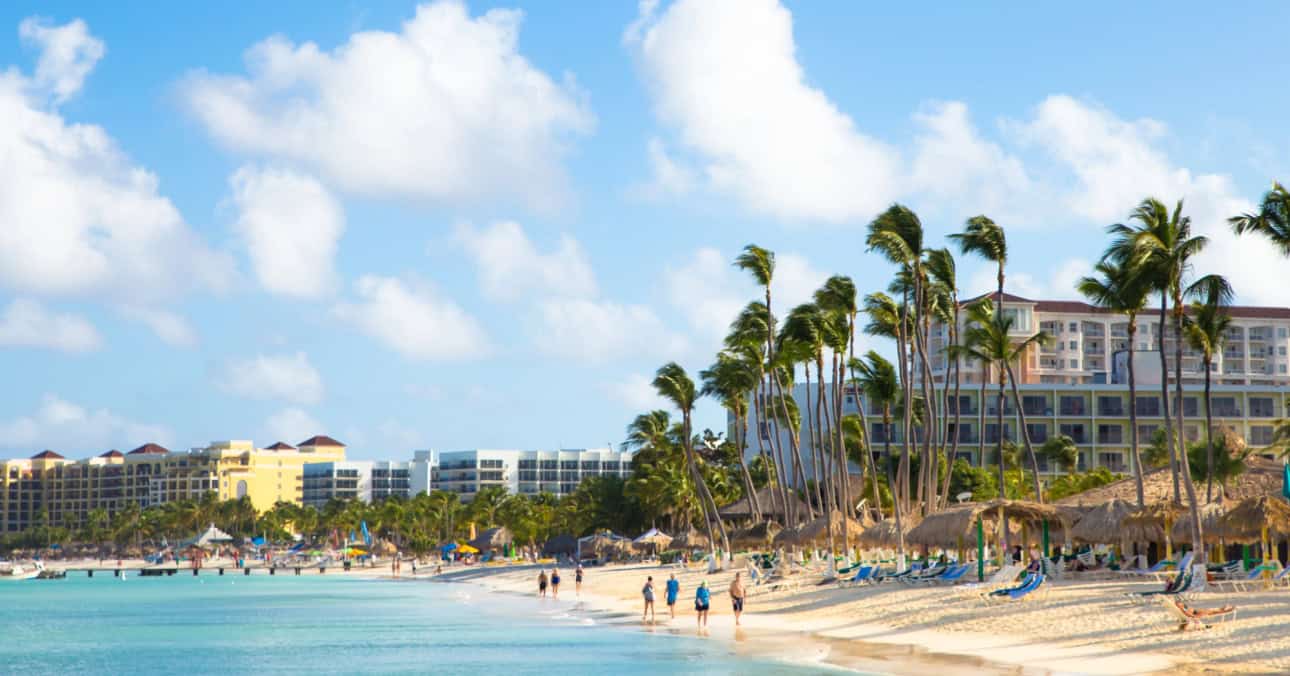
Curaçao is often presented internationally through photographs of Willemstad's colourful waterfront, clear blue water and secluded beaches.
These images are part of the country's appeal, but they reveal relatively little about the everyday lives of its residents.
Neighbourhoods across Willemstad and the surrounding districts are shaped by families, schools, shops, community organisations and workplaces.
In the western part of the island, commonly known as Bandabou, villages and rural landscapes preserve different aspects of Curaçao's history and local identity.
The country is home to people with a wide range of backgrounds, beliefs and political opinions, united by shared institutions and experiences but not necessarily by a single view of what Curaçao should become.
Like any society, it faces economic pressures, social disagreements and difficult choices about its future.
Understanding Curaçao therefore means recognising both its cultural achievements and the everyday concerns of the people who live there.
Do you run a business? RotterdamStyle is looking for a main sponsor. Get exclusive visibility across our website for a fixed fee. Interested? Contact us 🤝
9. Looking forward: Curaçao and the 21st-century Kingdom
Since becoming an autonomous country in 2010, Curaçao has continued to develop its political institutions and economic priorities.
The transition away from oil refining and towards tourism and services has created new opportunities, but it has also exposed longstanding vulnerabilities.
Economic diversification, educational development, environmental protection and greater social equality remain important priorities.
Curaçao's cultural and historical heritage offers considerable strengths. Its multilingual population, international connections, natural harbour and established commercial traditions provide a foundation for future development.
But the country's prospects will depend on more than its ability to attract visitors and investors.
Improving living standards, supporting local businesses, protecting the environment and ensuring effective public institutions will be essential to building a more resilient society.
Its constitutional position within the Kingdom also raises continuing questions.
How can Curaçao exercise meaningful autonomy while cooperating with countries that have substantially different populations, resources and political influence?
What responsibilities should the wider Kingdom assume in supporting economic stability and democratic governance?
And how can the experiences of colonialism, slavery and political struggle inform a relationship based on mutual respect?
These questions are not unique to Curaçao, but they are central to understanding its position within the modern Kingdom of the Netherlands.
Conclusion
Curaçao is a country whose history reaches far beyond its shores.
Its Indigenous heritage, colonial trading economy, struggle against slavery, industrial transformation and pursuit of self-government have shaped a society with a distinctive cultural and political identity.
The island's history includes remarkable achievements, but also profound inequalities and injustices whose consequences remain relevant today.
Within the Kingdom of the Netherlands, Curaçao is both an autonomous country and a partner in a larger constitutional arrangement.
Its future will depend on balancing those responsibilities with the aspirations of its own people.
Perhaps Curaçao's greatest strength lies in the very experiences that have shaped it: centuries of cultural exchange, adaptation and the determination to define its own place in the world.
The challenge now is to turn that inheritance into a future in which prosperity, cultural identity and self-government reinforce one another.