
ROTTERDAM, 4 March 2026 – The Usual says both its Rotterdam and Brussels hotels have achieved BREEAM In-Use ‘Outstanding’ certification, the highest score within the system for existing buildings. For Rotterdam, that places The Usual among a very small group of hotels worldwide to reach that level, and gives the brand a strong sustainability calling card right in the city centre.
For Rotterdam, the more interesting part is not the badge itself, but what it says about how older urban buildings can be adapted for hospitality use without treating sustainability as a decorative extra.
What the BREEAM rating means
BREEAM In-Use is a sustainability assessment method for existing buildings. It looks at areas such as energy, water, materials, ecology, transport, resilience, and health and wellbeing.
The ‘Outstanding’ rating is the highest possible score in that framework. According to The Usual, only a very small number of hotels worldwide have reached it, and the brand says it is the only hotel group in the Benelux with two such certifications.
Why the Rotterdam hotel stands out
The Usual says its Rotterdam hotel achieved an Outstanding Asset score of 86.26%, with especially strong results in Transport, Land Use & Ecology, and Health & Wellbeing.
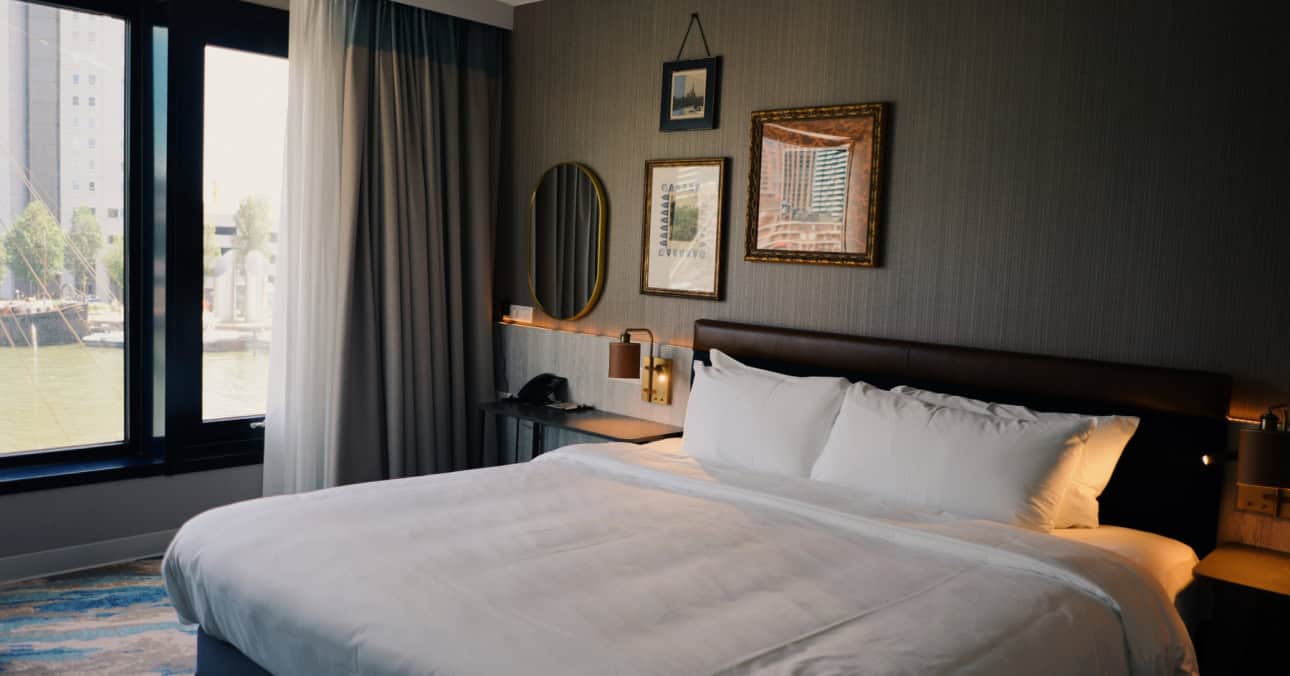
That matters in a city like Rotterdam, where central location, public transport access, and the reuse of existing buildings are already part of the wider urban conversation. The Usual frames its Rotterdam property as an example of how an existing city-centre building can be turned into a more future-ready hospitality environment.
Do you run a business? RotterdamStyle is looking for a main sponsor. Get exclusive visibility across our website for a fixed fee. Interested? Contact us 🤝
No gas connection and renewable energy
According to the company, both hotels operate fully on renewable energy and are not connected to the gas grid. It also says water-saving fixtures and monitoring systems are in place to reduce consumption.
The stronger health and wellbeing score is linked to factors such as daylight, indoor climate, user comfort, and accessibility. In other words, the company is not presenting this as a purely technical sustainability story, but as something that also affects the guest experience.
Reuse and adaptability built into the design
The Usual says both locations also received exemplary recognition in the Resources category for reuse and future adaptability.
That means the buildings include facilities for reuse and recycling, and are designed to remain flexible over time. For Rotterdam, that is a relevant angle, because adaptability is often what separates a building with a long city life from one that quickly feels outdated.
Rotterdam as a reuse story
One of the more useful takeaways in the press material is that The Usual is positioning the Rotterdam hotel as a redevelopment case, not just a new hotel with green language attached to it.
That fits the city. Rotterdam keeps testing how older structures can be reworked for contemporary use, and hospitality is now very much part of that. In that sense, this is also a small story about what kind of buildings the city wants to keep making room for.
Do you run a business? RotterdamStyle is looking for a main sponsor. Get exclusive visibility across our website for a fixed fee. Interested? Contact us 🤝
BREEAM as a growth framework
The company says the certification is also meant to function as a framework for future expansion in Europe. As The Usual grows, BREEAM In-Use is being presented as both a benchmark and a roadmap for renovation, operations, and resilience planning.
“We are proud that both of our first hotels have achieved the Outstanding rating,” says Gisela Boersma, ESG Manager at The Usual. “The certification process challenged us to critically assess every aspect of our buildings and operations. It confirms that high environmental performance and a strong guest experience can reinforce one another.”
More than one sustainability label
Alongside BREEAM, The Usual also says it has received Green Key certification and has picked up several international design and sustainability awards.
The brand describes itself as a hospitality concept built around reducing negative impact on people and planet, while also aiming to connect international guests with local communities. Rotterdam was one of its first two locations, alongside Brussels.