
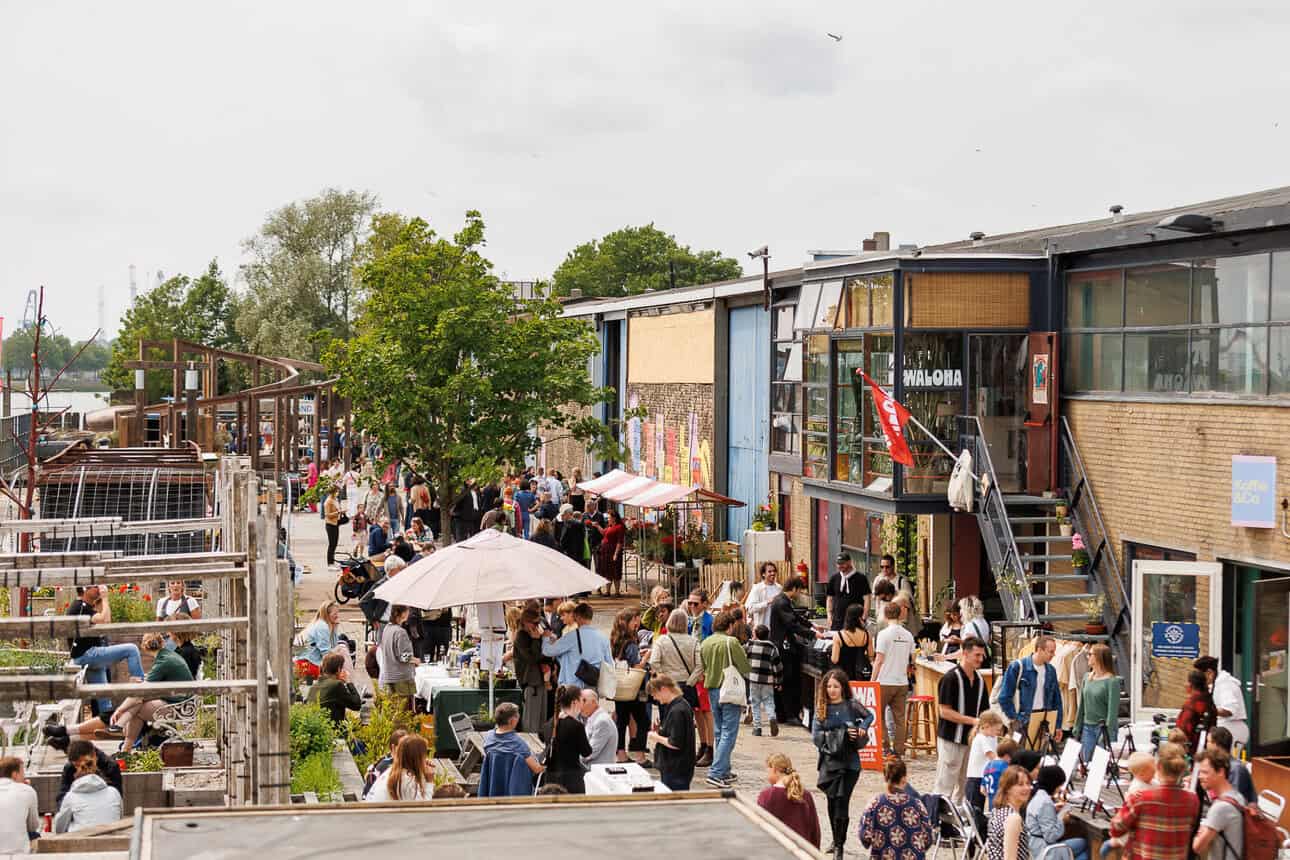
ROTTERDAM, 1 April 2026 – Rotterdam Architecture Month 2026 will turn the Keilekwartier into a live testing ground for circular building, with a new Materials Yard at the centre of the programme. Throughout June, you will be able to see how reused materials, shared responsibility and local collaboration could shape the future of building in Rotterdam.
Photo: Fred Ernst
Rotterdam Architecture Month is putting a difficult question front and centre this year: how do you build without waste when the construction chain is still fragmented? The 2026 edition takes that question into M4H, where the city’s circular ambitions are no longer abstract policy language but something you can walk through, look at and discuss.
At the heart of the month is the Materials Yard (Materialenwerf), a flexible new site in the Keilekwartier where used building materials will be collected, processed and prepared for reuse. It opens on Wednesday 3 June and serves as the main festival hub for the rest of the month.
Why the Materials Yard matters
The idea behind the Materials Yard is simple, but the implications are larger. If Rotterdam wants to become fully circular by 2050, with no waste, far less raw material use and a climate-neutral construction sector, the city needs more than better tools. It also needs a different way of working.
That means designers speaking to demolition firms earlier, contractors joining the conversation sooner, clients allowing room for uncertainty, and public bodies, makers, researchers and residents sharing responsibility rather than guarding their own corner. Rotterdam Architecture Month 2026 argues that circular building cannot work if every party keeps optimising only its own part of the process.
Do you run a business? RotterdamStyle is looking for a main sponsor. Get exclusive visibility across our website for a fixed fee. Interested? Contact us 🤝
M4H becomes the testing ground
This year’s festival is based in M4H, the former port and industrial area that is now being reshaped into a mixed urban district. For Rotterdam, it is a logical place to stage this experiment. The municipality and Port of Rotterdam Authority have already marked M4H as the city’s circular development area, where making, living and working are meant to come together in new ways.
The Materials Yard, designed by Studio ACTE, is intended as a working meeting point where supply and demand for reused materials can meet. It also makes the chain behind reuse visible. Instead of treating circularity as a polished end result, the project shows how many steps, decisions and partnerships are needed to make reused building materials viable in the first place.
 Materialenwerf. Photo: Frank Hanswijk
Keilepand looks at collective power
While the Materials Yard focuses on the movement of materials, the nearby Keilepand turns to the social side of circular building. Under the title The power of community (De kracht van de gemeenschap), an exhibition developed with the KeileCollectief explores how cooperative and collective models can support circular area development.
That gives the programme a useful balance. You are not just being shown reclaimed materials and flexible structures, but also the kind of shared effort needed to organise them. The exhibition makes the case that cooperation is not an extra layer added at the end, but one of the basic conditions for circular development to work at all.
Do you run a business? RotterdamStyle is looking for a main sponsor. Get exclusive visibility across our website for a fixed fee. Interested? Contact us 🤝
What you can expect in June
For four weeks, the Keilepand and the area around the Materials Yard will host a broad public programme. Expect workshops, films, tours, talks and markets, including vintage furniture and household items, as well as practical sessions where visitors can work with materials from the yard itself.
The full month runs from 1 to 30 June 2026, with the festival heart opening on Wednesday 3 June. That makes Rotterdam Architecture Month 2026 less about polished future talk and more about showing you, in real time, how a circular city might actually function when materials, people and responsibilities are forced into the same space.



.jpg "Popronde Rotterdam - date, locations, artists, info")