
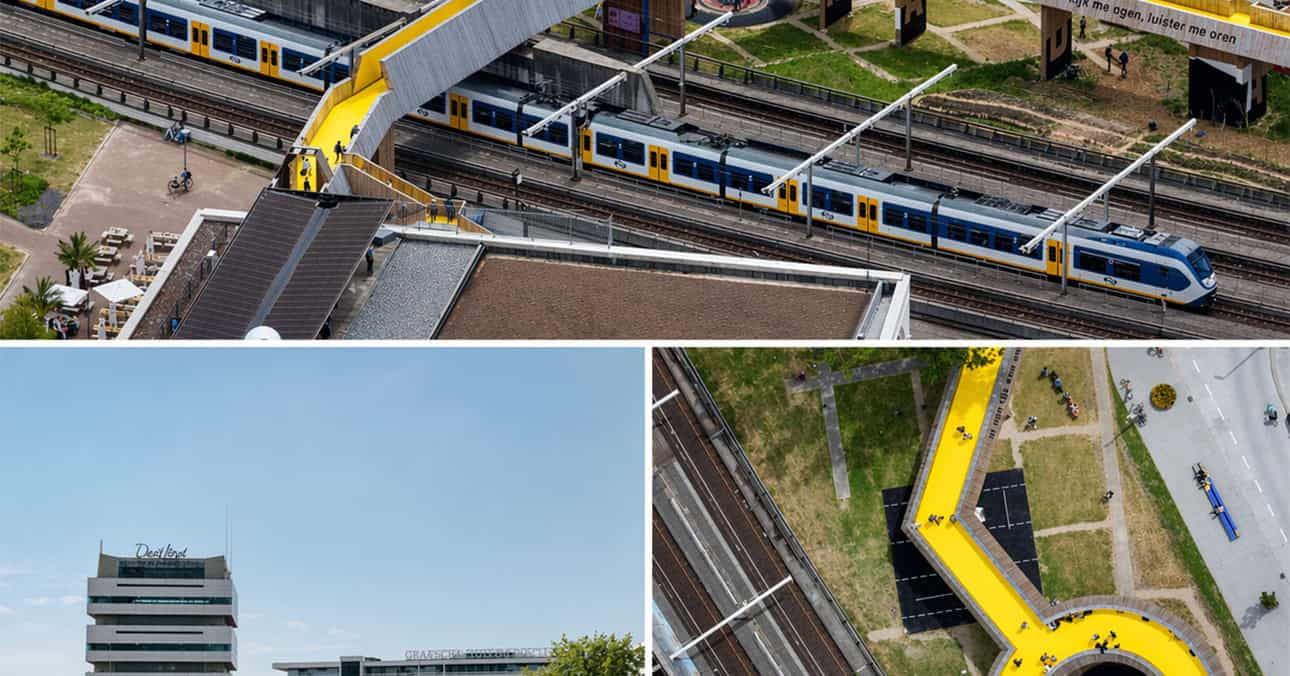
ROTTERDAM, 23 April 2026 – Rotterdam is moving a step closer to bringing back the Luchtsingel, the bright yellow pedestrian bridge that once linked the city centre to Rotterdam Noord. The municipality has opened a designer selection process for a permanent successor, with applications running until 7 June 2026.
Images: Luchtsingel in Rotterdam. Photo credit: Ossip van Duivenbode | Adriënne Wildeman
Why the Luchtsingel still matters
The news matters because the Luchtsingel was never just a shortcut across roads and railway lines. For years, it tied together Schiekadeblok, Pompenburg and the Hofbogen, while helping turn a neglected stretch near Rotterdam Centraal into one of the city’s most talked-about urban renewal stories.
Its return has been hanging in the air since 2024, when large parts of the wooden structure were demolished because of wood rot. Since then, the big question in Rotterdam has been whether the city would ever rebuild a link that had become both practical infrastructure and a local symbol. The answer now appears to be yes.
Do you run a business? RotterdamStyle is looking for a main sponsor. Get exclusive visibility across our website for a fixed fee. Interested? Contact us 🤝
How the yellow bridge began
The original Luchtsingel grew out of a very Rotterdam mix of frustration, imagination and public backing. ZUS (Zones Urbaines Sensibles) launched the idea after major development plans in the Rotterdam Central District were scrapped, leaving empty office space and a disconnected area around the Schieblock. In 2011, the practice started the I Make Rotterdam campaign, inviting people to help fund a bridge plank by plank.
That civic energy turned into something much bigger in 2012, when the project won Rotterdam’s city initiative (Stadsinitiatief). The plan received 48 per cent of the vote and secured €4 million, while thousands of supporters bought wooden planks engraved with their names or messages. By the time the full bridge opened in 2015, the Luchtsingel had become known internationally as the world’s first piece of public infrastructure delivered through crowdfunding.
What made it more than a bridge
That origin story still shapes how people in Rotterdam talk about the bridge. The Luchtsingel was designed as a 390 to 400 metre elevated walking route and part of a wider chain of urban interventions, including Dakakker, Delftsehof, Pompenburg Park and the roof of the former Hofplein Station. In other words, it helped stitch together a part of the city that had long felt broken up by traffic infrastructure and vacant plots.
It also became one of those places that told a larger story about Rotterdam. The bridge connected districts, created new walking routes and gave the area a recognisable identity at a time when the surroundings were still in transition. That helps explain why its disappearance landed so heavily with many people in the city.
Do you run a business? RotterdamStyle is looking for a main sponsor. Get exclusive visibility across our website for a fixed fee. Interested? Contact us 🤝
What Rotterdam wants now
The new phase is less about nostalgia and more about how this part of Rotterdam now functions. According to the municipality, the replacement will need to respond to major changes in the area, including the development of Schiekadeblok and Pompenburg, the arrival of Hofbogenpark and closer interaction with surrounding buildings, including the planned Kopgebouw pavilion in Pompenburg. That is why the city is asking one designer to help create both a recognisable concept and a design handbook (ontwerphandboek) for the future connection.
The brief is aimed at architects, or people with a master’s degree in a design discipline, who can work with the municipality as well as local stakeholders. The selected designer is expected to help translate a vision for the new route while engaging with residents, entrepreneurs and other interested parties in the area. Applications opened on 22 April and close on 7 June 2026.
What happens next
For Rotterdam, this is the clearest sign yet that the city wants the Luchtsingel back in some form, this time as a longer-term part of the urban fabric rather than a temporary wooden icon that outlived its intended lifespan. The next bridge will not simply copy the old one. It will need to fit a district that has changed sharply since the first planks went up.
If you want to read the municipal call yourself, the public notice is here: https://mijn.rotterdam.nl/link/nieuwsbericht/ontwerpersselectiegestartvoorvervang.