

ROTTERDAM, 13 March 2026 – Wereldmuseum has acquired Sleepwalkers by Jamaican artist Roberta Stoddart for its collection. The painting will become one of the key works in Leef Surrealisme, a major exhibition opening at Wereldmuseum Rotterdam on 17 September 2026 and running until 29 August 2027.
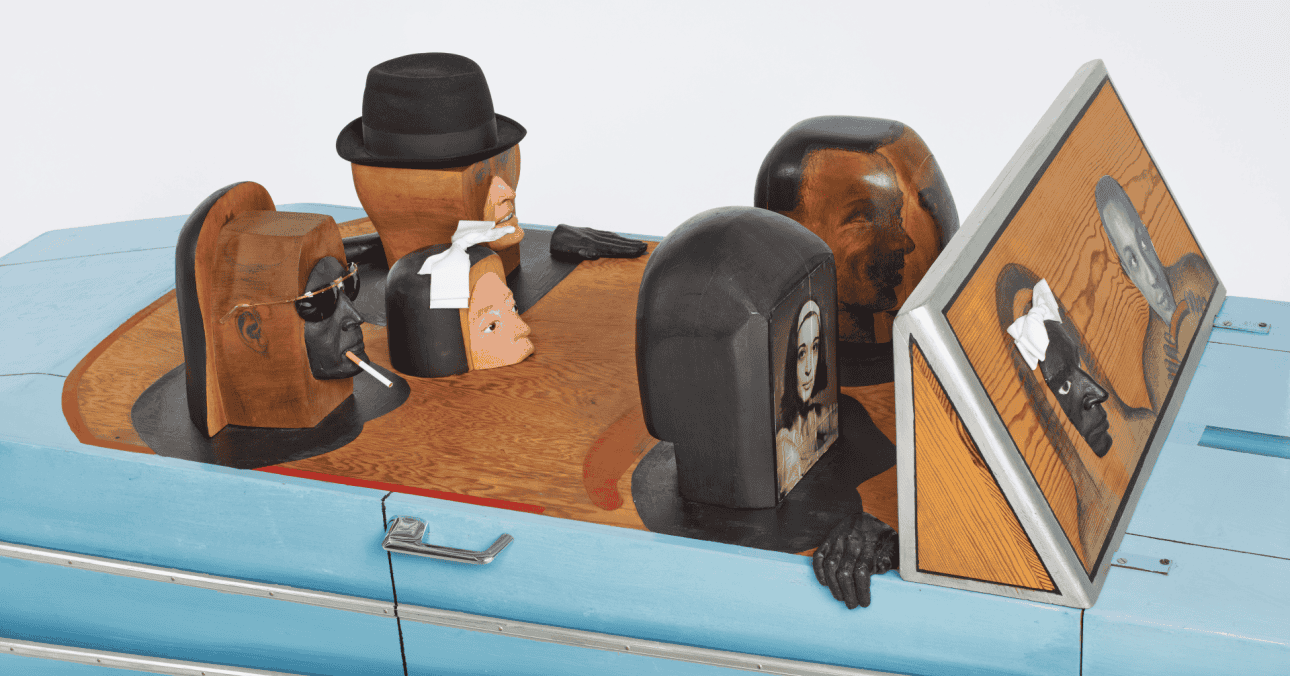
Image: Roberta Stoddart, Sleepwalkers (2009–2017)
The acquisition gives the Rotterdam museum a major Caribbean work ahead of one of its most ambitious upcoming exhibitions. According to Wereldmuseum, Sleepwalkers will play a central role in a show that approaches surrealism as something far broader than a European art movement.
Instead, Leef Surrealisme presents surrealism as a global mentality and a form of resistance, shaped across different continents, cultures and historical moments. In that setting, Stoddart’s painting fits neatly into the exhibition’s wider argument that surrealism remains a living way of seeing, imagining and challenging power.
Surrealism beyond Europe
Leef Surrealisme will bring together works by dozens of artists, including Julio Gálan, Tetsuya Ishida, Roberta Stoddart, Renée Stout, Yves Tanguy, Co Westerik and Santiago Yahuarcani. The exhibition combines works from the museum’s own collection with international loans, including pieces from Museum Boijmans Van Beuningen and contemporary work by Rotterdam artists.
The show will feature surrealist art from several continents, including Mexico, Australia, Jamaica and Indonesia. In doing so, Wereldmuseum is deliberately widening the usual museum view of surrealism and placing the dream of a better world in a more global frame.
Do you run a business? RotterdamStyle is looking for a main sponsor. Get exclusive visibility across our website for a fixed fee. Interested? Contact us 🤝
A Caribbean conversation piece
Stoddart is one of the leading contemporary artists from Jamaica and the wider Caribbean. She is known for layered portraits and unsettling landscapes that examine how colonialism, ethnicity, gender and class continue to shape daily life.
In Sleepwalkers, she reworks the seventeenth and eighteenth-century genre of the conversation piece, a type of group portrait that often appeared informal and harmonious while quietly reinforcing colonial power structures. By using that visual language in a nocturnal wedding scene, Stoddart exposes the tensions and hierarchies hidden beneath the surface.
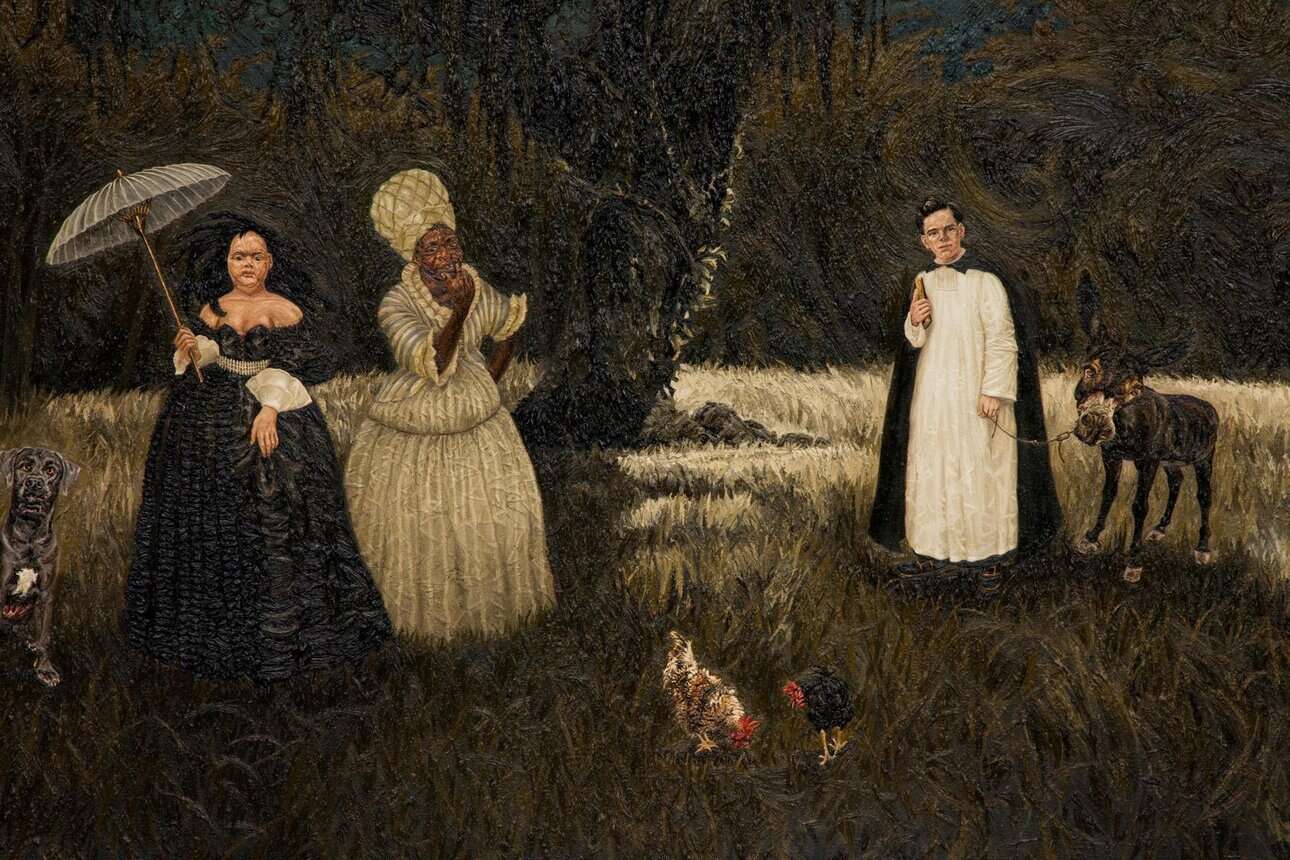 Detail from Roberta Stoddart’s Sleepwalkers (2009–2017
Bertha Mason at the centre
The painting is set in a dark, humid Caribbean landscape filled with Spanish moss. Figures from past and present seem to gather in a frozen moment, while humans and animals look directly at the viewer as if caught in headlights, pushing a quiet but urgent question forward.
At the centre of the work is Bertha Mason, the so-called attic character from Charlotte Brontë’s Jane Eyre (1847). In the novel, Bertha, who comes from Jamaica, is reduced to a colonial stereotype. In Stoddart’s painting, she is given her own story and her own voice.
That places Sleepwalkers in dialogue with postcolonial rereadings such as Jean Rhys’s Wide Sargasso Sea (1966), which retells the story from Bertha’s perspective. By drawing together those literary and historical strands, the painting asks how colonial structures continue to shape identity, gender and class, and how categories such as perpetrator and victim, black and white, past and present remain entangled.
Do you run a business? RotterdamStyle is looking for a main sponsor. Get exclusive visibility across our website for a fixed fee. Interested? Contact us 🤝
A major addition to the national collection
Wereldmuseum says the acquisition strengthens both its own holdings and the wider Dutch national collection. The museum manages around 500,000 collection objects and 750,000 photographs, with contemporary art playing a growing role in how those histories are re-read today.
The purchase was made possible in part through support from the Mondriaan Fund (Mondriaan Fonds). According to the museum, although Stoddart is well known across the Caribbean and the Americas, her work has not previously been acquired by a European museum.
That gives the Rotterdam presentation an extra weight. It is not just the first local showing of an important work, but also the first time a European museum has formally brought Stoddart into its collection.
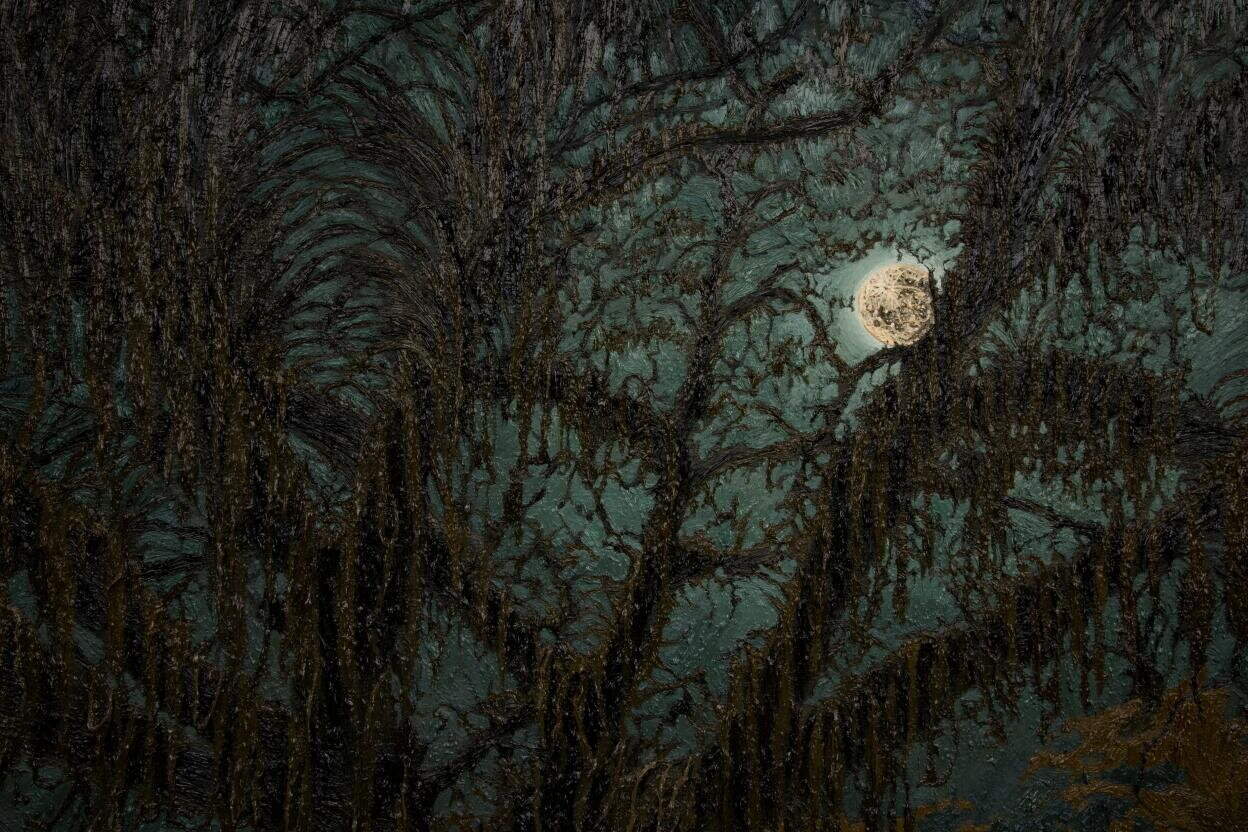 Detail from Roberta Stoddart’s Sleepwalkers (2009–2017), showing the moonlit Caribbean landscape.
What happens after Rotterdam
After its run in Leef Surrealisme at Wereldmuseum Rotterdam, Sleepwalkers will move to Wereldmuseum Leiden. There, it will take a prominent place in the renewed permanent presentation opening in 2027, focused on global perspectives on the history of art and design.
For Rotterdam, though, the first chapter matters most. This is where the painting will begin its museum life in Europe, and where Leef Surrealisme will test a bigger idea: that surrealism is not a closed chapter from European art history, but an active global force that still resonates now.