
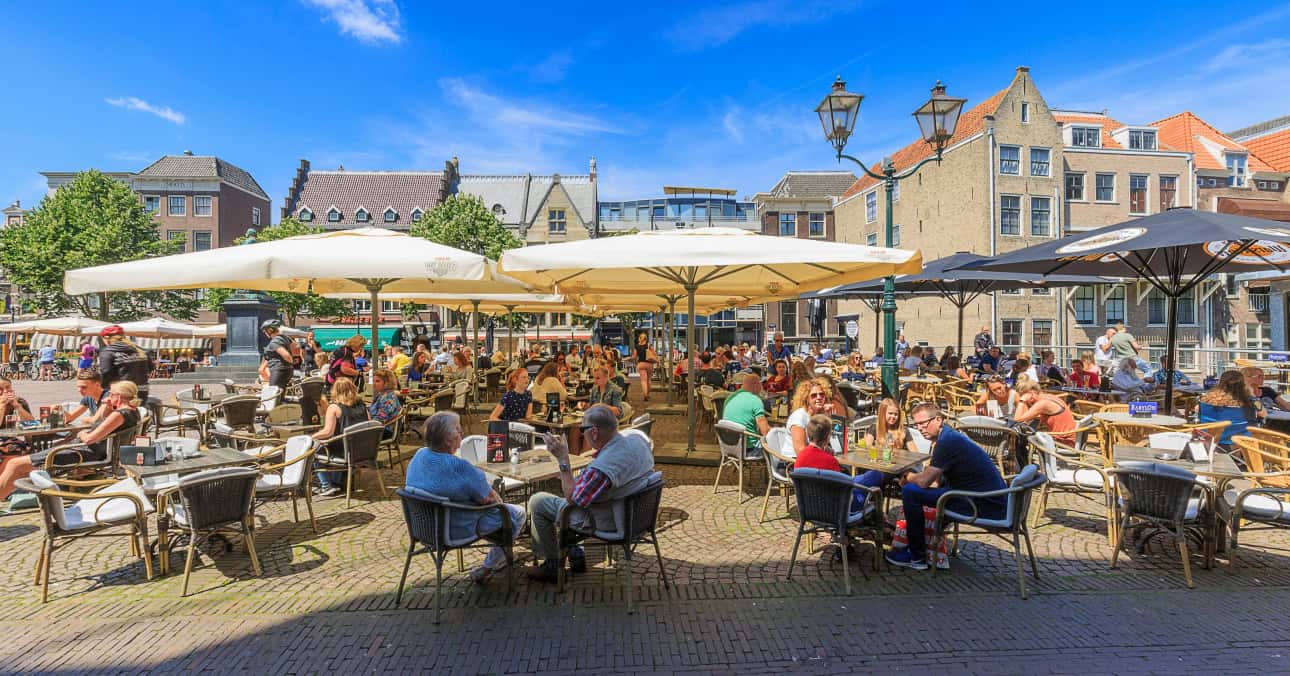
The Dutch borrel is one of those rituals you only truly understand once you have stood near a bowl of bitterballen while pretending you came mainly for the conversation. New research shows that 30% of Dutch people have a borrel every week, proving once again that this country has turned “a quick drink” into a full social system.
A borrel is a relaxed Dutch get-together with drinks, small snacks and plenty of conversation. It is not quite dinner, not quite a party and definitely not just “having a drink”. It sits somewhere between social glue, post-work therapy and a perfectly acceptable excuse to eat fried snacks before your evening meal.
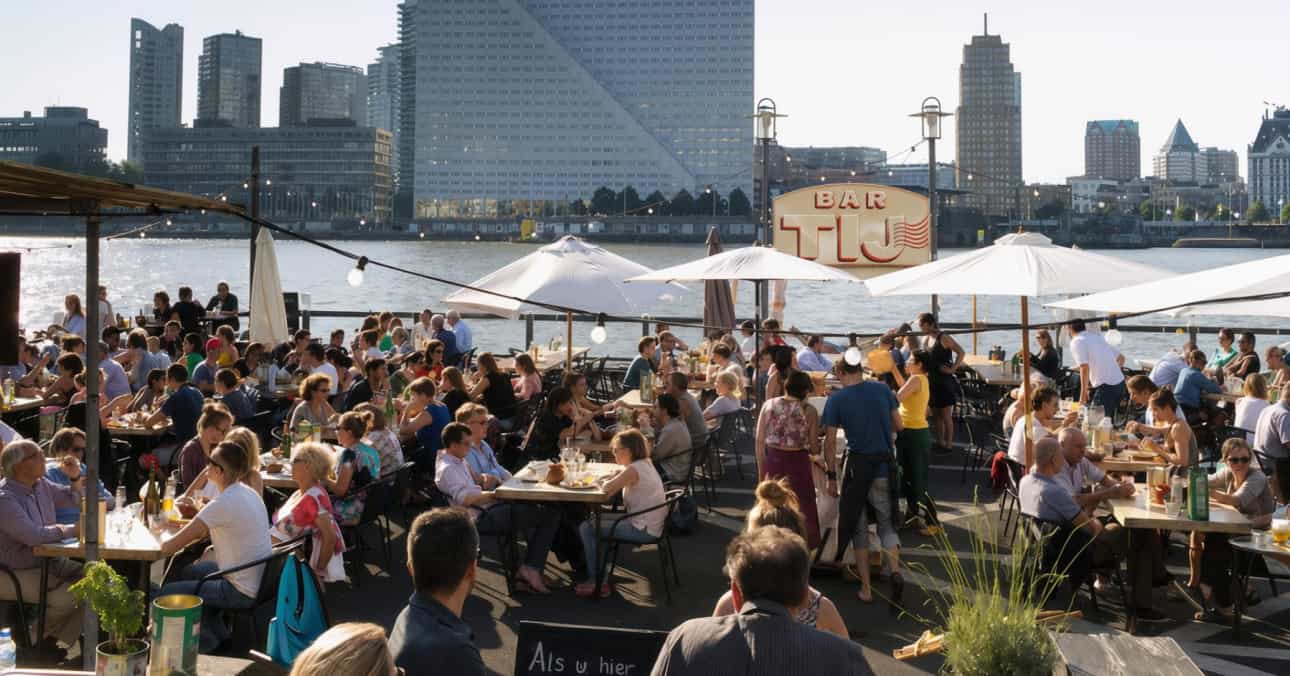
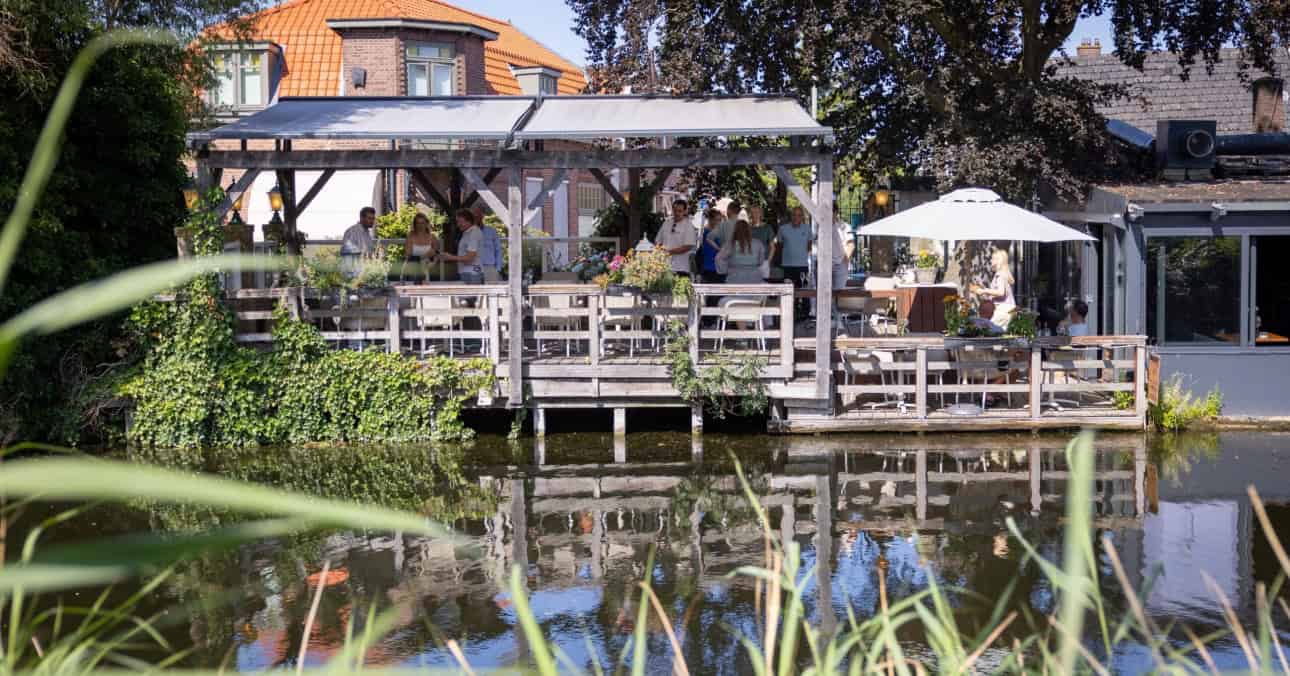
It can happen in a café, at home, on a balcony, in an office, at a birthday, after a meeting or on a terrace the moment the sun shows even mild commitment. The point is simple: you gather, you drink something, you share snacks, and you enjoy each other’s company without making the whole thing too formal.
Do you run a business? RotterdamStyle is looking for a main sponsor. Get exclusive visibility across our website for a fixed fee. Interested? Contact us 🤝
The borrel is social glue
Research by Maxima Kitchen Equipment found that 30% of Dutch people have a borrel every week. One in five even has a fixed borrel moment, with the Friday afternoon drinks ritual, better known as the vrijmibo (vrijdagmiddagborrel), being the classic example.
The main reason is simple: people want to spend time together. According to the research, 87% say they mainly borrel to spend time with friends or family. That feels about right. The borrel is less about fine dining and more about standing near a bowl of crisps while someone tells you a work story that somehow needs seven characters and three departments.
Gezelligheid comes first
The most important ingredient is gezelligheid, the Dutch word that refuses to be translated properly because it is basically a national emotional infrastructure. In the survey, 76% name gezelligheid as the most important part of a borrel, followed by relaxation at 19%.
Alcohol is not the star of the show. For 93% of respondents, a borrel is more about gezelligheid than alcohol. So yes, a borrel can include beer, wine or a spritz, but the deeper point is company, atmosphere and that shared moment when everyone silently agrees dinner can wait.
Do you run a business? RotterdamStyle is looking for a main sponsor. Get exclusive visibility across our website for a fixed fee. Interested? Contact us 🤝
From duty to downtime
Motivaction researchers Mandy Kuhlman and Ruurd Hielkema describe the borrel as a transition from obligations to relaxation. That is probably why it works so well in Dutch life. It marks the shift from agenda mode to human mode.
After work, after a formal event or after a long week, the borrel gives people permission to soften a little. The laptop closes, the first drink appears, the snacks arrive, and suddenly everyone remembers they have a personality outside Outlook.
The vrijmibo is sacred
The Friday afternoon borrel has its own status in Dutch office culture. The vrijmibo is the informal bridge between the working week and the weekend, and in many workplaces it is treated almost like a small secular ceremony.
It does not have to be fancy. A few drinks, some snacks, maybe bitterballen if management is feeling generous, and a colleague who starts saying “just one more” at 17:42. By 19:15, someone is explaining their side hustle, someone else is texting their partner that dinner is “running a bit late”, and the week has officially been processed.
Snacks carry the room
A Dutch borrel without snacks is just a meeting with liquid. The classics are deeply recognisable: bitterballen, cheese cubes, liver sausage, crisps, nuts, olives, bread with dips and whatever mysterious fried item arrives in a little metal basket.
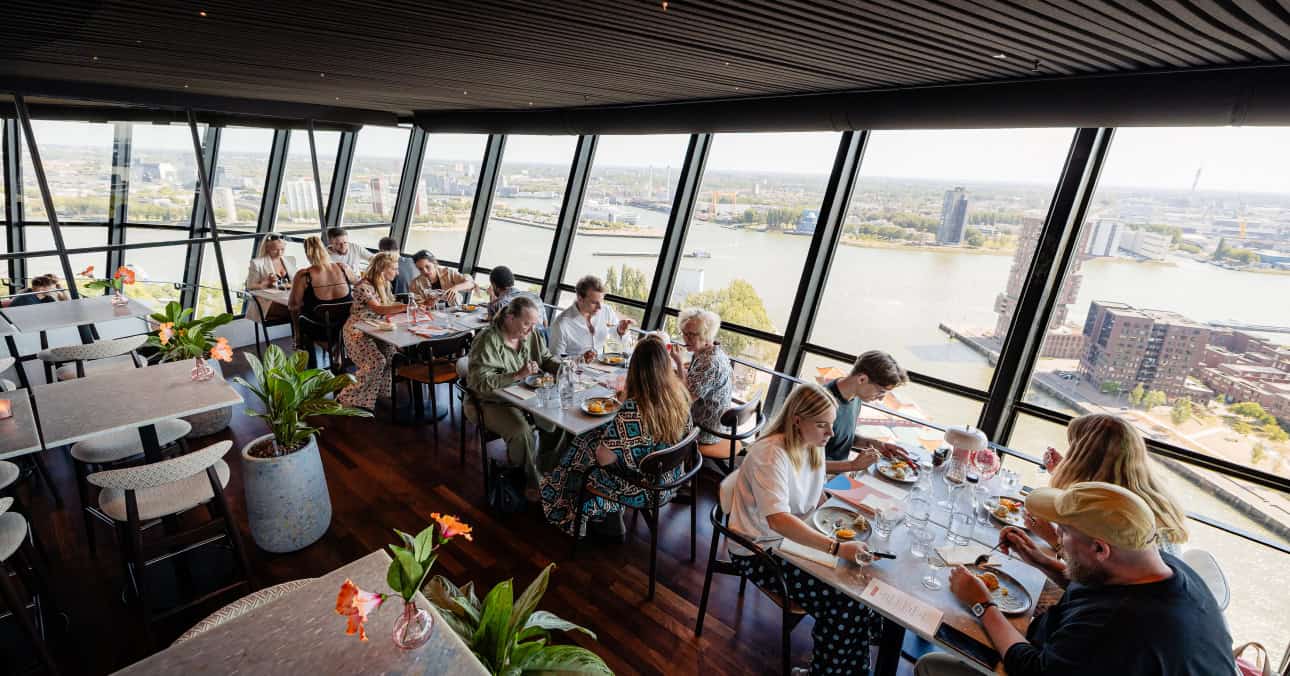
The research also points to a shift in hospitality. People are having longer lunches, going for drinks after work and staying into the early evening with shared dishes. In Rotterdam, you see this everywhere, from terraces around Oude Haven and Witte de Withstraat to neighbourhood spots where the borrel slowly turns into dinner because nobody wants to be the first to leave.
Do you run a business? RotterdamStyle is looking for a main sponsor. Get exclusive visibility across our website for a fixed fee. Interested? Contact us 🤝
The café still matters
A third of Dutch people prefer to go to a café or restaurant for a borrel. That makes sense, because the setting does half the work. A good terrace, a warm bar, decent lighting and snacks that arrive before people start considering poor decisions: that is the formula.
At home, the borrel is more relaxed. On a balcony, it becomes optimistic. In a café, it becomes public theatre. You get to see the full Dutch social spectrum: the office table, the birthday table, the couple “just having one”, the friend group already deep into round three, and the person who ordered the bitterballen “to share” but is monitoring them like a stock portfolio.
There are unwritten rules
The borrel may feel informal, but Dutch culture always finds a way to add invisible rules. Etiquette expert Jan Jaap van Weering points out that, at a reception, you hold your glass in your left hand so your right hand stays dry for shaking hands.
Timing matters too. If a borrel runs from 17:00 to 19:00, you do not arrive at 16:45 like an eager intern haunting the snack table. You arrive a little later. Casual, but not chaotic. Relaxed, but with choreography. Very Dutch, honestly.
Everyone is invited
Van Weering also notes that Dutch borrel culture is less formal than in Belgium or France. Once five o’clock arrives, people are happy to sit down for a drink with cheese cubes, liver sausage, bitterballen and good company.
That openness is part of the appeal. A borrel can be small or busy, planned or spontaneous, polished or gloriously improvised. It is one of the easiest ways to join Dutch social life, especially in Rotterdam, where people may be direct, but will usually forgive almost anything if you arrive with snacks.
Do you run a business? RotterdamStyle is looking for a main sponsor. Get exclusive visibility across our website for a fixed fee. Interested? Contact us 🤝
The borrel is practical magic
The beauty of the borrel is that it is low-pressure. You do not need a three-course plan, a dress code or a grand reason. You need a table, a drink, something salty and people who are willing to linger.
That is why the borrel keeps working. It gives structure to relaxation, which sounds contradictory until you remember this is the Netherlands. Even the art of unwinding benefits from a start time, a snack board and a rough end point that everyone fully intends to ignore.
Common borrel snacks
Typical borrel snacks include bitterballen, cheese cubes, liver sausage, crisps, nuts, olives, bread with dips, fried snacks and shared plates. Modern versions often include vegetarian bites, oysters, charcuterie, loaded fries or small dishes that quietly turn the borrel into dinner.