

Rotterdam is one of the Netherlands' most interesting cities for international students. Home to Erasmus University, several universities of applied sciences and a large international community, it combines education, culture and career opportunities with the energy of a major European port city. But Rotterdam is also quite different from the Netherlands' more traditional university towns. You either love its bold, modern character or you don't, and that's part of what makes studying here an interesting experience.
With tens of thousands of students studying across the city's higher education institutions, Rotterdam offers plenty of opportunities to meet people, explore different cultures and build a life outside the classroom. Whether you're considering an exchange semester, a bachelor's degree or a master's programme, here are six reasons why Rotterdam could be a great place to study, along with some practical things worth knowing before you move.
Do you run a business? RotterdamStyle is looking for a main sponsor. Get exclusive visibility across our website for a fixed fee. Interested? Contact us 🤝
1. Rotterdam has lots of things to do and see
Rotterdam's centre is big and busy enough that you rarely get bored. Around Lijnbaan, Coolsingel and Binnenwegplein you'll find a mix of high-street brands, independent shops, cafés, bars and late-night food spots. If you prefer indoor shopping centres, Alexandrium in the east and Zuidplein in the south offer plenty of alternatives.
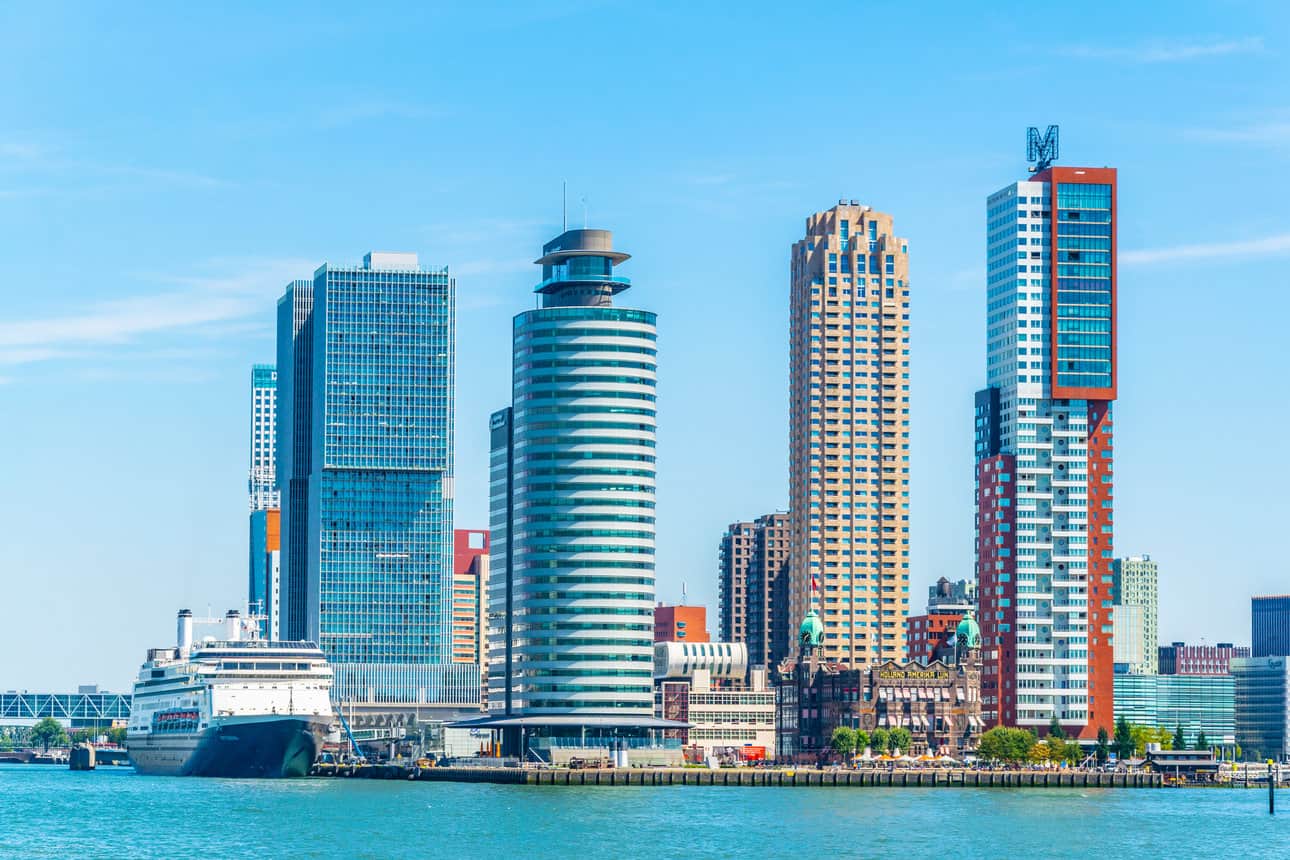
Culturally, the city has a great deal to offer. There are major museums, theatres, cinemas and independent art spaces scattered across the centre and Kop van Zuid, covering everything from contemporary art and design to photography and experimental performances. The city's architecture is also an attraction in itself, with striking landmarks such as the Cube Houses, Markthal and Erasmus Bridge.
Throughout the year, Rotterdam hosts a packed calendar of festivals, sporting events and cultural activities. Some of the better-known events include:
- Rotterdam Unlimited Summer Carnival (Zomercarnaval): A colourful celebration of Caribbean and other international cultures, featuring music, dance and a major street parade. Rotterdam's Summer Carnival was added to UNESCO's Representative List of the Intangible Cultural Heritage of Humanity in 2023.
- NN Marathon Rotterdam: One of the Netherlands' major running events, attracting elite athletes, recreational runners and large crowds of spectators each spring.
- World Port Days: A celebration of Rotterdam's maritime industry, with opportunities to discover the harbour through activities, exhibitions, ship visits and events on the water.
- Eendracht Festival: A free showcase of Rotterdam's creative talent, bringing emerging musicians, artists and performers to venues around the city centre.
Of course, student life isn't just about major events. Rotterdam has independent music venues, neighbourhood cafés, parks and restaurants representing cuisines from around the world. The city also has an active nightlife, although the atmosphere varies considerably from one neighbourhood to another.
One of the things we particularly like about Rotterdam is that there's no single way to experience it. You can spend a quiet afternoon in Museumpark, explore the bars around Witte de Withstraat, catch a concert or discover a neighbourhood you've never visited before.
Do you run a business? RotterdamStyle is looking for a main sponsor. Get exclusive visibility across our website for a fixed fee. Interested? Contact us 🤝
2. Rotterdam offers opportunities for student jobs
Rotterdam has a large service, retail and logistics economy, and businesses in hospitality, events, shops and delivery services regularly recruit part-time employees. There are also opportunities connected to universities, student organisations and international companies.
However, finding a job isn't necessarily as easy as some student guides make it sound. Competition can be significant, and many customer-facing jobs require at least some knowledge of Dutch. Your nationality and residence status also determine which employment rules apply.
If you're an EU/EEA or Swiss student, you can generally work in the Netherlands without a separate employment permit. For students from outside the EU/EEA who hold a Dutch study residence permit, the rules are more restrictive.
Under the current regulations, non-EU/EEA students with a study residence permit may work as employees under one of two arrangements:
- Up to 16 hours per week throughout the year; or
- Full-time during June, July and August.
In both cases, the employer must obtain a work permit, known as a tewerkstellingsvergunning (TWV). Different conditions apply to internships forming part of a study programme and to genuine self-employment. You can check the current requirements on the Dutch Immigration and Naturalisation Service (IND) website.
Another important detail is health insurance. International students who take up paid employment may become required to arrange Dutch basic health insurance, even if they previously had insurance specifically for international students.
A student job can be a great way to practise Dutch, meet people and gain work experience. But particularly if you're coming from outside Europe, we wouldn't recommend depending on part-time earnings to cover all your living expenses.
Do you run a business? RotterdamStyle is looking for a main sponsor. Get exclusive visibility across our website for a fixed fee. Interested? Contact us 🤝
3. Rotterdam's location keeps Europe close
Rotterdam sits in the middle of the Randstad, the densely populated western region of the Netherlands that also includes Amsterdam, The Hague and Utrecht. This makes it an excellent base for exploring the country and travelling further into Europe.
Amsterdam and Utrecht are generally reachable in under an hour by train, while Delft and The Hague are even closer. You can easily visit friends studying in other Dutch cities, spend an afternoon exploring somewhere new or attend concerts and events outside Rotterdam without needing a car.
The city's international rail connections also make weekend trips appealing. Antwerp and Brussels are relatively close, while Paris, London and several German cities can be reached by international rail services, sometimes with a connection. Journey times and fares depend on the route and when you book.
Rotterdam also has its own airport, Rotterdam The Hague Airport, located north of the city centre. It mainly serves European destinations and holiday routes, and is accessible by public transport.
From Rotterdam Centraal, you can take RET bus 33 directly to the airport or travel by metro line E to Meijersplein and change to bus 33. The airport journey generally takes around 20 to 30 minutes, depending on the route and departure time.
For international students who want to explore beyond the Netherlands, having so many destinations within relatively easy reach is a real advantage. You don't need to own a car to make the most of living here.
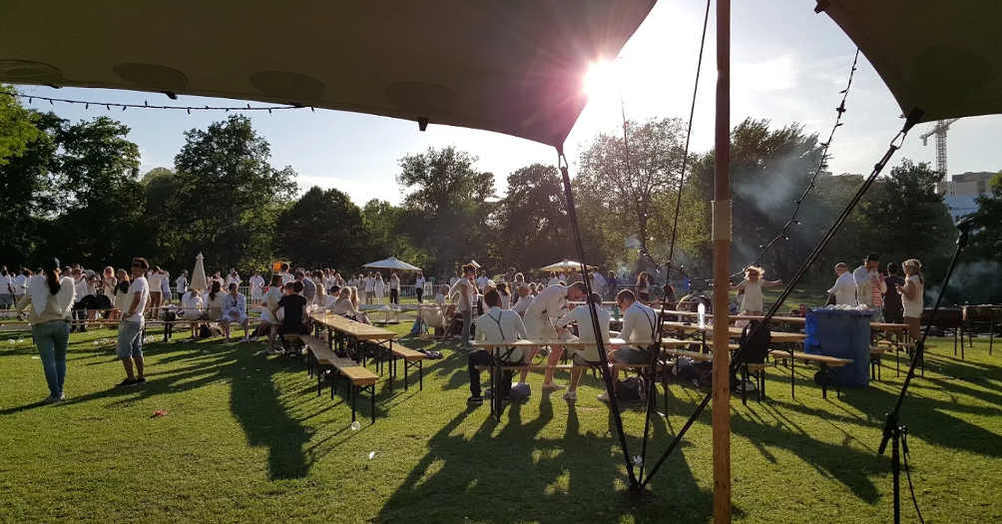 Outdoor student life and recreation near Rotterdam's Euromast Park
Do you run a business? RotterdamStyle is looking for a main sponsor. Get exclusive visibility across our website for a fixed fee. Interested? Contact us 🤝
4. Rotterdam has a vibrant community of students
Rotterdam doesn't feel quite like a traditional Dutch student town such as Groningen or Leiden. Its students are spread across a large working city rather than concentrated around a small historic centre. That can make student life feel less obvious at first, but there's no shortage of people studying here.
Erasmus University Rotterdam reported approximately 31,200 students in its 2025 figures, while Rotterdam University of Applied Sciences, known locally as Hogeschool Rotterdam, had 37,445 students in the same year. Other institutions, including Codarts, Willem de Kooning Academy and various specialist colleges, contribute to the city's educational community.
Rotterdam also attracts a substantial number of students from abroad. According to Nuffic's international student research published in September 2026, the city recorded 5,013 new international degree-student enrolments during the 2025/26 academic year. This figure refers to new enrolments at higher education institutions, rather than the total number of international students already living or studying in Rotterdam.
One of the easiest ways to meet people is through the Erasmus Student Network (ESN) in Rotterdam. The organisation arranges introduction activities, social events, excursions and opportunities for international students to become involved in organising activities themselves. You can find out more through ESN Rotterdam.
There are also student associations, university sports clubs, cultural groups and informal communities organised around different interests and nationalities.
Outside university, Rotterdam is an exceptionally diverse city with a long history of migration and international trade. That diversity shows up in its neighbourhoods, shops, restaurants and cultural events. It's one of the reasons international students can often find communities and familiar cultural influences alongside experiences that are completely new to them.
That said, making friends takes effort. Rotterdam is a large city where people have their own routines and social circles. Joining an association, participating in university activities or simply showing up regularly at places you enjoy can make a real difference.
Do you run a business? RotterdamStyle is looking for a main sponsor. Get exclusive visibility across our website for a fixed fee. Interested? Contact us 🤝
5. Getting around Rotterdam is relatively easy
Rotterdam has an extensive public transport network operated primarily by RET, with metro lines, trams and buses connecting the city centre to residential neighbourhoods and surrounding municipalities.
For students, this makes it possible to live some distance from campus while still having convenient access to university facilities, shops and nightlife. Of course, travel times depend on where you live, so it's worth checking the journey to your campus before signing a rental agreement.
Public transport tickets and payments
You no longer need a dedicated public transport card for most ordinary journeys. Through the national OVpay system, you can check in and out using a contactless debit card, supported credit card or smartphone.
Just remember to use the same card or device when checking in and out. This applies when travelling with the metro, tram and bus, as well as many other public transport services in the Netherlands.
The traditional OV-chipkaart is being replaced gradually by the new OV-pas and other OVpay options. Existing OV-chipkaarten are still used for certain subscriptions and student travel products, so longer-term residents should check which payment method suits their circumstances.
Visit OVpay for current information about payment options, or use the RET website to plan local journeys and check disruptions.
Getting home after a night out
Rotterdam also has a weekend night-bus network. Since September 2025, RET has operated thirteen night-bus routes on Friday and Saturday nights, connecting Rotterdam Centraal with neighbourhoods across the city and several surrounding municipalities.
The first departures generally begin shortly after midnight, with services continuing into the early morning. Frequencies vary by route, so check the current timetable before heading out, particularly if you're planning to stay out late.
Cycling around the city
For many students, cycling is the most convenient way to get around Rotterdam. Once you've bought a reliable second-hand bicycle and a good lock, you can reach many central neighbourhoods without depending on public transport schedules.
Rotterdam has extensive cycling infrastructure, although some major roads and junctions can feel busy if you're not accustomed to Dutch traffic. Take a little time to learn the local cycling rules, use proper lights after dark and avoid leaving your bicycle somewhere it could be removed for obstructing pedestrians.
Do you run a business? RotterdamStyle is looking for a main sponsor. Get exclusive visibility across our website for a fixed fee. Interested? Contact us 🤝
6. Rotterdam innovates and inspires
Rotterdam likes to describe itself as a city of doers, and there are plenty of examples of that mentality in its architecture, businesses and urban development projects.
The city's industrial and maritime history has helped shape an environment where people experiment with new approaches to sustainability, engineering, logistics and design.
Consider a few examples:
- Floating Farm: Located in Rotterdam's Merwehaven, this pioneering floating dairy farm explores the possibilities of producing food within a densely populated urban environment.
- Floating Office Rotterdam: Situated in Rijnhaven, the world's largest floating office building houses the Global Center on Adaptation. Its design incorporates renewable energy, circular construction principles and the ability to rise with changing water levels.
- Depot Boijmans Van Beuningen: Opened in 2021, this mirrored building in Museumpark is the world's first publicly accessible art storage facility, offering visitors an unusual look at how a major museum collection is stored and maintained.
For students interested in fields such as architecture, business, economics, urban planning, logistics or environmental science, Rotterdam can feel like a living laboratory. You don't always have to look very far beyond campus to find examples of the subjects you're studying.
The city also continues to develop. Former harbour areas are becoming residential neighbourhoods, new buildings are changing the skyline, and large infrastructure projects are reshaping how people move around Rotterdam.
There's something appealing about studying in a place that is still actively experimenting with what a modern European city can become.
Do you run a business? RotterdamStyle is looking for a main sponsor. Get exclusive visibility across our website for a fixed fee. Interested? Contact us 🤝
What should international students know before moving to Rotterdam?
As much as we enjoy highlighting what makes Rotterdam a good place to study, there are a few practical challenges that shouldn't be overlooked. The most important is housing.
Finding student accommodation can be difficult
Rotterdam, like much of the Netherlands, is experiencing a serious housing shortage. Student rooms are in high demand, and finding suitable accommodation can take considerable time, particularly when you're searching from abroad.
Erasmus University Rotterdam reserves accommodation for approximately 25% of incoming international students each year, meaning that most students need to find a room or apartment through other providers.
The university strongly recommends starting your housing search at least three months before arriving and securing accommodation before travelling to the Netherlands. We would take that advice seriously.
Rooms advertised online can attract considerable interest, and unfortunately, rental scams are also a risk. Be cautious about sending money before verifying a property, rental agreement and landlord.
Useful starting points include the Erasmus University housing guide and the housing information provided by your own educational institution.
How much does studying in Rotterdam cost?
Living in Rotterdam isn't necessarily cheap. Although housing is generally less expensive than in Amsterdam, rents have risen considerably, and accommodation is likely to be your largest monthly expense.
According to Erasmus University's current estimates, students should budget approximately €1,000 to €1,800 per month for living expenses, depending primarily on housing costs and lifestyle.
The university estimates that accommodation typically costs around €700 to €1,000 per month. Additional expenses include groceries, insurance, study materials, transport and social activities. These estimates do not include tuition fees or unexpected costs.
For the 2026/27 academic year, the standard Dutch statutory full-time tuition fee is €2,694 for students who meet the eligibility requirements. Students from outside the EU/EEA often pay considerably higher institutional tuition fees, which vary by programme and institution.
Before accepting a place at a university, check the tuition fees for your specific programme and prepare a realistic budget. Erasmus University provides a useful student cost-of-living overview.
Registration and residence requirements
If you're moving to Rotterdam from abroad and expect to live in the Netherlands for more than four months, you generally need to register with the municipality. Registration provides access to a citizen service number, known as a BSN, which you'll need for various administrative matters.
Students from outside the EU/EEA may also need an entry visa or residence permit, depending on their nationality and circumstances. Your university can usually guide you through the application procedure, but you should check the requirements well before travelling.
The Municipality of Rotterdam provides information about first registration in the Netherlands.
Do you run a business? RotterdamStyle is looking for a main sponsor. Get exclusive visibility across our website for a fixed fee. Interested? Contact us 🤝
So, is Rotterdam a good city for international students?
We think Rotterdam has plenty going for it. The international atmosphere, varied cultural life, strong transport connections and opportunities to study alongside people from different backgrounds make it an exciting place to spend a few years.
But it isn't a traditional, postcard-perfect Dutch student town. Rotterdam is larger, busier and more spread out than places such as Leiden or Groningen. Its appeal lies partly in that difference. You get a modern European city with a working port, ambitious architecture, diverse neighbourhoods and a student community woven into everyday urban life.
The biggest challenge is getting established, particularly when it comes to finding housing and managing your finances. If you can arrange those things before arriving, Rotterdam offers an enormous amount to discover.
And once you've settled in, you may find that the city's straightforward, independent character is exactly what makes it feel like home.