
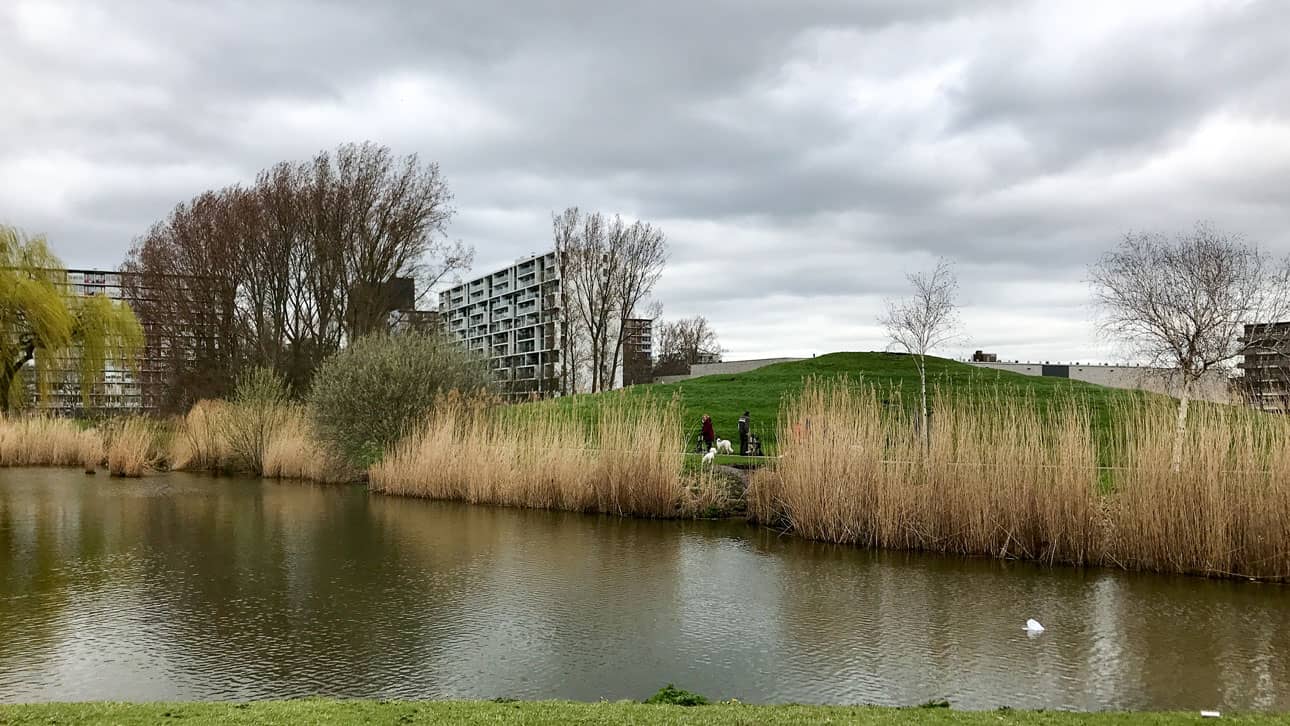
Prins Alexander is Rotterdam's most populous district, home to approximately 98,000 people and a surprisingly varied collection of neighbourhoods. Located in the eastern part of the city, it combines major shopping destinations, spacious residential areas, parks and even a lakeside beach. From the busy streets around Alexandrium to the quieter surroundings of Ommoord and Nesselande, Prins Alexander offers a different side of Rotterdam from the familiar city-centre skyline.
Photo credit: Amanda de Jong Bouwens.
While tourists often concentrate on the Markthal, Erasmus Bridge and the city's historic waterfront, Prins Alexander is a place where a substantial part of Rotterdam's everyday life takes place. It has apartment towers, terraced houses, schools, shopping centres, community facilities and recreational areas, spread across neighbourhoods that differ considerably in age and character.
In fact, the district is large enough that visiting one part doesn't necessarily tell you much about another. The commercial centre around Rotterdam Alexander station feels very different from the residential streets of 's-Gravenland or the waterfront promenade in Nesselande.
History: From peatland to a Rotterdam district
The history of Prins Alexander begins long before the apartment buildings and shopping centres appeared.
Centuries ago, much of the area consisted of peatland. The extraction of peat for fuel gradually transformed the landscape into an extensive system of lakes and waterways. This created difficulties for agriculture and surrounding settlements, eventually leading to plans to reclaim the land.
Drainage of the area began in 1867 and was completed in 1875. The reclaimed land became known as the Prins Alexanderpolder, named after Prince Alexander, a son of King Willem III. The polder subsequently developed into an agricultural area, with farms and market gardens supplying produce to Rotterdam and its surroundings.
Following the Second World War, Rotterdam needed substantial numbers of new homes. The eastern outskirts offered space for residential expansion, and construction gradually transformed the former agricultural landscape.
Development of Het Lage Land began in 1961, followed by Ommoord in the mid-1960s. Oosterflank and Zevenkamp were developed later, with Prinsenland and 's-Gravenland following as the city continued expanding eastwards. Construction of Nesselande began around 2000.
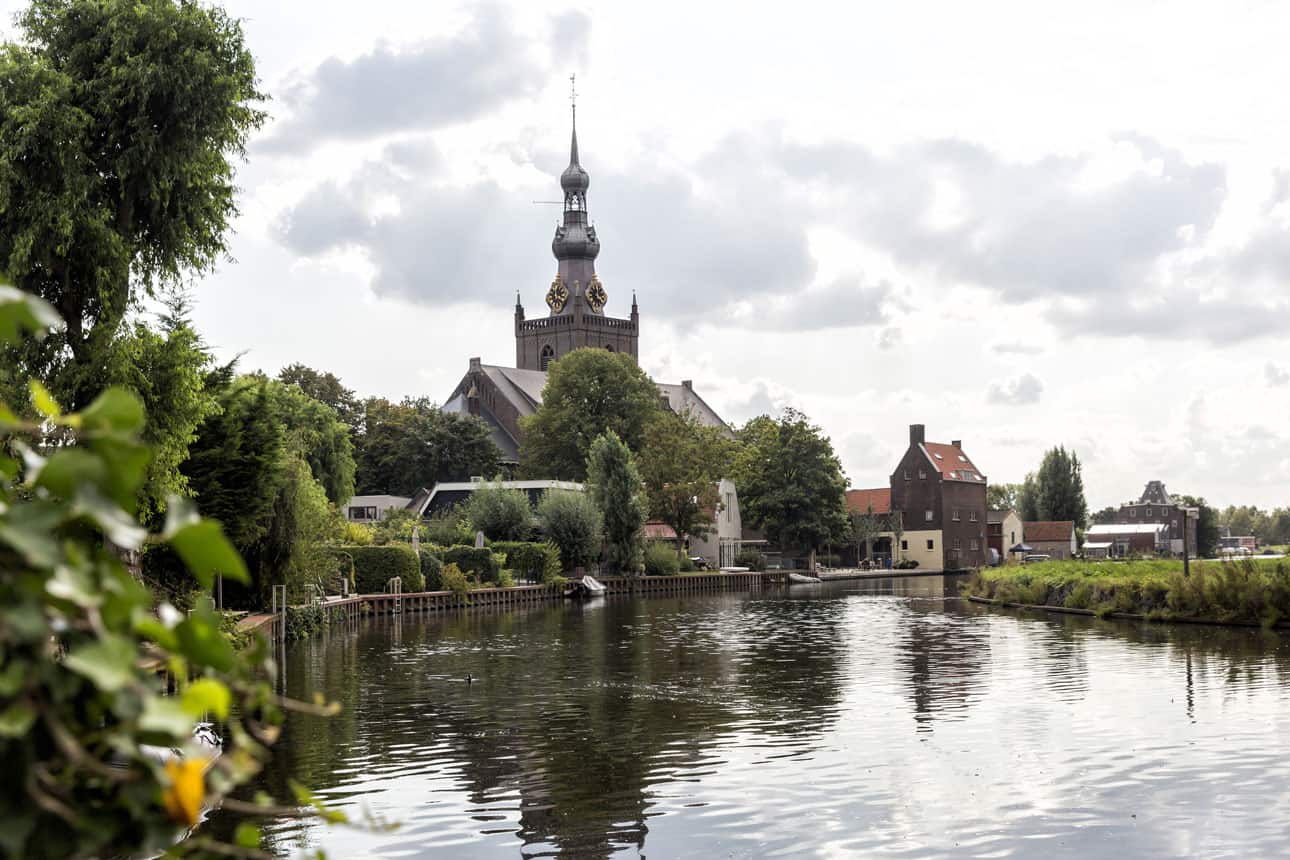
One exception to this predominantly modern history is Kralingseveer, which has much older roots as a settlement near the River IJssel.
Today, the former polder is an established part of Rotterdam, although its low-lying geography and history of water management remain important to understanding the landscape.
Do you run a business? RotterdamStyle is looking for a main sponsor. Get exclusive visibility across our website for a fixed fee. Interested? Contact us 🤝
The eight neighbourhoods of Prins Alexander
Prins Alexander consists of eight neighbourhoods, each with its own character and housing mix. Some are dominated by post-war apartment buildings, while others offer more recent residential developments, family homes and waterfront properties.
Het Lage Land is one of the district's older post-war residential neighbourhoods. Its streets contain a combination of apartment buildings, terraced housing and local shopping facilities, with a relatively spacious layout compared with many inner-city areas.
Ommoord is known for its residential towers, low-rise housing and extensive green spaces. Developed from the 1960s onwards, it has its own neighbourhood shopping centres and connections to the city's metro network.
Oosterflank developed mainly during the 1980s. Besides residential streets, it contains the important commercial area around Alexandrium Shopping Center and Rotterdam Alexander station.
Zevenkamp offers a mixture of apartment buildings, family housing, local shops and green spaces. It is connected to the wider city by metro and sits towards the northeastern side of Rotterdam.
Prinsenland combines apartment buildings, residential streets and parkland. Prinsenpark, one of the district's better-known green spaces, provides an attractive setting for walking and recreation.
's-Gravenland has a relatively spacious residential character, with a mix of housing types and neighbourhood greenery. Its housing market differs noticeably from that of some older parts of Prins Alexander.
Kralingseveer is the district's smallest and oldest neighbourhood. Its location near the River IJssel and its older settlement history give it a different character from the twentieth-century residential districts nearby.
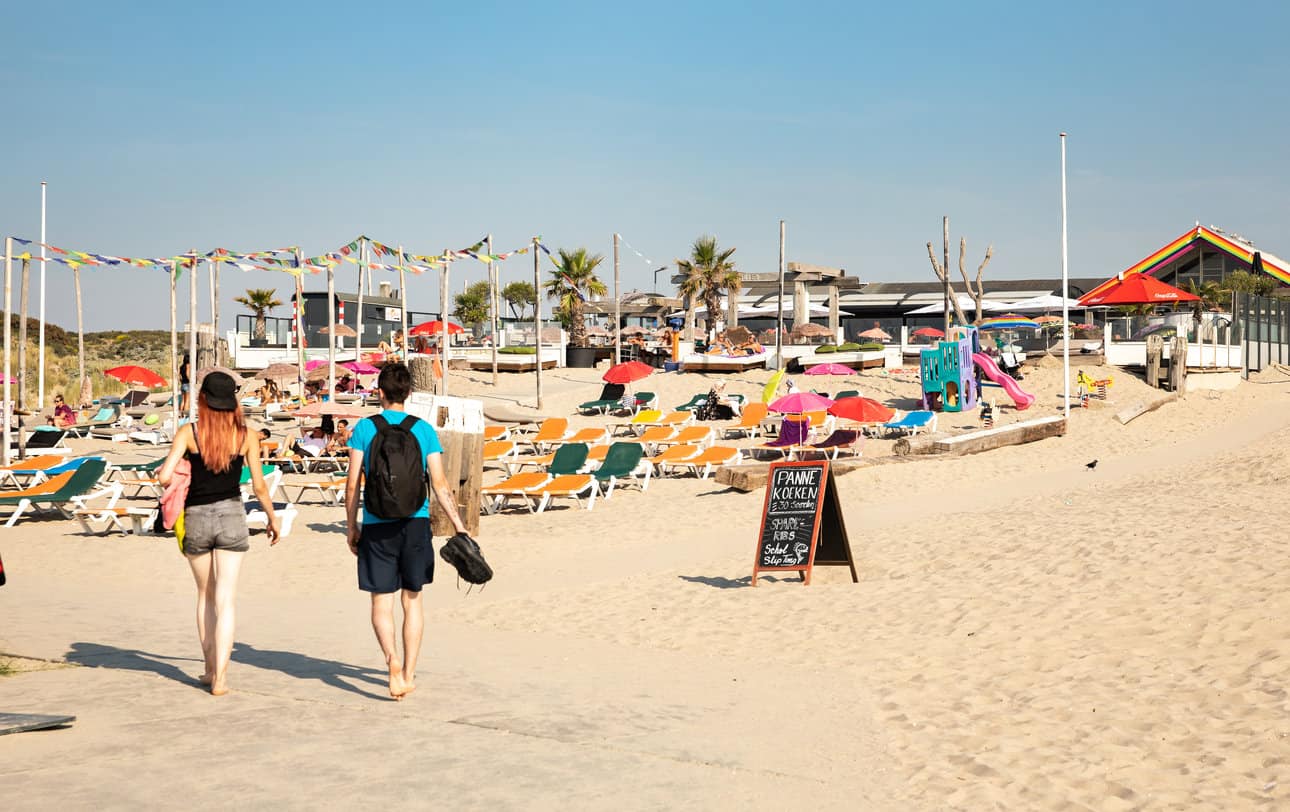
Nesselande is the newest major residential neighbourhood. Located beside the Zevenhuizerplas, it combines modern homes and apartments with a boulevard, restaurants, recreational facilities and a popular sandy beach.
Do you run a business? RotterdamStyle is looking for a main sponsor. Get exclusive visibility across our website for a fixed fee. Interested? Contact us 🤝
Shopping at Alexandrium
Alexandrium is one of Rotterdam's largest shopping destinations and a major reason people visit Prins Alexander from elsewhere in the city and region.
The commercial area consists of three connected shopping environments: Alexandrium Shopping Center, Alexandrium Megastores and Alexandrium Woonmall.
The Shopping Center offers a large selection of fashion, beauty, electronics, food and everyday retail stores. Alexandrium Megastores is known for larger retail premises, while the Woonmall specialises in furniture, interiors and home furnishings.
Together, the three areas contain more than 200 shops, making Alexandrium particularly convenient if you're planning a substantial shopping trip or looking for something you can't easily find in the city centre.
The shopping district is located near Rotterdam Alexander train and metro station, with parking facilities and road connections to the A16 and A20.
More information: Official Alexandrium website.
Do you run a business? RotterdamStyle is looking for a main sponsor. Get exclusive visibility across our website for a fixed fee. Interested? Contact us 🤝
Parks, green spaces and outdoor recreation
One of Prins Alexander's defining qualities is the amount of space devoted to greenery, waterways and outdoor recreation. While the district is urban, it often feels considerably more open than Rotterdam's densely built central neighbourhoods.
Prinsenpark, situated near Prinsenland, is one of the area's most recognisable parks. Developed in the 1990s, it features an extensive water feature, walking paths and open green spaces. The park is used by residents for exercise, recreation and neighbourhood activities, and sometimes hosts local cultural events.
Ommoord also offers substantial greenery, including the Ommoordse Veld and other green corridors around its residential buildings. These spaces are part of what makes the district attractive to people who prefer a quieter residential environment without leaving Rotterdam.
However, if you're looking for somewhere to spend a sunny afternoon beside the water, Nesselande is probably the district's most distinctive destination.
Nesselande beach and the Zevenhuizerplas
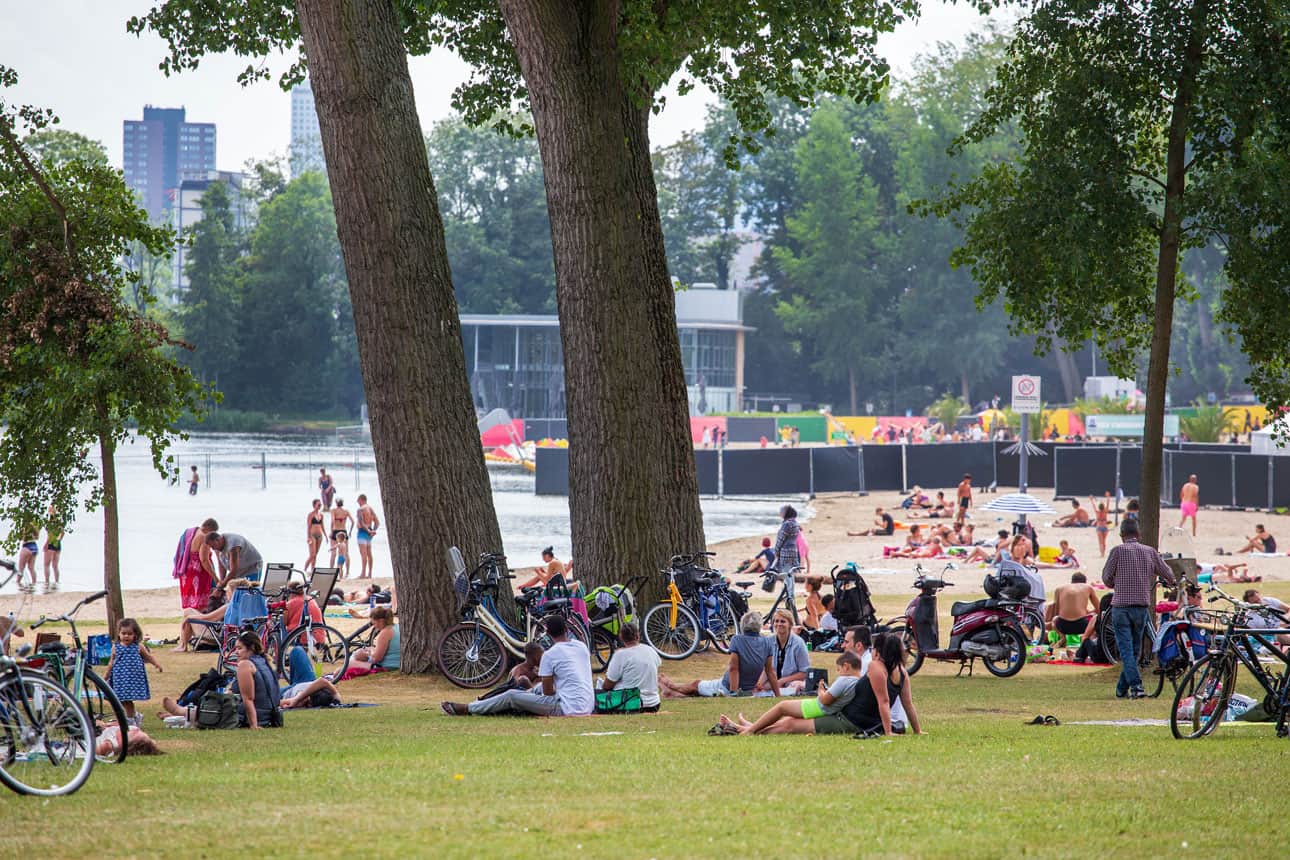
Yes, Rotterdam has a beach in Prins Alexander. Nesselande beach stretches for more than 800 metres along the Zevenhuizerplas and is one of the city's established recreational swimming areas.
The beach is accompanied by a waterfront boulevard, cafés and restaurants, while the surrounding Oeverpark includes facilities for beach volleyball, skating, fitness and other outdoor activities.
During warmer months, visitors come here to sunbathe, swim, walk and enjoy the water. The municipality monitors the designated swimming area's water quality during the official bathing season, and lifeguards are present during the high season.
Before swimming, it's sensible to check current water-quality advice, particularly during periods of hot weather. Outside the official bathing season, the water isn't monitored in the same way.
More information: Municipality of Rotterdam: Nesselande beach.
One geographical detail worth remembering: Kralingse Plas is not part of Prins Alexander. That lake belongs to Kralingen-Crooswijk, a neighbouring district. Although both areas offer outdoor recreation, they are separate destinations.
Do you run a business? RotterdamStyle is looking for a main sponsor. Get exclusive visibility across our website for a fixed fee. Interested? Contact us 🤝
Housing and living in Prins Alexander
Prins Alexander has a particularly diverse housing market, ranging from older post-war flats and terraced houses to modern apartments, larger family homes and waterfront properties.
That variety means it's difficult to generalise about property prices or the cost of living across the district.
According to CBS-based figures for 2025, the average WOZ property value in Prins Alexander was approximately €360,000, compared with around €342,000 for Rotterdam as a whole. WOZ values are official property valuations used for taxation, rather than actual asking or selling prices.
There are substantial differences within the district. Neighbourhoods such as Oosterflank, Het Lage Land and Zevenkamp have lower average property valuations than Nesselande and 's-Gravenland, where larger and newer homes account for a different housing mix.
For people considering moving to Prins Alexander, the choice therefore depends on more than the district name. Proximity to public transport, schools, shops, green spaces and the type of housing available can vary considerably between neighbourhoods.
The area's generally spacious layout and range of residential environments make it worth considering if you prefer a neighbourhood outside Rotterdam's busier central districts. However, availability and affordability should always be assessed for individual properties rather than assumed from district-wide averages.
Public transport and getting around
Prins Alexander is connected to the rest of Rotterdam by train, metro, bus and major roads.
Rotterdam Alexander station is the district's main public transport hub, combining railway services with Rotterdam's metro network. Its location beside Alexandrium also makes it a practical starting point for shopping or exploring the surrounding neighbourhoods.
Metro services provide connections across the eastern part of Rotterdam and towards the city centre. Nesselande has its own metro terminus on line B, making the lakeside neighbourhood accessible without a car.
The district is also served by several bus routes and has road connections to the A16 and A20. For local journeys, cycling is another practical option, particularly between residential neighbourhoods, parks and shopping areas.
Because Prins Alexander covers a large area, travelling between its neighbourhoods can take longer than visitors might expect. Checking the destination and nearest metro station before setting off can save you an unnecessary detour.
Do you run a business? RotterdamStyle is looking for a main sponsor. Get exclusive visibility across our website for a fixed fee. Interested? Contact us 🤝
The changing Alexanderknoop and Prins Alexanderplein
Prins Alexander isn't standing still. One of the municipality's most important development projects in Rotterdam's eastern districts centres on the Alexanderknoop, the area surrounding Rotterdam Alexander station and the Alexandrium shopping district.
The municipality's long-term vision is to develop the area into a greener, more lively urban centre, combining housing, offices, shops, cultural facilities and better public spaces.
One visible improvement is the transformation of Prins Alexanderplein. The previously rather hard-surfaced square has been redesigned with approximately 2,500 square metres of additional greenery, around 50 new trees, improved public space and features intended to make the area more pleasant for pedestrians and visitors.
The municipality is also planning further improvements to routes around the station and the wider commercial district. The overall Alexanderknoop development is a long-term programme, with ambitions extending towards 2040, so not every element of the vision has been completed or given a definitive construction timetable.
These developments are particularly significant because Alexandrium and Rotterdam Alexander station already function as one of the city's major shopping and transport destinations.
More information: Municipality of Rotterdam: Alexanderknoop development.
Restaurants, cafés and local activities
Although Prins Alexander isn't primarily known as a nightlife district, it has a broad range of restaurants, cafés and casual dining options serving its residents and visitors.
You'll find a concentration of food and drink establishments around Alexandrium, as well as smaller restaurants and neighbourhood cafés in shopping areas throughout the district. Nesselande adds another dimension, with places to eat and drink near the Zevenhuizerplas.
The district also has sports facilities, community centres and neighbourhood activities. Prinsenpark and other public spaces occasionally host events, while shopping centres organise seasonal programmes throughout the year.
If you're planning an evening specifically around nightlife, Rotterdam's central districts offer a much larger concentration of clubs and bars. Prins Alexander's appeal is different: it's a place where shopping, neighbourhood life and outdoor recreation play a bigger role.
Is Prins Alexander worth visiting?
It depends on what you want to experience. Prins Alexander doesn't have the same concentration of famous landmarks as central Rotterdam, but that doesn't mean there's nothing to discover.
For shopping, Alexandrium is an obvious destination. If you're looking for parks and a little breathing room, Prinsenpark and the green spaces around Ommoord are worth exploring. And during the warmer months, Nesselande beach offers a particularly enjoyable alternative to the city's more familiar waterfront locations.
Prins Alexander also gives visitors a different perspective on Rotterdam. Beyond the architecture of the city centre, this is a district shaped by centuries of water management, post-war urban planning and continuing residential development.
Whether you're thinking about moving here, visiting friends or simply curious about a part of Rotterdam you haven't explored before, Prins Alexander has considerably more variety than its largely residential reputation might suggest.

.png)