
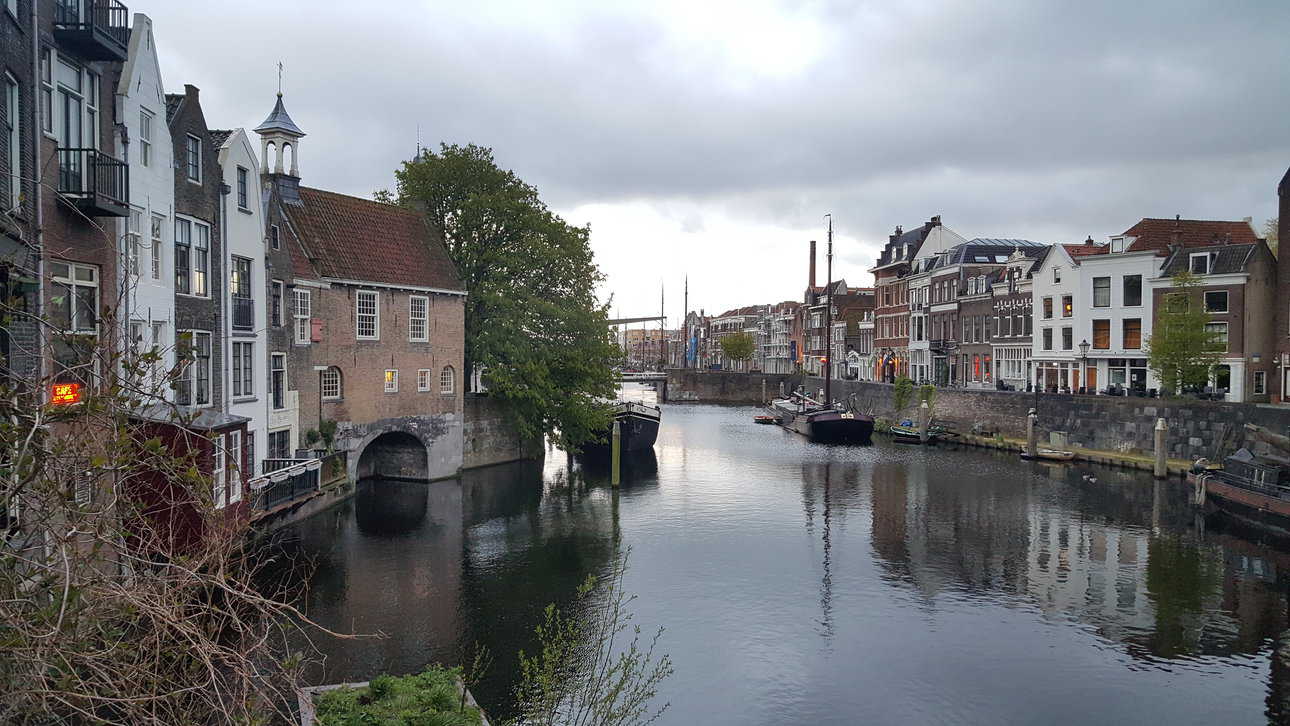
If you are searching for Rotterdam's old-town atmosphere, Historisch Delfshaven is the place to start. It is better understood as the city's surviving historic harbour quarter than as a formal “Old Town”, with old harbour water, narrow houses, warehouses, bridges, a centuries-old church and a windmill creating a streetscape that feels very different from modern central Rotterdam.
Where to find Rotterdam's old-town atmosphere
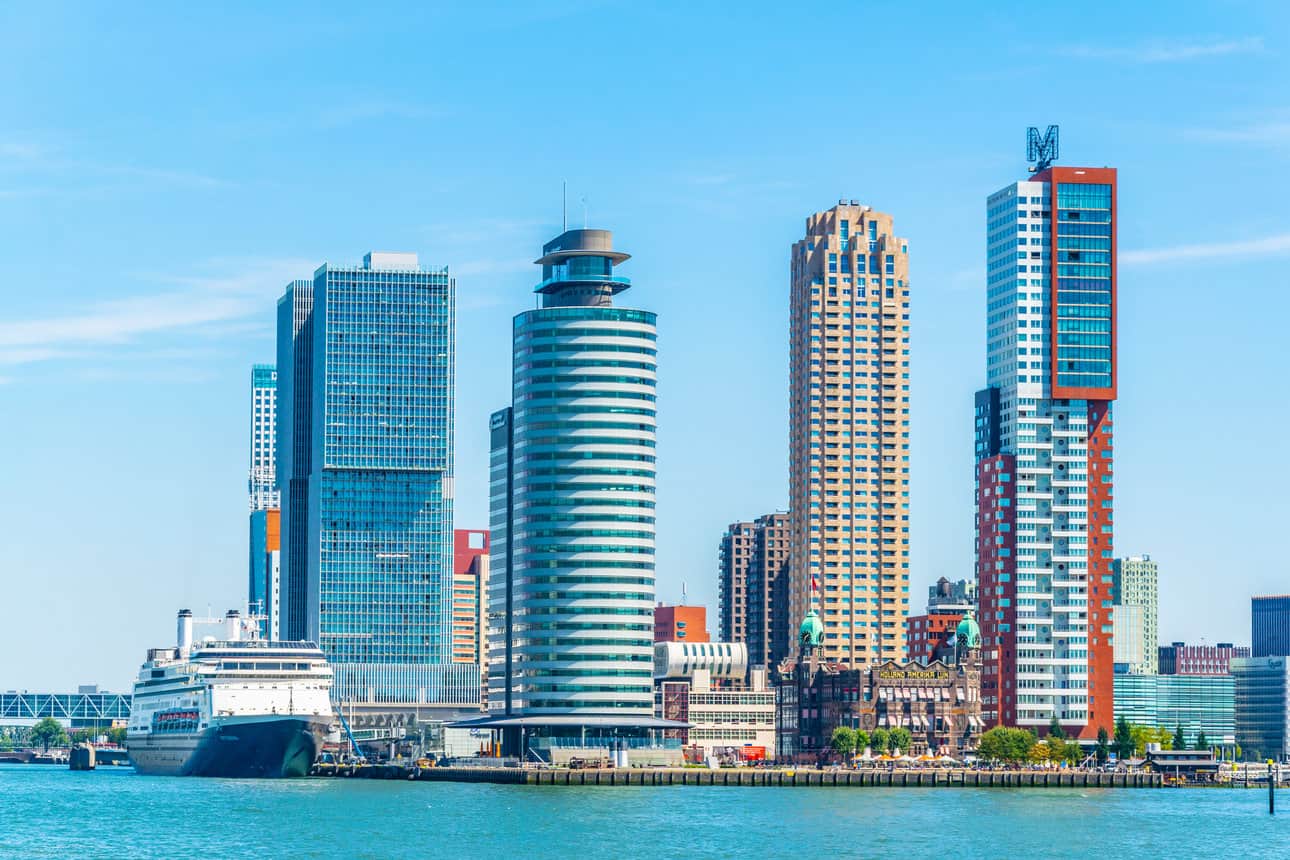
Rotterdam is famous for rebuilding itself after the Second World War, which is why much of the centre is defined by modern architecture rather than medieval streets. Historisch Delfshaven, west of the centre, offers a very different view of the city.
The historic core around the Aelbrechtskolk, Voorhaven and Achterhaven survived the destruction that transformed central Rotterdam in 1940. Today it forms part of a nationally protected townscape, recognised not simply for individual monuments but for the relationship between its harbour water, quays, streets, bridges and buildings.
If someone tells you to visit Rotterdam's “old town”, this is probably the place they mean.
Do you run a business? RotterdamStyle is looking for a main sponsor. Get exclusive visibility across our website for a fixed fee. Interested? Contact us 🤝
A simple walk through Delfshaven
The easiest introduction is to start near the Delfshaven public transport stop and walk towards the Aelbrechtskolk. From there, continue past the Oude of Pelgrimvaderskerk and Stadsbrouwerij De Pelgrim before following the Voorhaven south.
The Dutch Pinball Museum sits directly on the harbour at Voorhaven 12. Continue along the water towards the southern end and the reconstructed De Distilleerketel windmill comes into view. If you have extra time, cross towards the Achterhaven to see the surviving VOC warehouse or make a detour to the community garden De Schat van Schoonderloo.
The historic core itself is compact. You can get the basic impression in an hour, but two or three hours makes more sense if you want to visit the church, museum or brewery rather than simply photograph the harbour and leave.
How Delfshaven began
Delfshaven's story begins in 1389, when Delft received permission to create its own shipping connection to the Maas. Delft wanted direct access to maritime trade without depending on neighbouring Rotterdam and Schiedam.
A settlement developed where the new waterway reached the river, around what are now the Aelbrechtskolk and Voorhaven. The Achterhaven followed in the 15th century, and herring fishing, shipbuilding and jenever production became important parts of the local economy.
Delfshaven separated from Delft in 1795, was briefly reunited with it from 1803 and became an independent municipality again in 1811. Its independence ended in 1886, when Rotterdam incorporated Delfshaven.
Its maritime history also includes the Dutch East India Company. Shipyards developed around the Buizenwaal, and the first VOC ship built here, Delft, was launched in 1606. Shipbuilding continued until the VOC disappeared at the end of the 18th century.
Do you run a business? RotterdamStyle is looking for a main sponsor. Get exclusive visibility across our website for a fixed fee. Interested? Contact us 🤝
Why Delfshaven looks so different
The German bombardment of Rotterdam on 14 May 1940 destroyed much of the city centre, killed nearly 900 people and left around 80,000 without homes. The fires and subsequent clearance fundamentally changed the appearance of central Rotterdam.
Historisch Delfshaven escaped that destruction. Its old harbour layout, quays, streets, alleys and much of its historic building stock survived, which is why walking here can feel like arriving in another Dutch city altogether.
The area is not frozen in one century. Buildings in the protected core range across different periods, and later architecture sits alongside older houses, warehouses and industrial structures. That mixture is part of what makes Delfshaven more interesting than a perfectly reconstructed heritage district.
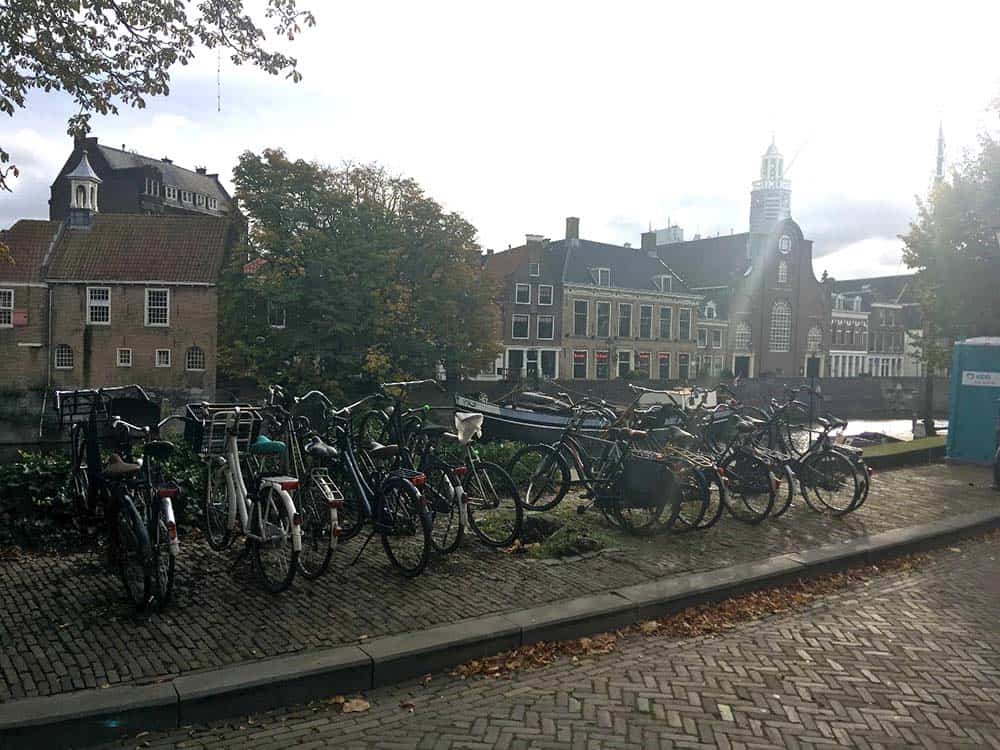 Historic houses and harbour water at Aelbrechtskolk in Delfshaven. Photo: Anna Soetens
What to see in Historisch Delfshaven
The harbour itself is the main attraction, so there is no need to treat Delfshaven as a checklist. Still, several landmarks are worth knowing before you arrive.
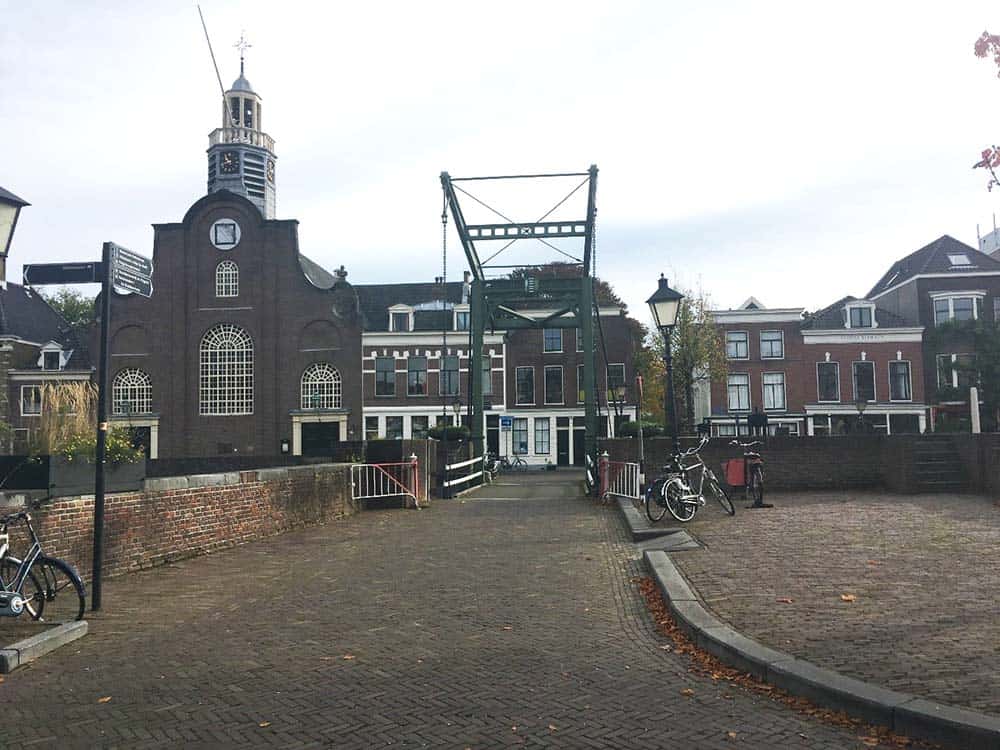 Drawbridge leading towards the Pilgrim Fathers Church in historic Delfshaven. Photo: Anna Soetens
Oude of Pelgrimvaderskerk
The Oude of Pelgrimvaderskerk is one of Delfshaven's most important landmarks. Delft received permission to build a church here in 1416, and the first Sint-Antoniuskapel was completed in 1417. Repeated alterations over the centuries created the church standing beside the Aelbrechtskolk today.
Its international significance comes from the English Separatists now known as the Pilgrim Fathers. After more than eleven years in Leiden, members of the community left Delfshaven aboard the Speedwell in 1620. The ship later developed serious leaks, and the transatlantic journey ultimately continued aboard the Mayflower.
A large stained-glass window showing the Speedwell recalls that connection. The church also contains a permanent presentation about the Pilgrim Fathers.
This is still a working church and event venue rather than a conventional museum. Open Church normally takes place on selected Friday and Saturday afternoons from around 12:00 to 16:00, although dates can change. There is normally no Open Church programme in December, January and February, so check the church website before making a special trip.
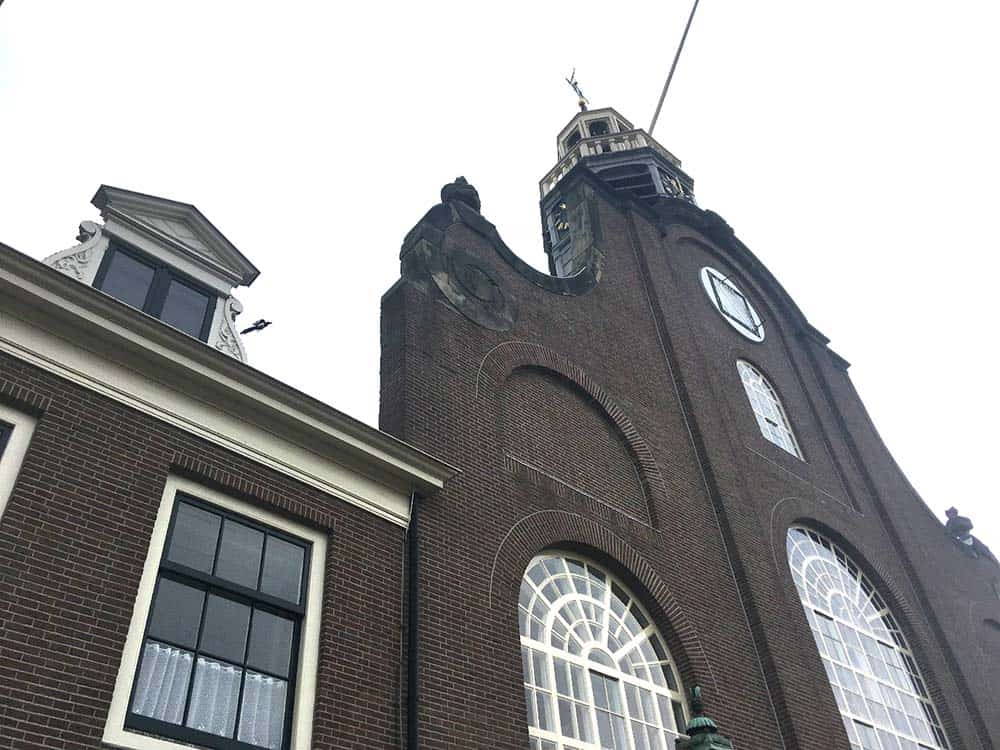 Carillon tower of the Oude of Pelgrimvaderskerk in Delfshaven. Photo: Anna Soetens
VOC Zeemagazijn
At Achterhaven 148 stands a surviving warehouse built in 1672 for the Delft chamber of the Dutch East India Company. The former VOC Zeemagazijn is one of only four surviving sea warehouses of its kind in the Netherlands.
It is an especially useful stop because it makes Delfshaven's maritime history tangible. The VOC story here was not simply about ships passing through the harbour: vessels were actually built in Delfshaven.
De Distilleerketel
At the southern end of the historic harbour stands Korenmolen De Distilleerketel. It looks much older than it actually is.
The present windmill was built in 1986, replacing an earlier landmark whose history began in 1727. The predecessor was used in connection with Delfshaven's distilling industry before eventually disappearing, and the reconstruction restored a windmill to the harbour skyline.
The mill itself is no longer operating as a working grain mill, although the associated mill shop has limited seasonal opening days. Check current information if you want to go inside rather than simply see it from the harbour.
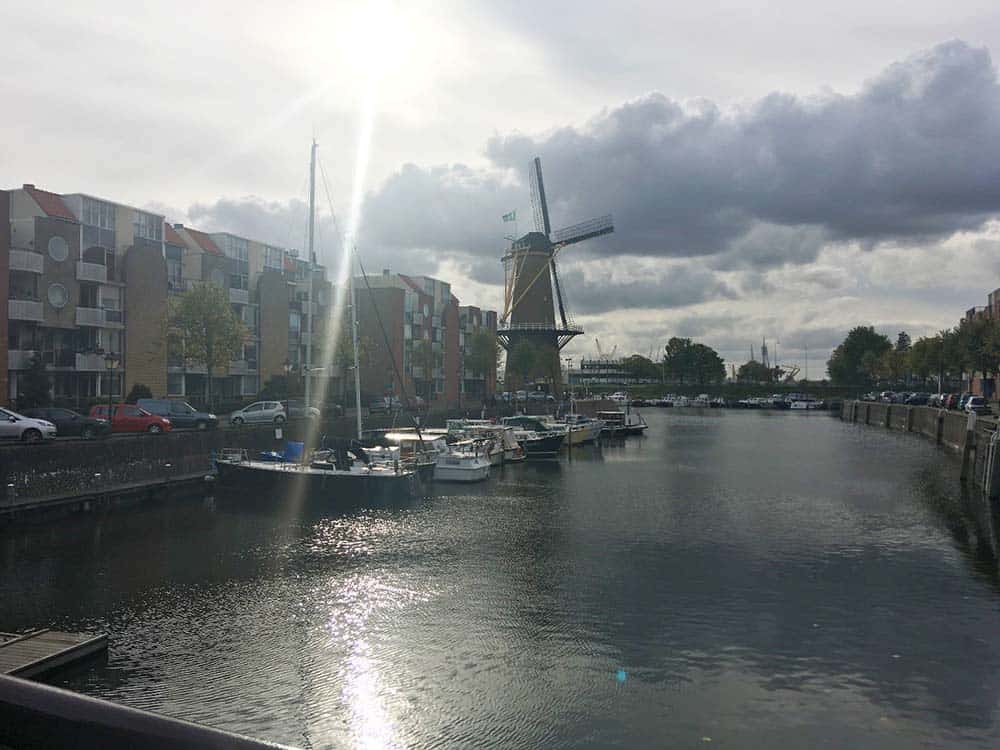 De Distilleerketel windmill at the southern end of historic Delfshaven. Photo: Anna Soetens
Stadsbrouwerij De Pelgrim
A few steps from the church is Stadsbrouwerij De Pelgrim, founded in 1995. The brewery, tasting room and restaurant occupy a prominent spot on the Aelbrechtskolk and make an easy break during a walk through the harbour.
The brewery currently opens Wednesday to Saturday from 12:00 to midnight and Sunday from 12:00 to 22:00. Brewery tours with a tasting can also be booked in advance.
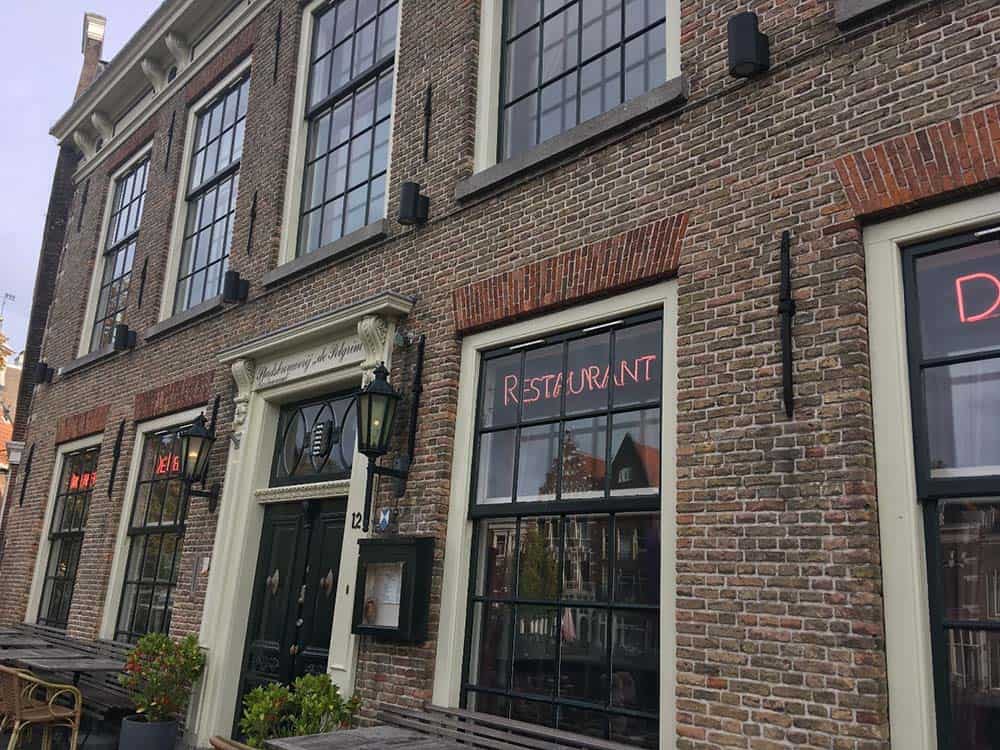 Stadsbrouwerij De Pelgrim beside the Pilgrim Fathers Church. Photo: Anna Soetens
Dutch Pinball Museum
If you want a break from maritime history, the Dutch Pinball Museum provides one of Delfshaven's more unexpected attractions. The museum moved to the former Dubbelde Palmboom building in Historisch Delfshaven in 2020 and now has more than 150 playable pinball machines.
The machines span generations rather than simply sitting behind glass, so playing is central to the visit. The museum normally opens on Wednesday, Saturday and Sunday and uses timed sessions. Booking online in advance is strongly recommended, particularly at weekends and during school holidays.
The entrance is at Voorhaven 12, directly beside the water.
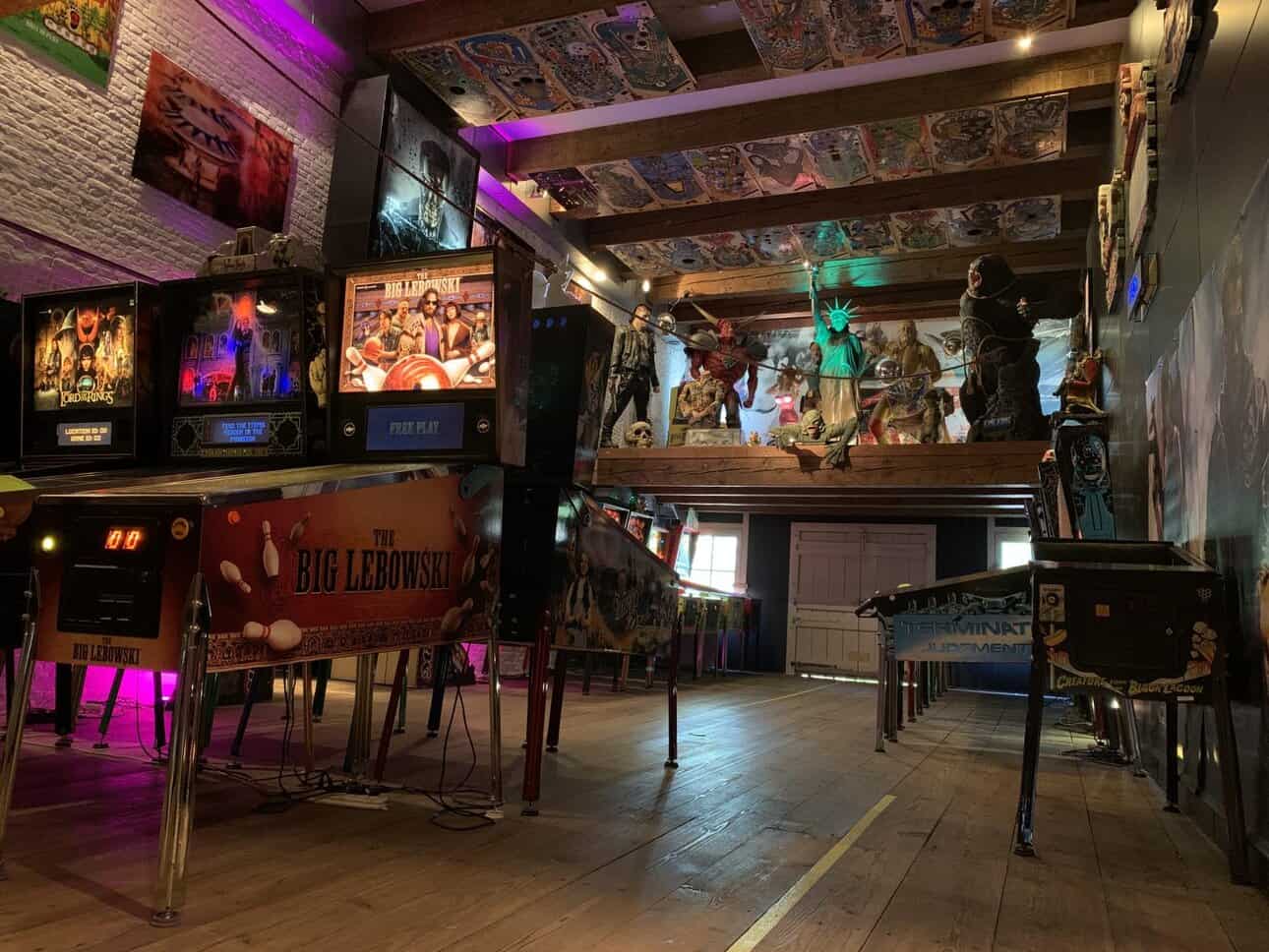 Pinball machines inside the Dutch Pinball Museum in Delfshaven. Photo: Dutch Pinball Museum
Antique shops, studios and jenever bars
Part of Delfshaven's appeal lies between the named attractions. Historic houses and former commercial buildings around the harbour now contain a changing mixture of antique shops, creative studios, small cafés and places connected to Rotterdam's old jenever culture.
Individual businesses come and go, so it is better to explore the harbour streets than arrive with too rigid a shopping list.
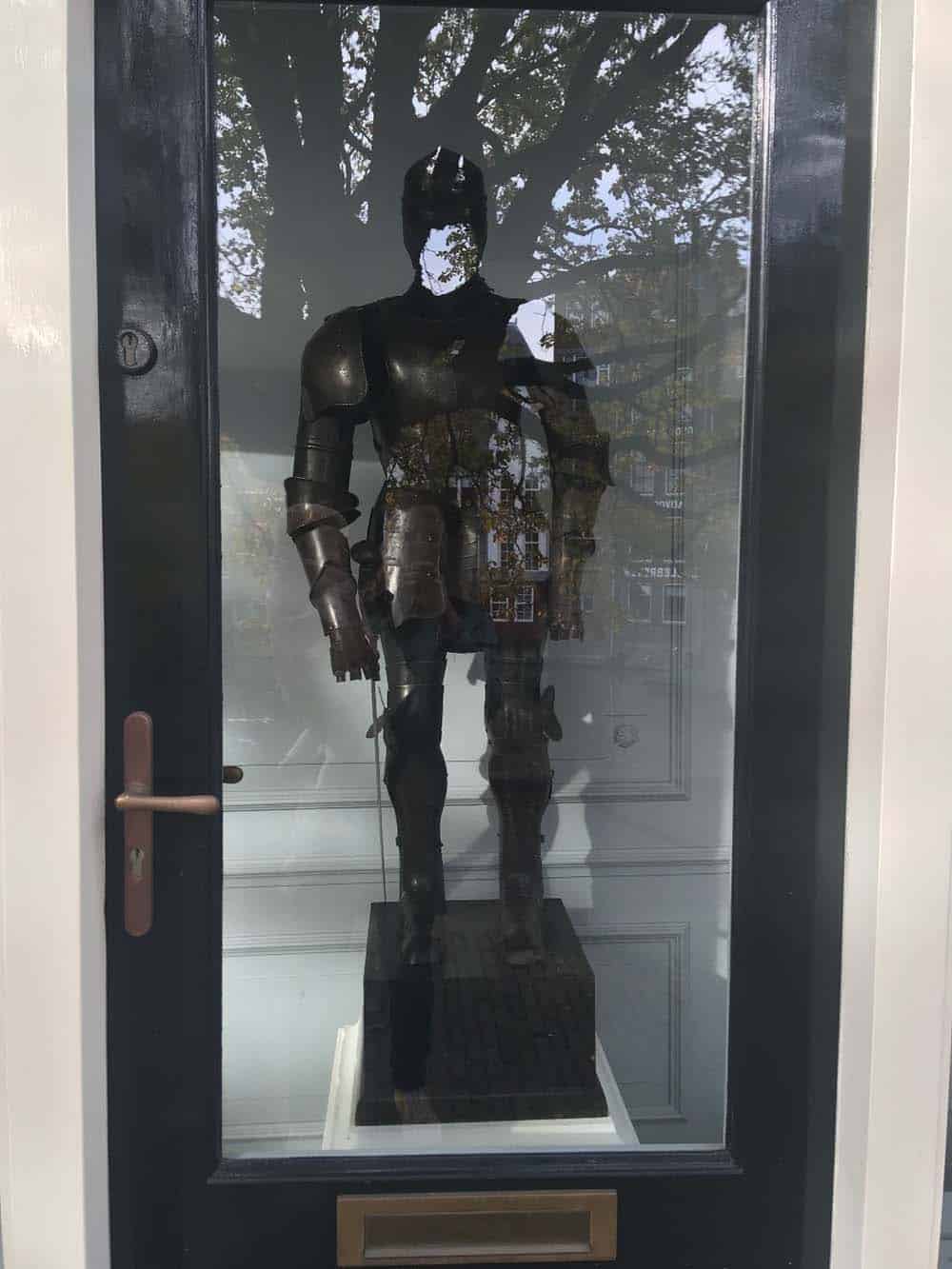 Antique shop window in historic Delfshaven. Photo: Anna Soetens
De Schat van Schoonderloo
De Schat van Schoonderloo is a small community garden hidden in the Schoonderloostraat, a short detour from the historic harbour.
The garden grew from a neighbourhood initiative and is still maintained by local volunteers. Trees, flowers, water and artworks fill a site that once held the Petruskerk and later became an empty plot.
It is open every day until sunset, with 22:00 as the latest closing time. The park makes a particularly good addition if you want something quieter after the busier Voorhaven.
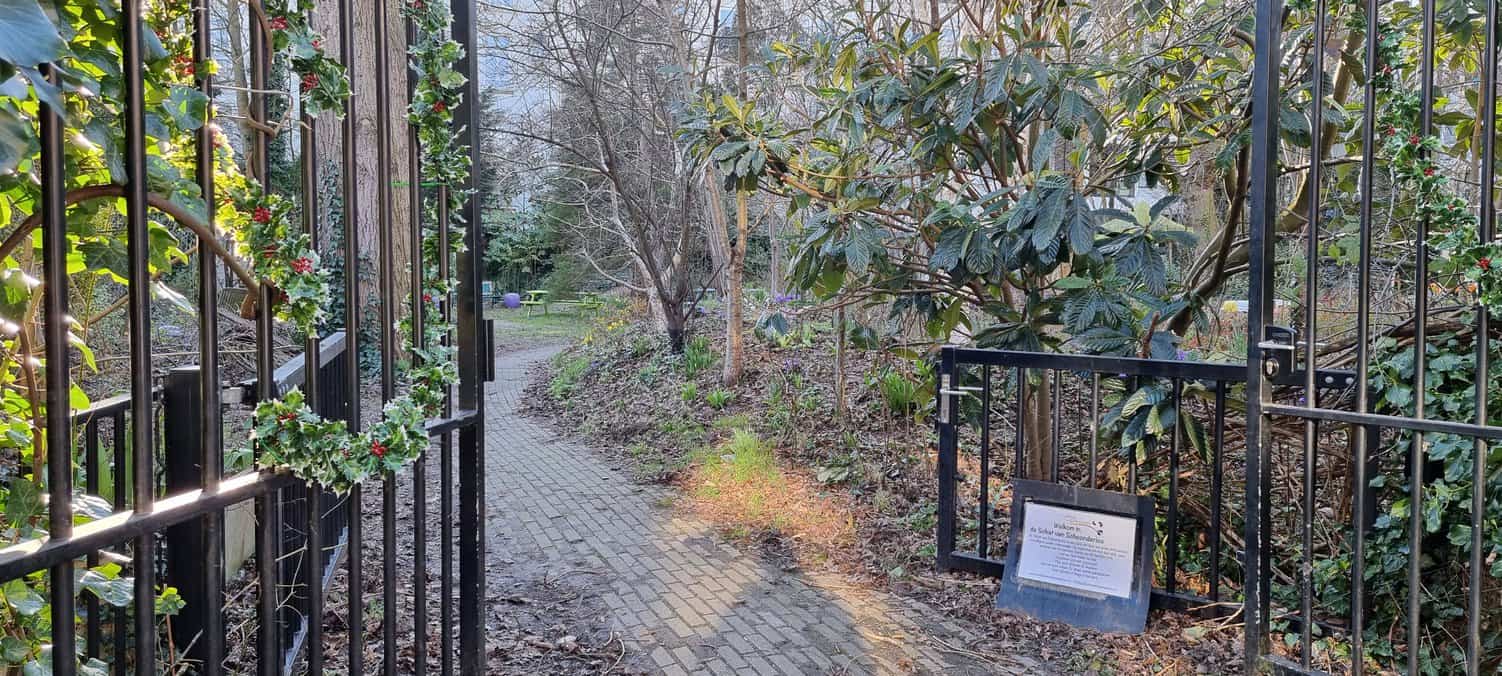 De Schat van Schoonderloo, a community garden maintained by local volunteers in Delfshaven
Do you run a business? RotterdamStyle is looking for a main sponsor. Get exclusive visibility across our website for a fixed fee. Interested? Contact us 🤝
Where to eat and drink
The harbour has several small places where stopping is part of the experience rather than an interruption to it. De Pelgrim is the most obvious historic-harbour choice if you want locally brewed beer, lunch or dinner.
Long-running restaurant 't Ouwe Bruggetje closed on 1 September 2026. Its website says new owners expect to reopen the restaurant around mid-January 2027, so do not rely on older listings that still show it as open.
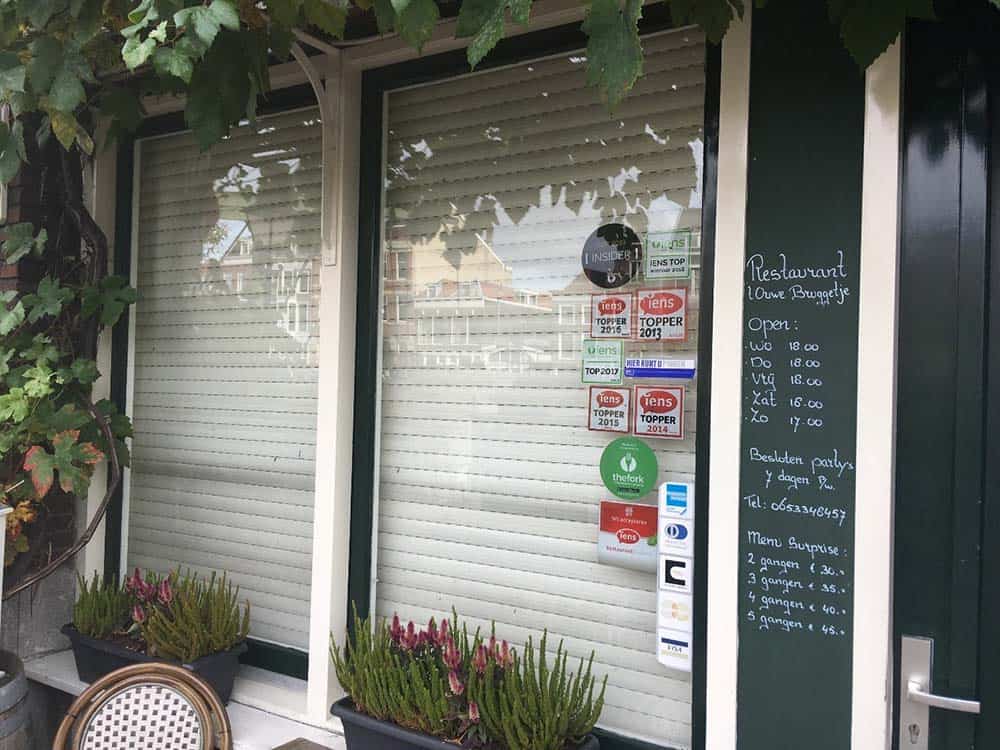 't Ouwe Bruggetje beside the historic harbour in Delfshaven. Photo: Anna Soetens
Take your time
Delfshaven works best without much urgency. The harbour is small enough that you can wander without a detailed route, and much of its character comes from details rather than monumental sights: boats against old quays, narrow side streets, gables reflected in the water and the contrast between historic buildings and everyday neighbourhood life.
If you only have an hour, concentrate on Aelbrechtskolk and Voorhaven. With half a day, add the church or Dutch Pinball Museum, have something to eat or drink and explore the Achterhaven and neighbouring streets.
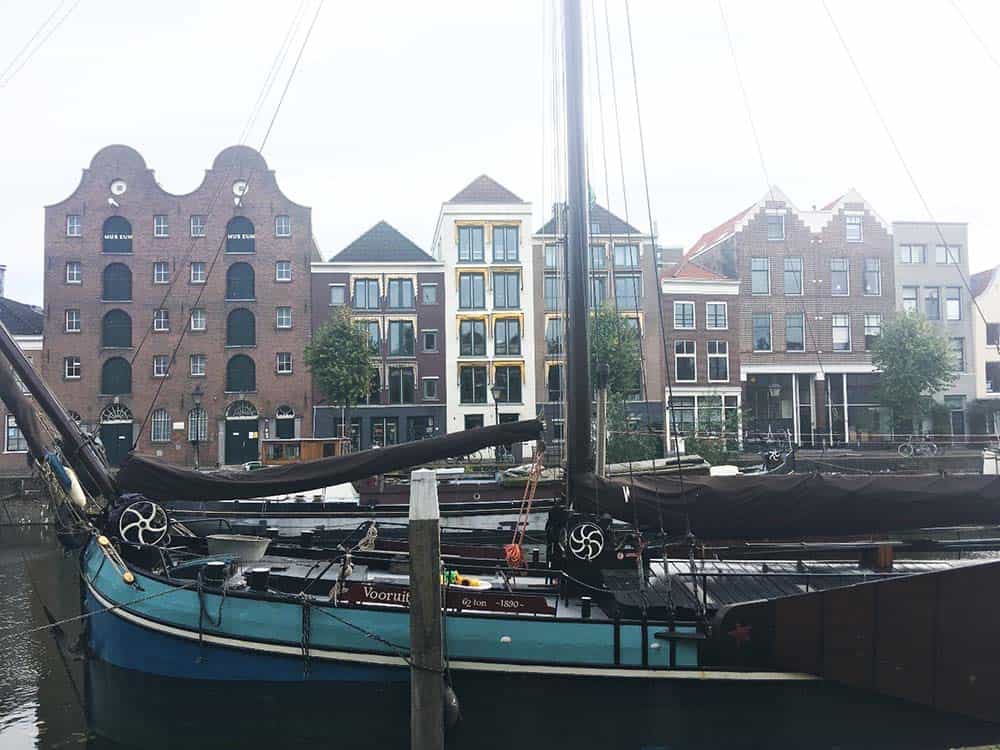 Houseboats and historic harbour buildings in Delfshaven. Photo: Anna Soetens
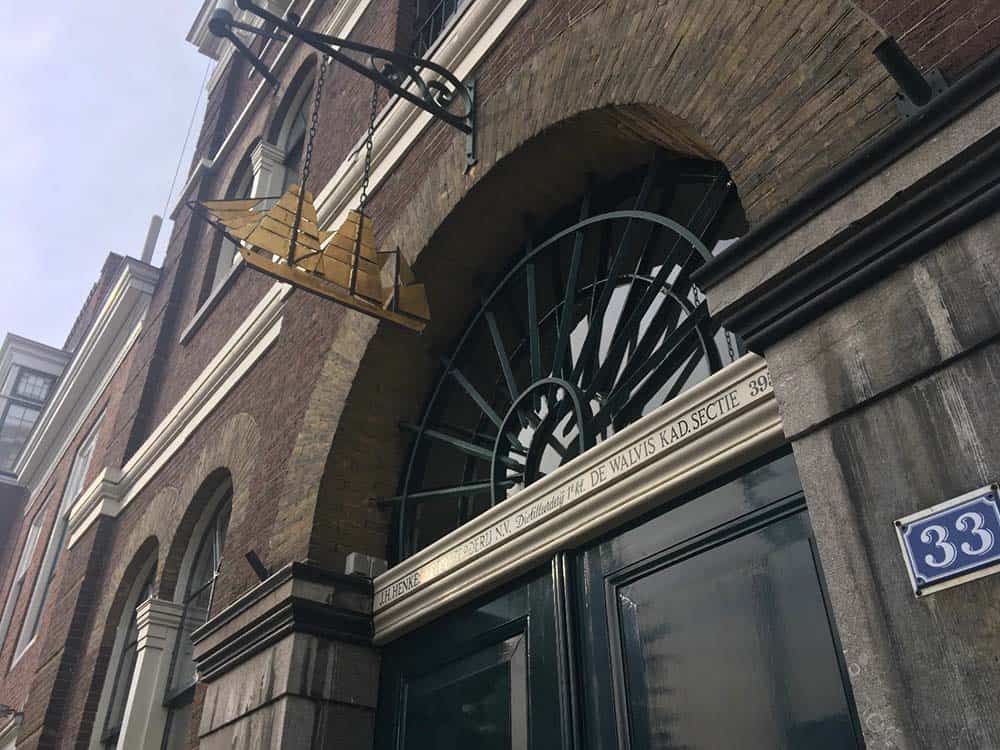 Architectural detail on a historic building in Delfshaven. Photo: Anna Soetens
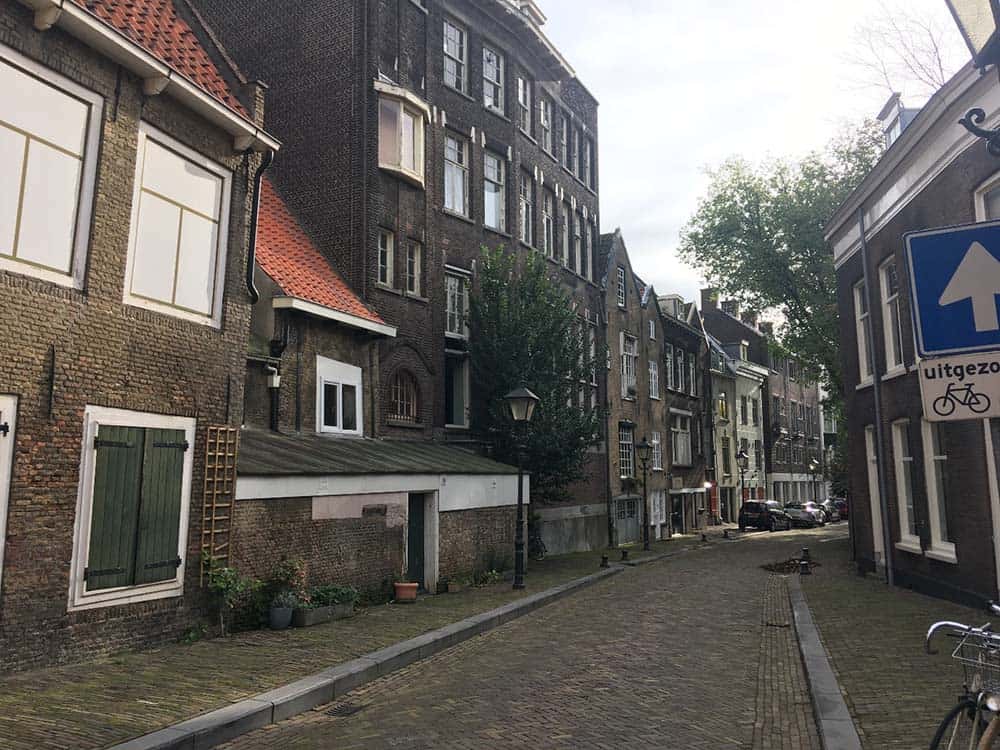 Historic side street behind the Pilgrim Fathers Church in Delfshaven. Photo: Anna Soetens
Do you run a business? RotterdamStyle is looking for a main sponsor. Get exclusive visibility across our website for a fixed fee. Interested? Contact us 🤝
How to get there
Metro lines A, B and C stop at Delfshaven, about a five-minute walk from the historic harbour. From Rotterdam Centraal, you can take metro D or E to Beurs and change there for metro A, B or C towards Delfshaven.
Trams also serve the neighbourhood, but routes can change, so check RET or your public transport app before travelling. Cycling from central Rotterdam is another straightforward option.
If you want a convenient map point in the middle of the historic area, use the Oude of Pelgrimvaderskerk on Aelbrechtskolk.