
ROTTERDAM, 9 June 2026 – Het Industriegebouw has grown from a largely empty post-war monument into an almost fully occupied business hub with more than 200 entrepreneurs, makers and companies under one roof. Its directors, Eva Sharo and Desiree van den Wittenboer, say the building’s success comes less from traditional property management and more from treating tenants as part of an active working community.
The Rotterdam landmark now brings together design studios, architects, technology companies, consultants, start-ups and hospitality businesses. That mix keeps the building active beyond office hours and creates opportunities for people working in different sectors to meet.
Do you run a business? RotterdamStyle is looking for a main sponsor. Get exclusive visibility across our website for a fixed fee. Interested? Contact us 🤝
From empty monument to workplace
Het Industriegebouw was still largely vacant when Sharo and Van den Wittenboer became involved. Sharo came from creative writing, communications and branding, while Van den Wittenboer brought experience in marketing, brand management and hospitality concepts. Since 2020, they have jointly led the building.
“When I first came in here, I mainly thought: what a place,” says Sharo. “It was large, raw and far from finished, but you could immediately feel the potential.”
Van den Wittenboer remembers that the building did not yet function like an established organisation. “It was not a well-oiled machine. And that was exactly what made it interesting, because you could really build something.”
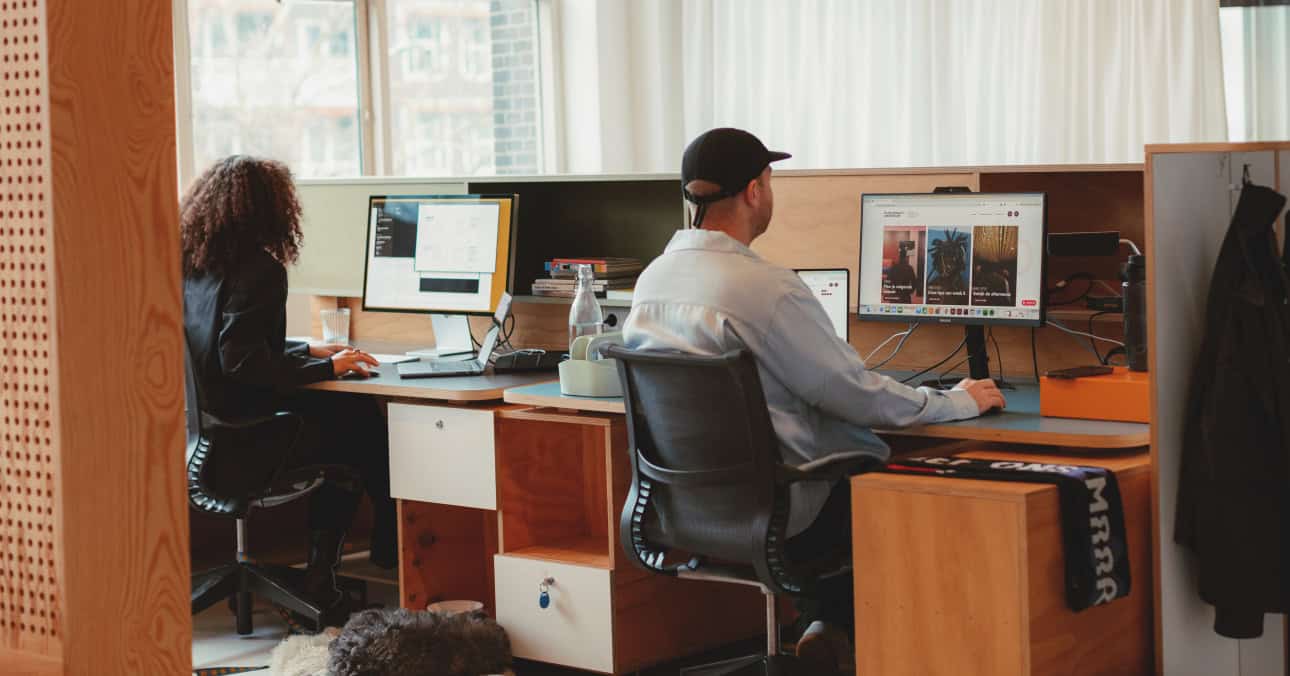
Their approach treats Het Industriegebouw as more than a collection of rented offices. The directors work inside the building, speak to tenants regularly and try to notice problems or needs before they become bigger issues.
“You are not just dealing with companies here, but with people,” says Van den Wittenboer. “If you understand what people need to work well, the rest follows naturally.”
The daily presence of the management also means decisions are informed by what happens inside the building. “We work here ourselves,” says Sharo. “So we experience the same things. That changes how you look at the building and helps you sense more quickly what is needed.”
Do you run a business? RotterdamStyle is looking for a main sponsor. Get exclusive visibility across our website for a fixed fee. Interested? Contact us 🤝
A workplace built around contact
Het Industriegebouw now houses a broader range of businesses than during its earlier years, when creative companies made up much of its community. The current mix includes established firms as well as smaller entrepreneurs and start-ups.
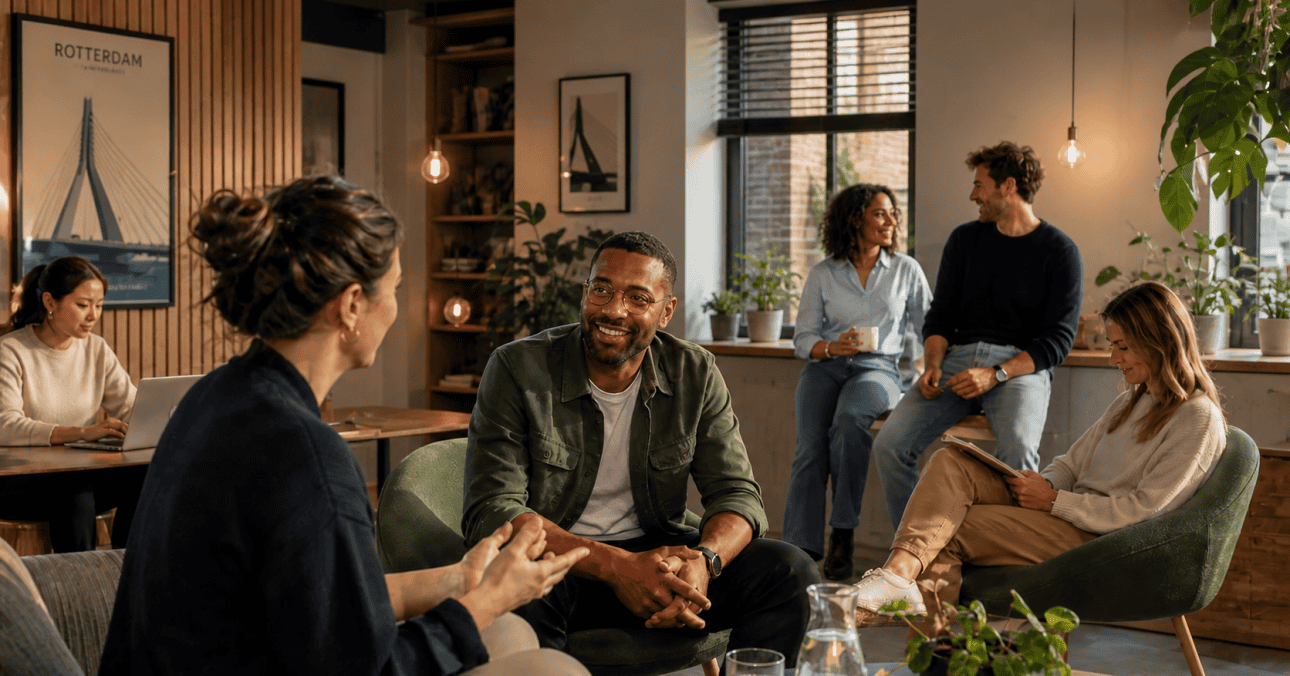
Talks, events and joint initiatives are used to bring people into contact, but informal encounters are just as important. Shared spaces, hospitality businesses and the rhythm of daily work mean tenants can meet without needing a formal networking event.
“The best thing is when people manage to find one another here,” says Van den Wittenboer. “When collaborations arise naturally because you simply see each other every day.”
The building also uses businesses based inside Het Industriegebouw whenever possible, including creative partners, makers and hospitality operators. That keeps work within the community and makes the range of skills inside the building more visible.
“Why would you not use the talent that is already here?” says Sharo. “It is literally under one roof.”
This is also where the hospitality approach becomes practical rather than decorative. The aim is not merely to make the building look welcoming, but to create reasons for people to remain involved and see themselves as part of the place.
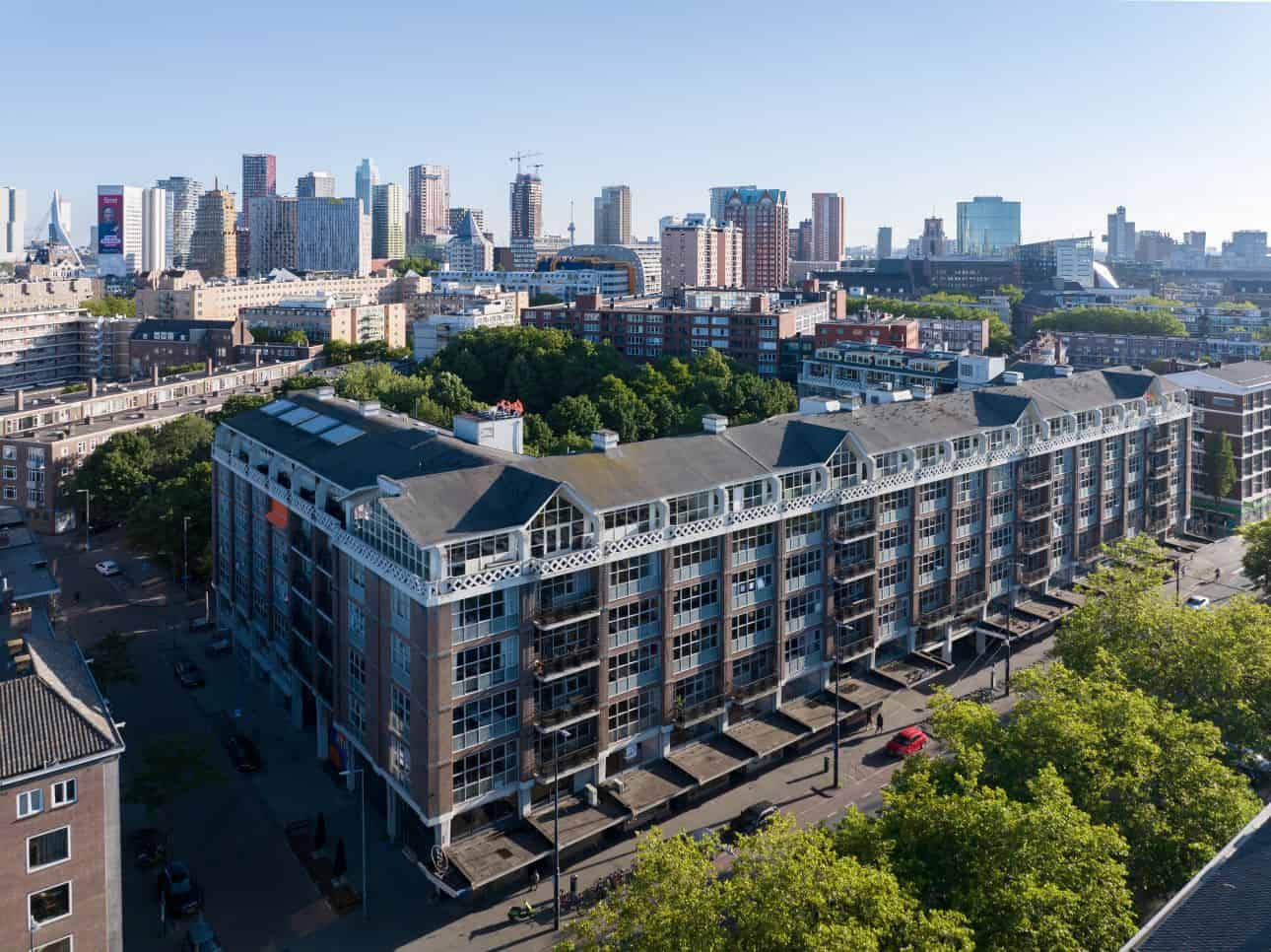 Het Industriegebouw now houses more than 200 Rotterdam businesses, using hospitality and daily contact to build an active working community. Photo: Ossip van Duivenbode
Full occupancy brings new pressures
An almost full building does not remove the challenges of running it. The team has had to respond to the effects of the pandemic, the energy crisis, higher costs and wider geopolitical uncertainty.
Some of those pressures arrive indirectly through the tenants. Rising raw material prices and higher wage costs affect the companies working inside, which can in turn shape their needs, financial room and plans for the future.
That makes regular contact important, particularly when economic conditions change quickly. The directors describe their role as one of staying flexible, understanding what tenants are dealing with and avoiding rushed reactions when outside pressures reach the building.
Do you run a business? RotterdamStyle is looking for a main sponsor. Get exclusive visibility across our website for a fixed fee. Interested? Contact us 🤝
HIG looks beyond full occupancy
Sharo and Van den Wittenboer do not see the current occupancy rate as the end of the process. Keeping a business hub relevant requires continued investment in the building, its services and the relationships between the people using it.
“A full building is not an end point,” says Van den Wittenboer. “That is when the work actually begins. You then have to keep investing, keep improving and keep looking at what the people in the building need.”
The idea of applying the same approach to another location has also been discussed. Any possible HIG 2.0 would need a building with a similarly distinct identity and enough character to support more than a standard office concept.
“The best thing would be if we could create this again in another place that is at least as iconic,” says Sharo. “In a similar way to what we have done here.”