
FROM 3 OCT '26 UNTIL 7 MAR '27 | Kunsthal Rotterdam opens Plastic Sea, Perfect Storm on Saturday 3 October, a photography exhibition by Rob Hornstra and writer Arnold van Bruggen about migrant labour, plastic waste and industrial agriculture in southern Spain. The exhibition focuses on the vast greenhouse landscape around Almería and the people whose work keeps fruit and vegetables moving towards supermarkets across Europe.
The project is part of The Europeans, Hornstra and Van Bruggen’s long-term exploration of contemporary Europe. In this chapter, they turn their attention to one of the continent’s most productive agricultural regions and the uncomfortable realities hidden behind its seemingly endless rows of plastic greenhouses.
Behind Europe’s greenhouse coast
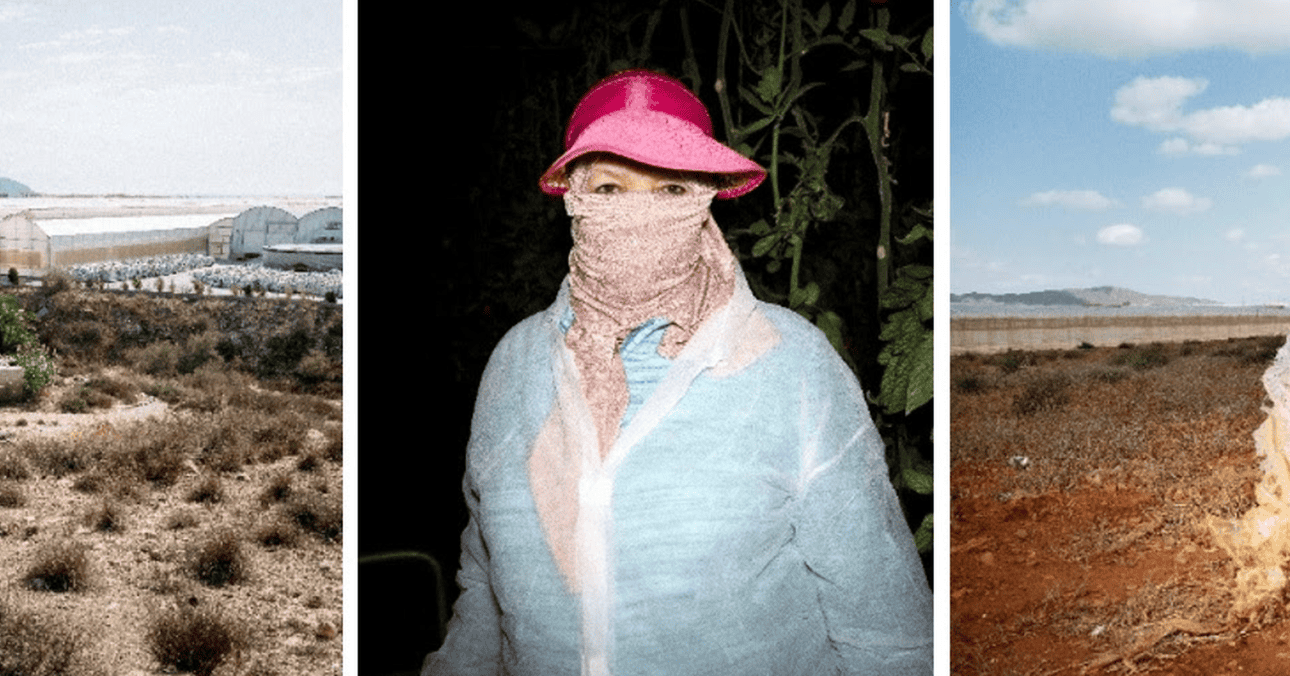
Around Almería, billions of kilos of fruit and vegetables are produced each year beneath plastic. According to the exhibition, roughly 3.5 billion kilos of produce come from the region annually, making it the largest greenhouse complex in Europe.
Hornstra and Van Bruggen are less interested in the scale alone than in the people working inside that system. Their photographs and stories focus on migrant workers, many of them without legal residency status, who pick tomatoes, strawberries and other produce under physically demanding conditions.
The project describes working weeks of six days and daytime greenhouse temperatures that can rise above 50°C, pushing some labour into the night. It also shows how workers can become trapped between economic dependence, insecure legal status and limited access to social protection.
That connection makes the exhibition particularly relevant in Rotterdam. The produce grown around Almería does not remain in Spain. It enters supermarket supply chains across Europe, including the Netherlands, making the photographs less about a distant agricultural landscape and more about the hidden systems behind everyday food.
Do you run a business? RotterdamStyle is looking for a main sponsor. Get exclusive visibility across our website for a fixed fee. Interested? Contact us 🤝
A landscape wrapped in plastic
The title Plastic Sea, Perfect Storm refers partly to the visual reality of Almería itself. From above and from a distance, the greenhouse landscape resembles a white sea stretching across the terrain.
Plastic also appears throughout the lives portrayed in the exhibition. Hornstra photographs self-built homes made from discarded materials, makeshift settlements between greenhouses and waste that has become part of the surrounding landscape. The press material accompanying the exhibition says the industry produces around six billion kilos of plastic waste annually and refers to hundreds of illegal dumping sites in southern Spain.
The images are not limited to anonymous industrial views. Portraits bring individual workers into focus, alongside photographs of the places where they live and work. Together with Van Bruggen’s writing, the exhibition moves between people, landscape and the economic system connecting them.
Among the works are photographs made in places including Barranco de Búho, El Viso, El Hoyo, San Isidro de Níjar, El Ejido, La Mojonera and Diseminado Barranquete between 2024 and 2025.
Part of The Europeans
Plastic Sea, Perfect Storm forms one chapter of The Europeans, a ten-year project in which Hornstra and Van Bruggen travel through different regions of Europe to document how political, economic and social pressures affect daily life.
The pair describe the current European moment as a “perfect storm”, shaped by issues including political instability, war, pollution, climate change and economic systems struggling with the consequences of their own success. Each phase of the project results in both an exhibition and a publication.
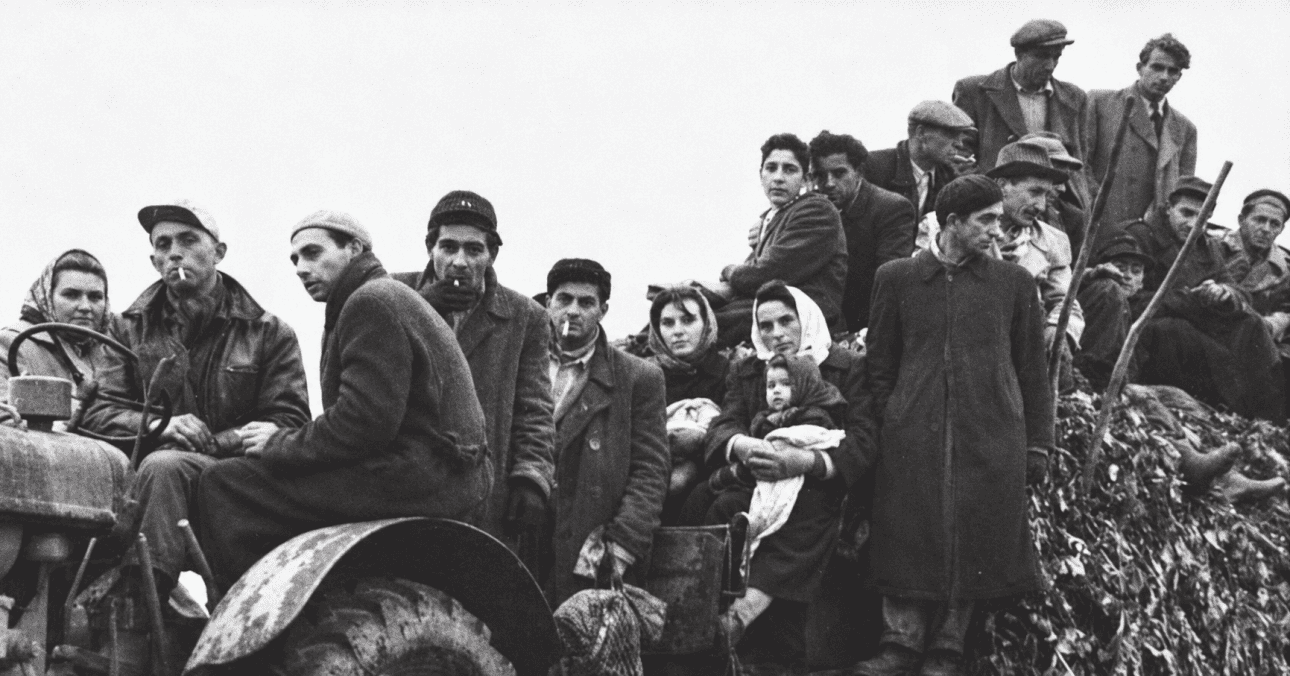
Their inspiration reaches back to Henri Cartier-Bresson’s 1955 publication Les Européens, which examined what it meant to be European in the post-war period. Hornstra and Van Bruggen are revisiting that question in a Europe that looks very different, but is again dealing with uncertainty about borders, identity and political direction.
In Plastic Sea, Perfect Storm, those broad themes are grounded in one specific place. The result is not an abstract discussion about migration or sustainability, but a close look at the people living inside a system most supermarket shoppers rarely see.
Do you run a business? RotterdamStyle is looking for a main sponsor. Get exclusive visibility across our website for a fixed fee. Interested? Contact us 🤝
Photography with an uncomfortable connection
There is an obvious tension in seeing these images inside a museum. You can spend an afternoon at Kunsthal looking closely at photographs of working conditions and environmental damage, then leave and encounter many of the same products described in the exhibition on supermarket shelves nearby.
That tension appears to be part of the point. Hornstra and Van Bruggen are not presenting Almería as an isolated problem. Their project connects the greenhouse economy to consumer demand elsewhere in Europe and asks what sits behind the convenience, abundance and relatively low prices of modern food supply chains.
“Plastic Sea, Perfect Storm explores feelings of powerlessness, anger and acceptance in Europe as it struggles with lawlessness, pollution, climate change and an economy that appears to be blind to the consequences of its own success,” Hornstra and Van Bruggen say of the project.
The exhibition therefore sits somewhere between documentary photography, journalism and social commentary, using one of Europe’s largest agricultural landscapes to tell a much wider story.
Visit Plastic Sea, Perfect Storm
Plastic Sea, Perfect Storm is on view in Hall 3 at Kunsthal Rotterdam from 3 October 2026 until 7 March 2027. Kunsthal is open Tuesday to Sunday from 10:00 to 17:00.
From 1 October, regular adult admission is €20, while students and CJP holders up to age 26 pay €12.50. Admission is free up to and including age 18, and Museumkaart and Rotterdampas are accepted. One Kunsthal ticket gives access to all exhibitions on the day of your visit. Advance booking of an online start time is required.
More information about the exhibition is available at:
https://www.kunsthal.nl/en/plan-your-visit/exhibitions/plastic-sea-perfect-storm/
How to get there
Kunsthal Rotterdam is located in Museumpark, close to Het Park, Nieuwe Instituut and Depot Boijmans Van Beuningen. Eendrachtsplein metro station is within walking distance, and the museum is also easy to reach by tram, bike or on foot from Rotterdam Centraal and the city centre.