
ON VIEW FROM 23 OCT '26 | Rotterdam's Fenix museum has acquired a rare series of original photographs by Hungarian-Dutch photographer Ata Kandó, documenting families fleeing Hungary during the 1956 uprising. The photographs will go on display on 23 October, ahead of a free commemorative event on Saturday 14 November featuring personal stories, music, workshops and Hungarian cultural traditions.
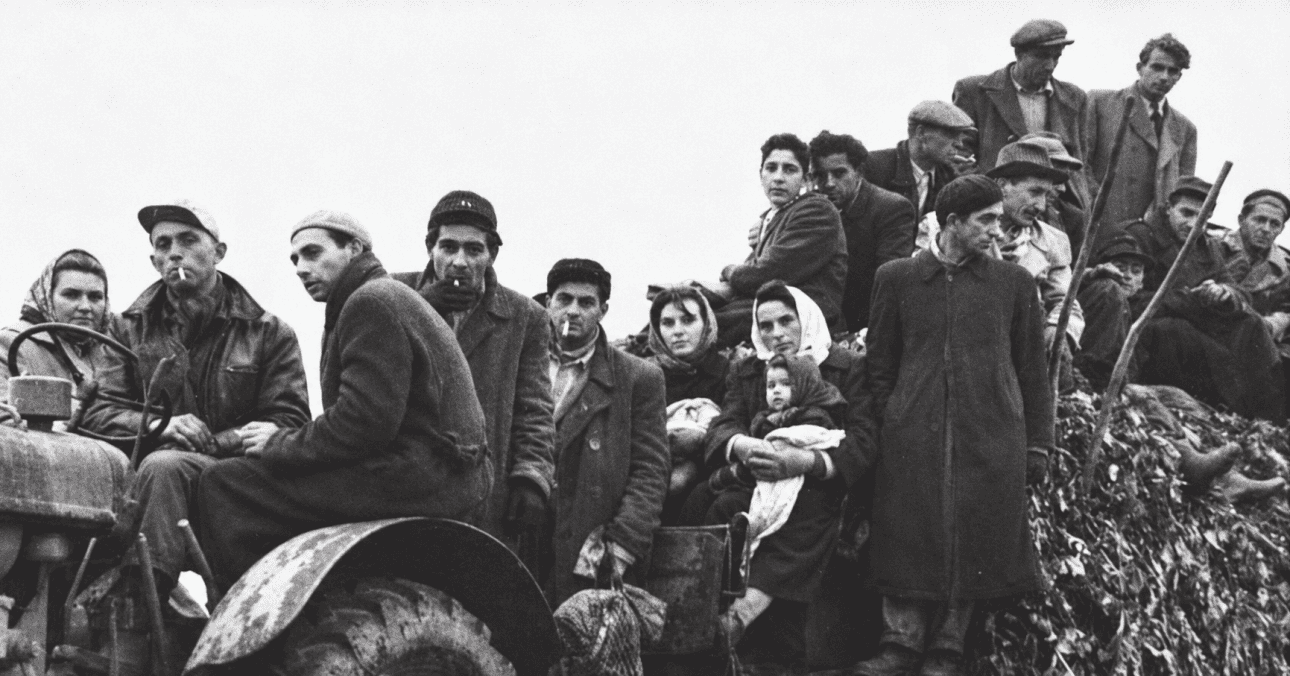
Image: Hungarian refugees fleeing towards Austria following the 1956 uprising. Photograph: Ata Kandó.
ROTTERDAM, 20 October 2026 - Seventy years after thousands of Hungarians fled their country following the Soviet suppression of the Hungarian uprising, Fenix is bringing their experiences into focus through photographs taken at the Austrian-Hungarian border in 1956.
The newly acquired photographs were taken by Ata Kandó, who travelled from the Netherlands to the border region after the uprising began. She spent ten days photographing refugees, including children carrying suitcases, families travelling through muddy fields and people crowded onto tractors as they escaped to Austria.
What makes the acquisition particularly significant is that these are vintage prints, made by Kandó herself in 1956 rather than modern reproductions. They will become part of All Directions (Alle Richtingen), Fenix's collection presentation exploring migration, identity, displacement and the search for a new home.
Do you run a business? RotterdamStyle is looking for a main sponsor. Get exclusive visibility across our website for a fixed fee. Interested? Contact us 🤝
Photographs that give refugees a face
Born in Budapest in 1913, Kandó was living in the Netherlands when the Hungarian uprising began on 23 October 1956. What started as a peaceful demonstration against the communist regime developed into a nationwide revolt, which Soviet forces subsequently crushed through military intervention.
Thousands were killed, while more than 200,000 Hungarians fled their country, many crossing into neighbouring Austria. Emergency refugee camps were established to accommodate the people arriving across the border.
Rather than photographing the military confrontation itself, Kandó turned her camera towards its human consequences. Her pictures show families in transit, young children surrounded by luggage and ordinary people facing an uncertain future.
For Fenix, the acquisition connects a major historical event with the personal experiences at the centre of the museum's collection. Director Anne Kremers emphasises that the images reveal what displacement meant to parents and children who had to leave everything behind, while creating opportunities to connect their experiences with those of later generations.
The photographs will be on display from Friday 23 October, the 70th anniversary of the beginning of the uprising.
A free Hungarian commemoration on 14 November
The museum will mark another significant anniversary on Saturday 14 November. On that date in 1956, the first train carrying Hungarian refugees from Vienna arrived in Utrecht, marking the beginning of a new chapter for many Hungarian families who eventually settled in the Netherlands.
Exactly seventy years later, Fenix is inviting members of the Hungarian-Dutch community and other visitors to gather on Plein, the museum's freely accessible indoor public square.
The commemorative programme runs from 10:00 to 17:00 and combines historical reflection with contemporary Hungarian culture. Visitors can hear first-hand accounts from people who fled Hungary in 1956, meet members of the second generation and take part in discussions about identity, migration and the ways family histories continue to shape people's lives.
A talk about Kandó's photographs takes place from 12:30 to 13:00, presented by Réka Deuten-Makkai. This is followed by a panel discussion with second-generation Hungarian-Dutch participants from 13:45 to 14:30, moderated in Dutch by author Patrick Bernhart, whose parents were Hungarian refugees. From 14:45 to 15:30, members of the first generation will share their memories in a Hungarian-language discussion led by Zsuzsa Nagy.
The rest of the programme includes Hungarian folk dancing, music, storytelling, puppet theatre, children's craft activities, a chess and Rubik's Cube competition, and workshops exploring traditional Hungarian crafts. Visitors can also sample Hungarian dishes such as goulash soup, lángos and Dobos cake.
Guided museum tours will draw special attention to Kandó's work, with Hungarian interpretation available.
The commemorative programme has been organised in cooperation with the Hungarian Cultural Foundation Mikes Kelemen, Stichting StiHon and Patrick Bernhart, with support from the Municipality of Rotterdam and the Gilles Hondius Foundation.
Do you run a business? RotterdamStyle is looking for a main sponsor. Get exclusive visibility across our website for a fixed fee. Interested? Contact us 🤝
Visiting Fenix
The Hungarian commemoration takes place on Saturday 14 November 2026, from 10:00 to 17:00, at Plein, inside Fenix. Admission to the public programme is free.
The photographs themselves can be viewed from Friday 23 October in All Directions, inside the ticketed museum exhibition area.
Regular museum admission costs €15 for adults and €7.50 for visitors aged 19 to 25. Entry is free for visitors aged 18 and under, as well as Rotterdampas and ICOM cardholders.
The museum's exhibitions are generally open Tuesday to Sunday from 10:00 to 17:00.
For the detailed schedule, visit Fenix's Hungarian commemoration programme.
How to get there
Fenix is located at Paul Nijghkade 5 in Rotterdam's Katendrecht neighbourhood. The nearest convenient public transport connection is Wilhelminaplein, approximately a 12-minute walk from the museum. You can also arrive by water taxi or bicycle.
Fenix does not have its own parking facilities. The museum recommends using public transport or one of the nearby paid car parks.