
FROM 18 JUL–30 AUG '26 | Wereldmuseum Rotterdam is turning paper into a hands-on summer activity for children and families with Verhaal van Papier (Story of Paper). From 18 July to 30 August, the interactive programme invites visitors aged 4 and up to make paper themselves, using natural fibres, recycled materials, ink, patterns and wooden stamps.
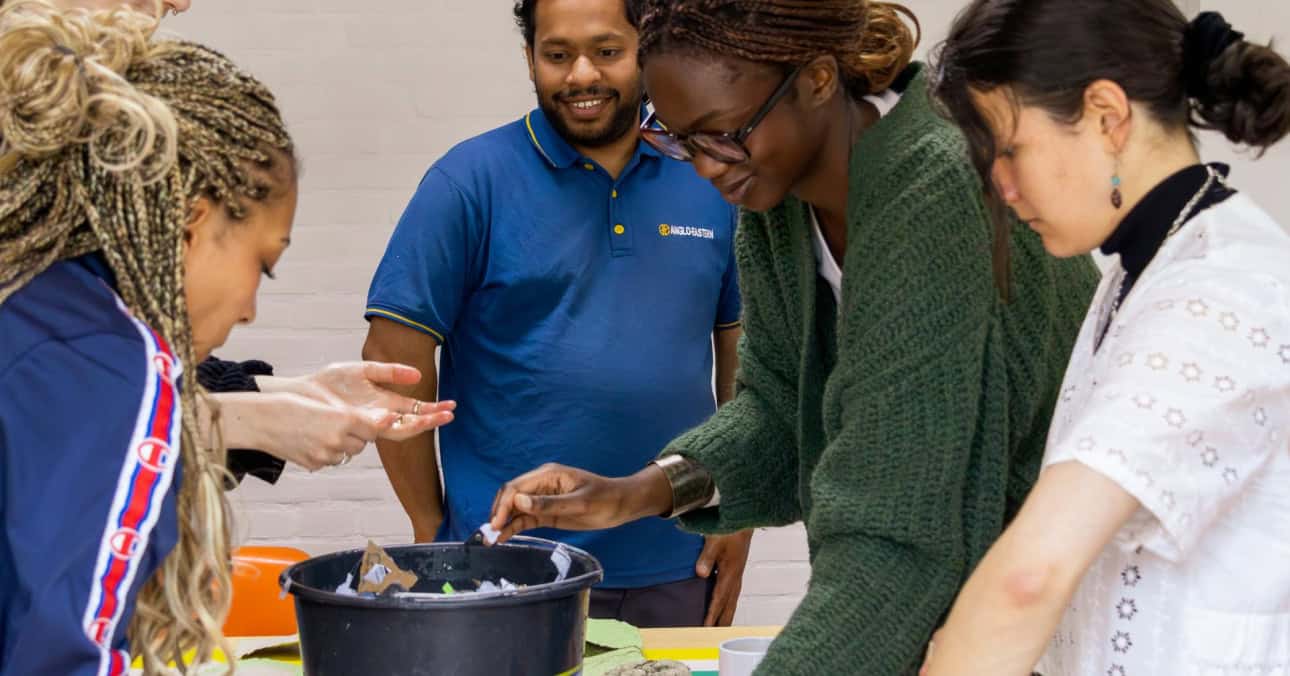
Image: Verhaal van Papier, led by Akash Kumar. Photo: Florine Bubbert.
The programme, created with artist Akash Kumar, turns the museum into a temporary workshop where children and families can discover how paper is made, what it can carry and why this everyday material has so many stories behind it.
Children (and families) become makers
During Verhaal van Papier, visitors move through three workshop stations. At the pulp station, they process natural and recycled materials into paper pulp. At the paper station, they learn how to scoop and press paper, experimenting with textures, fibres and dried flowers.
At the product station, visitors print on paper using ink, patterns and wooden stamps. The result can become a finished paper product to take home.
There is one useful detail to know before promising children they can immediately wave their own wet sheet of paper around the museum. Freshly made paper needs time to dry, so visitors work in the final station with paper made earlier by another participant. In return, the paper they make will be used by the next maker.
That makes the activity quietly communal. Each visitor adds to the process, while also continuing what someone else started.
Do you run a business? RotterdamStyle is looking for a main sponsor. Get exclusive visibility across our website for a fixed fee. Interested? Contact us 🤝
Recycling becomes part of the story
Wereldmuseum Rotterdam is also setting up a recycling collection point for the programme. Visitors can contribute materials used in the paper-making process, including dried pressed flowers, seeds, the dry outer skins of onions and garlic, and egg cartons without stickers.
That means families can become co-creators before they even enter the workshop. Something that might otherwise end up in the bin can become part of the paper pulp, and eventually part of someone else’s artwork.
The programme fits Rotterdam nicely as a city of makers. It is practical, tactile and just messy enough to feel like a proper summer holiday activity, without requiring anyone to pretend they fully understand paper chemistry before lunch.
For children, the appeal is simple: hands in the material, visible results and enough room to experiment. For adults, there is a slightly deeper layer about reuse, craft and how materials travel through daily life.
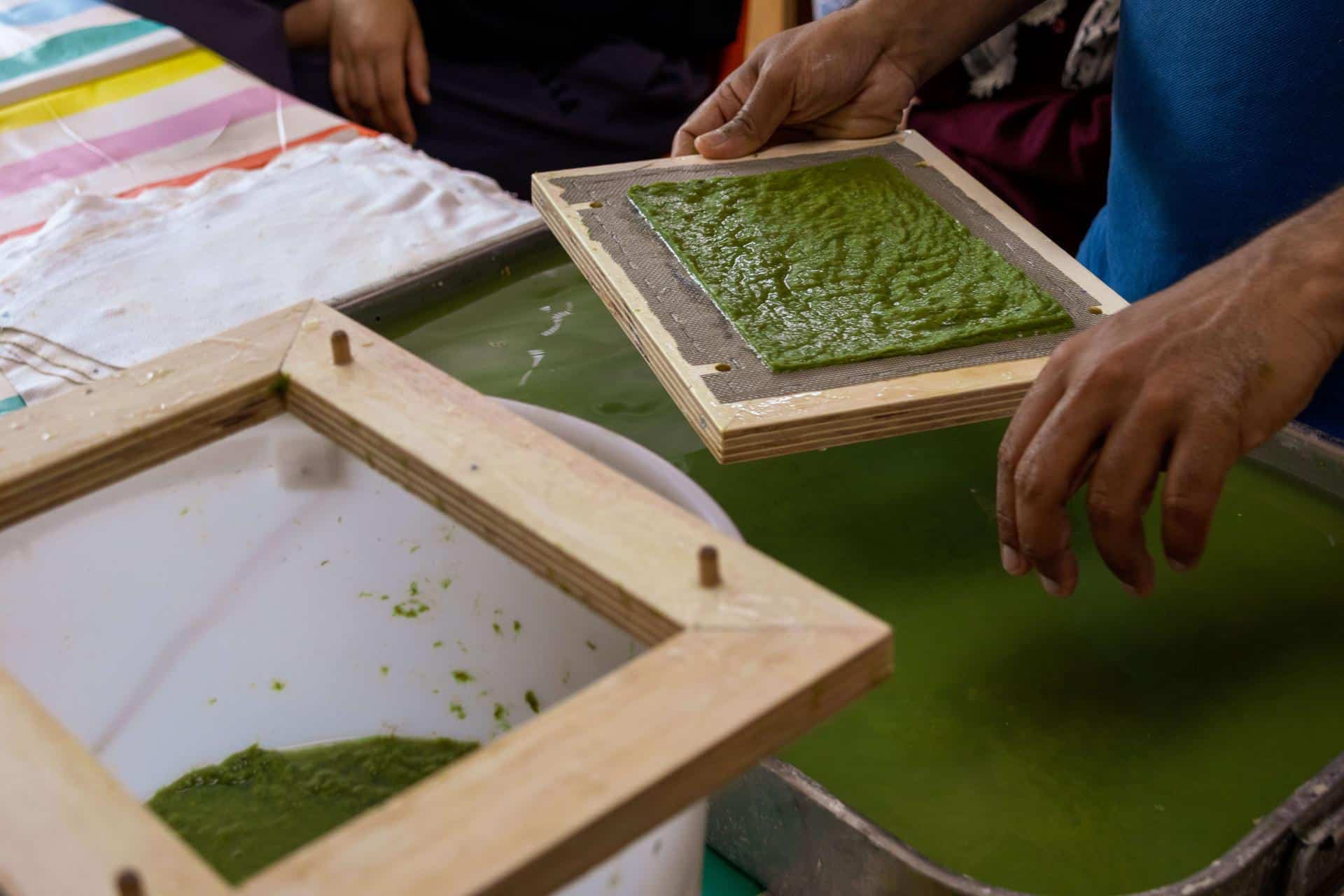 Verhaal van Papier, summer workshop 2026. Photo: © Florine Bubbert.
Akash Kumar connects craft and ecology
Verhaal van Papier was developed with artist Akash Kumar. His practice explores the intersections of craft, ecology and material culture, and how art and design can contribute to sustainability, community care and collective learning.
Kumar grew up in a farming family, studied textile design at the National Institute of Design in Ahmedabad and later completed a master’s degree at the Royal Academy of Art in The Hague.
“Paper is more than a material to me: it carries traces of raw materials, hands, memories, craft and historical knowledge. In Verhaal van Papier, we explore how making can also be a way to look differently at our relationship with material, nature and each other. The programme brings people together to reconnect with materials, creativity and one another in an open and welcoming environment,” says Kumar.
The programme also shows that paper has never belonged to one single culture or technique. Around the world, people have made paper and paper-like materials using what was available locally.
Do you run a business? RotterdamStyle is looking for a main sponsor. Get exclusive visibility across our website for a fixed fee. Interested? Contact us 🤝
Paper around the world
Visitors will encounter examples such as washi from Japan, a strong and refined paper made from plant fibres, and amate from Mexico, a sacred paper used to preserve stories long before books.
The programme also refers to tapa from Polynesia, made from the paper mulberry tree. Tapa is technically a textile, but it is also printed and used as a carrier of stories. In the Netherlands, paper was made from old textiles in windmills from the 14th century onwards.
World cultures have used paper to preserve stories, rituals, images and knowledge. The Wereldmuseum collection also includes paper objects from different cultures and periods, connecting the workshop to the museum’s wider focus on global material traditions.
For visitors, the point is not only to learn where paper comes from, but to feel the process in their hands. Paper stops being a flat thing you write on and becomes something made from fibres, water, pressure, time and human attention. Slightly poetic, yes, but also true.
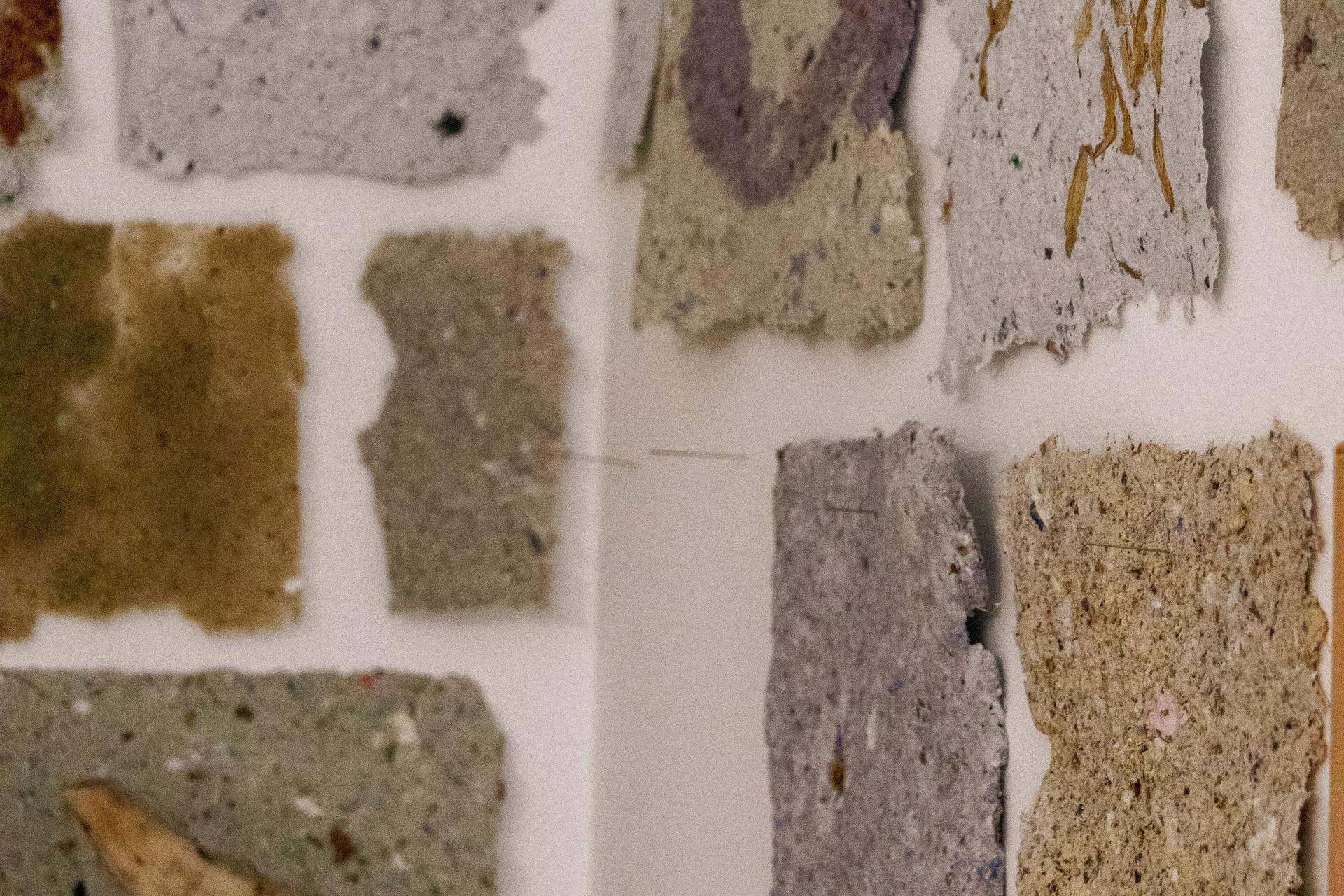 Verhaal van Papier, summer workshop 2026. Photo: © Florine Bubbert
Practical information
Verhaal van Papier runs daily from Saturday 18 July to Sunday 30 August 2026 at Wereldmuseum Rotterdam. There is no summer workshop on Saturday 22 and Sunday 23 August because of the Molukkers aan de Maas event.
The activity lasts two hours. There are five time slots per day: 11:15 to 13:15, 12:00 to 14:00, 12:45 to 14:45, 14:00 to 16:00 and 14:45 to 16:45.
The starting point is Winston’s Feestkeuken in Superstraat. Visitors gather at the blue cabin. The programme is for participants aged 4 and up. Children must be accompanied by an adult, and both the child and adult need a booked time slot.
The activity is free, excluding museum admission. Museumkaart, Jeugdvakantiepaspoort and other discount cards are valid. Tickets and current information are available via https://rotterdam.wereldmuseum.nl/nl/zien-en-doen/activiteiten/verhaal-van-papier.
Do you run a business? RotterdamStyle is looking for a main sponsor. Get exclusive visibility across our website for a fixed fee. Interested? Contact us 🤝
How to get there
Wereldmuseum Rotterdam is located on Willemskade, close to the Veerhaven, Erasmusbrug and the Scheepvaartkwartier. The museum is easy to reach by tram, metro, bike or on foot from the city centre and the riverfront.