
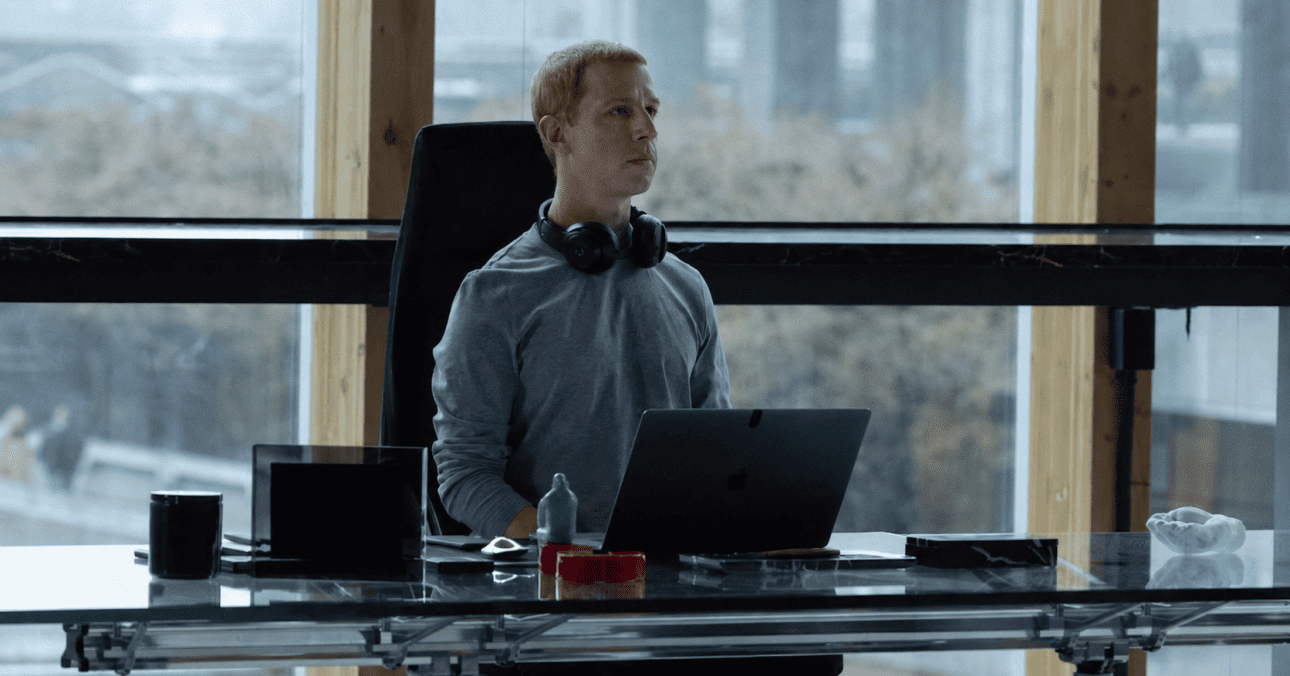
Sixteen years after The Social Network turned Facebook’s creation into one of the defining films of the internet age, Aaron Sorkin returns to ask what happened after the likes, shares and billions arrived. The Social Reckoning follows whistleblower Frances Haugen and journalist Jeff Horwitz as thousands of internal documents begin exposing what Facebook knew about some of the harms associated with its platforms.
Film details
- Title: The Social Reckoning
- Premiere date in the Netherlands: 8 October 2026
- Director: Aaron Sorkin
- Runtime: 112 minutes
- Genre: Drama, biography, thriller
- Country: United States
- Language: English
- Subtitles: Dutch
- Age rating: 12+
- Cast: Mikey Madison, Jeremy Allen White, Jeremy Strong, Wunmi Mosaku, Betty Gilpin, Billy Magnussen, Bill Burr and Patrick Fischler
- Where to watch in Rotterdam: KINO and Cinerama
Do you run a business? RotterdamStyle is looking for a main sponsor. Get exclusive visibility across our website for a fixed fee. Interested? Contact us 🤝
What’s the vibe?
Frances Haugen works inside Facebook and has access to thousands of internal documents concerning how the company understands its own products. Increasingly uncomfortable with what she sees, she begins gathering material and eventually approaches Wall Street Journal reporter Jeff Horwitz.
What follows is less tech thriller than journalism thriller. Think encrypted conversations, internal research, tense meetings and the dawning realisation that a story about one company has implications far beyond Silicon Valley.
Mikey Madison plays Haugen with restraint, while Jeremy Allen White takes on Horwitz, the reporter trying to turn an enormous pile of corporate documents into something the public can understand. Hovering over the story is Jeremy Strong as an older Mark Zuckerberg, very different from the awkward young founder Jesse Eisenberg played in The Social Network.
Sorkin is obviously in comfortable territory here. Powerful people in glass offices, journalists chasing evidence and morally loaded conversations delivered at speeds ordinary humans should not attempt before coffee.
Trailer
Check out the trailer below.
Do you run a business? RotterdamStyle is looking for a main sponsor. Get exclusive visibility across our website for a fixed fee. Interested? Contact us 🤝
Why you might like it
- Eyes: Jeff Cronenweth, who shot The Social Network, returns as cinematographer, reconnecting the new film visually with David Fincher’s original.
- Heart: Haugen and Horwitz give the story a human centre, turning an enormous debate about algorithms and corporate responsibility into the choices of two people deciding what to do with information.
- Mind: The film digs into misinformation, engagement algorithms, political polarisation, platform safety and the uncomfortable gap between what a company knows internally and what the public knows outside it.
Critical reception.
The full critical verdict is still developing. As of 6 October, Rotten Tomatoes has not published a Tomatometer score and Metacritic still lists no critic reviews or Metascore.
The first reactions are mixed to positive. Several critics have praised Sorkin’s screenplay, the performances and the film’s willingness to make an angry, direct argument about Facebook’s influence. Mikey Madison and Jeremy Allen White have received strong early notices, while Jeremy Strong’s colder, more powerful version of Zuckerberg appears to be the performance attracting the most discussion.
Other early reactions are more cautious. Some critics describe the film as solid rather than exceptional, arguing that Sorkin’s direction lacks the precision David Fincher brought to The Social Network. There are also suggestions that the material sometimes feels closer to a very polished editorial argument than the emotionally complicated drama of the original film.
That comparison may be unavoidable. The Social Network has a Metascore of 95 and has grown considerably in reputation since 2010, so its companion piece arrives with a rather cruel benchmark already waiting for it.
For now, the fairest verdict is that early viewers appear to respect The Social Reckoning more consistently than they love it. The performances and dialogue are getting praise, while pacing and direction are the main points of hesitation.
Metacritic currently lists one Astra Midseason Movie Awards nomination for the film. No major wins have been announced yet.
Do you run a business? RotterdamStyle is looking for a main sponsor. Get exclusive visibility across our website for a fixed fee. Interested? Contact us 🤝
Scene to watch for
Watch how the relationship between Frances Haugen and Jeff Horwitz changes once the documents stop being an abstract possibility and become an actual investigation.
Sorkin is at his best when characters understand the consequences of a decision a few seconds before they say it out loud. Here, the interesting question is not simply whether the information should become public, but how you responsibly turn thousands of pages of internal research into journalism capable of surviving scrutiny from one of the world’s most powerful companies.
And keep an eye on Jeremy Strong whenever Zuckerberg enters the room. Apparently, he had no intention of casually switching Mark off between takes either.
Recommended pairing
Make this a phone-free cinema night. Put the device away before the film, have dinner or coffee without checking notifications and enjoy the tiny rebellion of giving one conversation your complete attention.
Afterwards, find somewhere comfortable for a drink and compare your own relationship with social media. Bonus points if nobody instinctively reaches for their phone while discussing whether technology has damaged our attention spans.
Do you run a business? RotterdamStyle is looking for a main sponsor. Get exclusive visibility across our website for a fixed fee. Interested? Contact us 🤝
Need-to-knows
The Social Reckoning is being described by Sorkin and Sony as a companion piece to The Social Network rather than a conventional sequel. Sorkin wrote the Oscar-winning screenplay for the 2010 film, but David Fincher directed it. This time, Sorkin handles both writing and directing.
The story draws from the Facebook Files, The Wall Street Journal’s 2021 investigation based partly on thousands of pages of internal Facebook material supplied by whistleblower Frances Haugen. The reporting examined subjects including content moderation, high-profile accounts receiving different treatment, Instagram and teen well-being, algorithmic incentives and Facebook’s operations outside the United States.
Facebook strongly disputed parts of the Journal’s interpretation at the time. The company argued that documents and internal research had been presented without sufficient context and rejected the claim that it knowingly ignored inconvenient findings. The controversy therefore involved both what the documents showed and how those findings should be interpreted.
One small factual distinction is worth knowing: promotional material for the film describes Haugen as a Facebook engineer, but the real Frances Haugen worked at Facebook as a product manager, including on the company’s civic integrity team.
Jesse Eisenberg does not return as Mark Zuckerberg. Jeremy Strong takes over the role, portraying Zuckerberg roughly sixteen years after the period covered by The Social Network.
Strong also went fully Strong. Aaron Sorkin says the Succession actor remained in Zuckerberg’s voice and physicality throughout production, to the point that Sorkin did not hear his normal voice until Strong had completed his final scene. Crew members reportedly called him Mark on set.
The listed running time varies slightly between cinemas. KINO and the British classification board give the film as roughly 112 minutes, while some Dutch cinema listings round it to 113 minutes.
The Dutch rating is 12, with warnings including coarse language, discrimination and drugs or alcohol misuse.









.jpg "Popronde Rotterdam - date, locations, artists, info")