
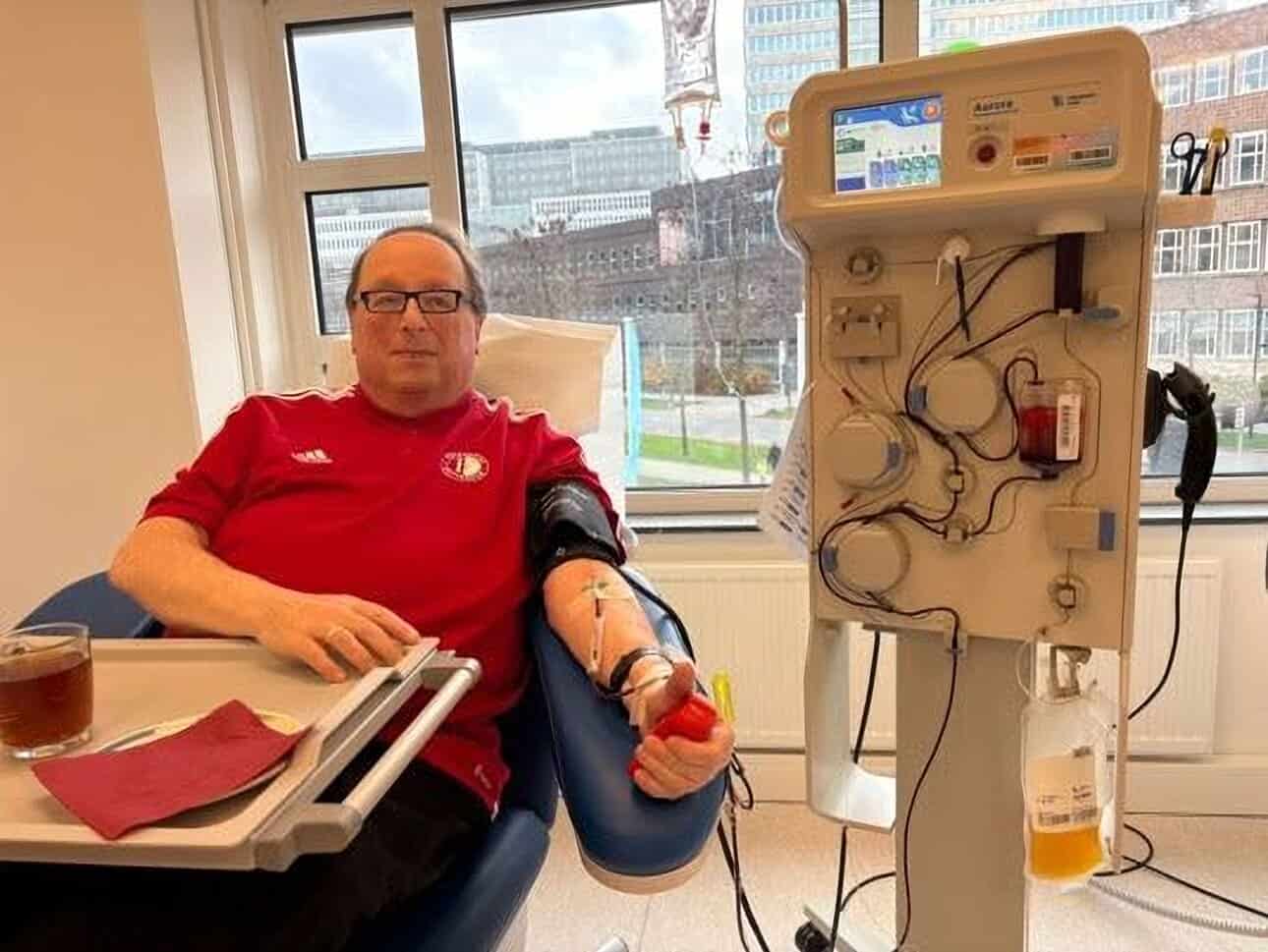
ROTTERDAM, 24 December 2025 – A long-running donor milestone was marked today at Sanquin in Rotterdam, where Henk Leeuwangh (66) donated plasma for the 500th time. Leeuwangh has been donating for almost 50 years and was celebrated at the donation centre.
If you have never come across Sanquin before, it is the Netherlands’ blood supply organisation (Stichting Sanquin Bloedvoorziening), responsible for collecting blood and plasma from donors and supplying hospitals with blood products and plasma-based medicines.
Leeuwangh started donating shortly before his 18th birthday, after seeing first-hand in nursing work how much donated blood can matter. Less than ten years later, he switched from blood donation to plasma donation, because he felt it could help more people.
He also recalls being collected by taxi to donate blood platelets (bloedplaatjes) within an hour, because a patient with his blood type was already on the operating table.
Today’s 500th plasma donation puts a spotlight on a habit that usually stays quiet in the background, even though it underpins everyday care in Dutch hospitals.
Do you run a business? RotterdamStyle is looking for a main sponsor. Get exclusive visibility across our website for a fixed fee. Interested? Contact us 🤝
How did Henk Leeuwangh reach 500 donations?
Leeuwangh says his motivation began early, shaped by what he saw while working in nursing. That is what pushed him to become a donor just before turning 18, and it is what later nudged him towards plasma donation as a way to support more patients.
The urgency has not always been abstract either. He describes a moment in his own circle where a baby was born almost lifeless, and needed resuscitation, operations and blood transfusions to recover.
Why does plasma donation matter?
Sanquin’s spokesperson Marloes Metaal says one in four people will need blood from someone else at some point, whether to survive, recover, or prevent illness. She points to patients with cancer, traffic victims, and women and babies after a difficult birth as examples of who is helped.
Plasma donors give the plasma part of their blood, and proteins from that plasma are used to make plasma medicines. Metaal says plasma donors are essential for around 25,000 patients in the Netherlands who depend on those medicines for their ongoing wellbeing.
Do you run a business? RotterdamStyle is looking for a main sponsor. Get exclusive visibility across our website for a fixed fee. Interested? Contact us 🤝
How can you become a Sanquin donor?
The first step is an online registration form that checks whether donating is safe, both for you and for the recipient. Sanquin says you will know within five minutes whether you are eligible to continue.
If everything looks fine, the next step is an appointment for a medical screening (keuring) with a donor doctor (donorarts), where blood pressure and haemoglobin are measured and blood is checked for infectious diseases. After approval, Sanquin says you will automatically receive an invitation to donate blood or plasma.